

You press the gas and nothing happens. The car just slows down. Your heart jumps. This is one of the scariest things that can happen while you are driving. When your car loses power while driving, it is not just annoying. It can be dangerous too, especially if it happens on a highway or in traffic.
The good news? Most of the time, there is a clear reason behind it. And once you know the cause, fixing it is not as hard as you think. Let me walk you through everything.
Warning Signs Your Car Is Losing Power
Before we talk about causes, let me share some signs I have noticed personally. When my old sedan started losing power on highway ramps, it did not just stop. It gave me hints first.
Watch out for these signs. Your car might feel slow when you press the gas. The engine could shake or misfire at idle. You may see the check engine light turn on. Your fuel efficiency might drop without any reason. The car might stall or hesitate when you try to speed up.
These are all signs that something is wrong. Do not ignore them. A small problem today can become a big repair bill tomorrow.
Sluggish Acceleration and What It Tells You
Sluggish acceleration is usually the first thing you notice. You press the gas pedal, and the car feels heavy. It does not respond the way it should.
This is often caused by a clogged air filter, dirty fuel injectors, or worn spark plugs. Think of it this way. Your engine is like a person running a race. If it cannot breathe properly or get enough food, it will run slowly. These three things are what feed air, fuel, and fire to your engine. When any one of them fails, your car slows down.
Top Causes of a Car Losing Power While Driving
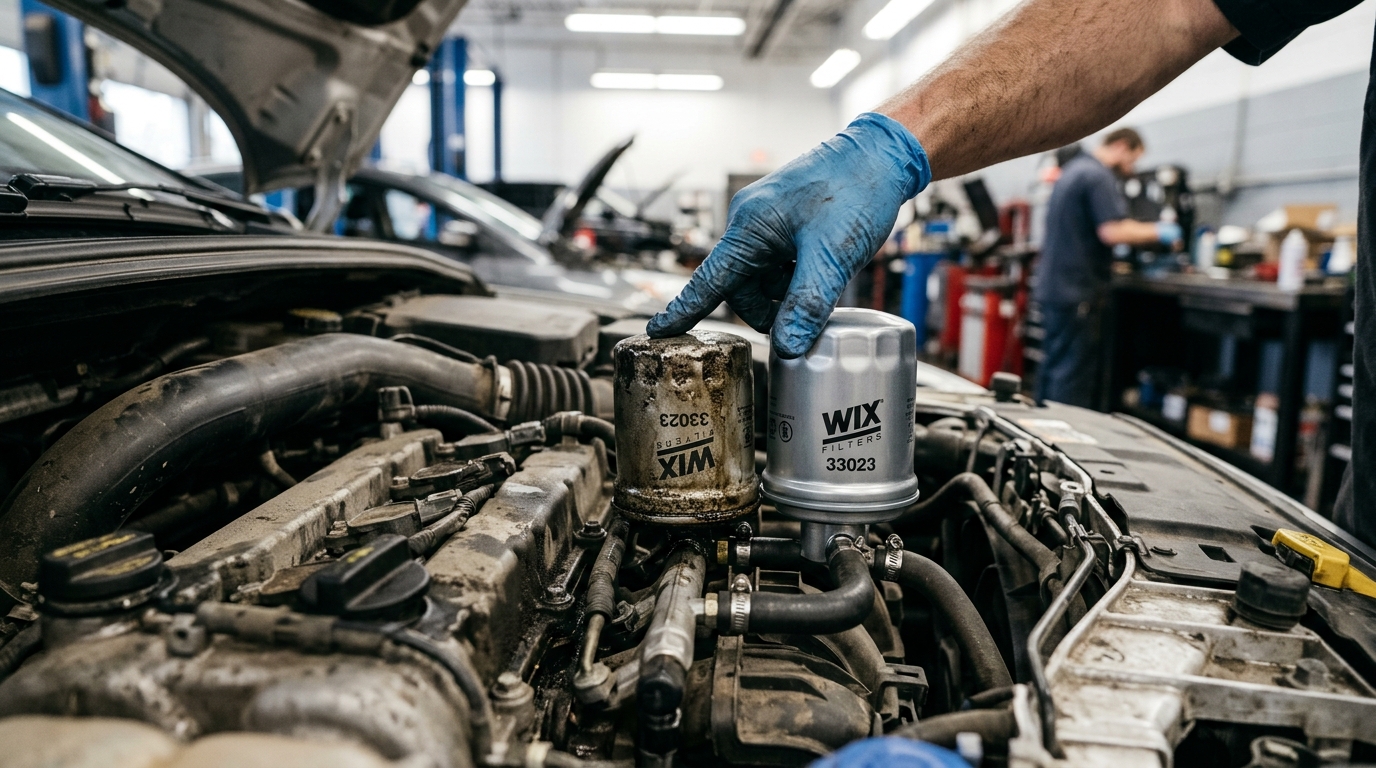
Now here is the main part. Your car loses power while driving for many different reasons. I will cover each one in simple words so you understand what is really going on under the hood.
Clogged Fuel Filter or Failing Fuel Pump
This is one of the most common causes. Your engine needs a steady flow of fuel at the right pressure to run well.
The fuel filter keeps dirt and debris out of the fuel system. Over time, it gets clogged. When it is blocked, the fuel pump has to work much harder to push fuel through. This results in low fuel pressure reaching the engine. The car will hesitate, lose power, or even shut off.
A failing fuel pump itself is another big culprit. If the pump cannot deliver enough fuel, the engine simply starves. You will notice the car losing power under heavy acceleration or when climbing hills.
According to the U.S. Department of Energy, a well-maintained fuel system is key to keeping your engine running at peak performance. A simple fuel filter change every 20,000 to 30,000 miles can prevent many of these problems.
Worn Spark Plugs and Faulty Ignition Coils
Spark plugs are small but very important. They create the spark that ignites the fuel and air mixture inside the engine. If they are worn or dirty, the spark is weak. The engine misfires. Power drops.
A faulty ignition coil makes things worse. The ignition coil converts battery power into a high-voltage spark. If the coil is damaged, it cannot send the right signal to the spark plug. The fuel and air mix will not ignite properly. You will feel rough idling, hesitation, and a noticeable drop in power.
I once drove a car that had not had its spark plugs changed in over 80,000 miles. The difference after replacing them was night and day. The car felt like it had a new engine. If your plugs have more than 50,000 miles on them, it is time to replace them.
Dirty Air Filter and Mass Airflow Sensor Issues
Your engine needs air just as much as fuel. The air filter keeps dust and dirt from getting into the engine. When it is clogged, the engine cannot breathe. Less air means less power.
The mass airflow sensor (MAF sensor) measures how much air enters the engine. It tells the engine how much fuel to use. When the MAF sensor is dirty or broken, the engine gets the wrong information. It may run too rich or too lean. Either way, engine performance drops.
Cleaning or replacing a dirty air filter is one of the cheapest fixes there is. You can often do it yourself in under 10 minutes. The MAF sensor can be cleaned with a special spray. If it is fully broken, it needs to be replaced.
Clogged Catalytic Converter and Exhaust Problems
The catalytic converter is part of your exhaust system. It cleans the gases coming out of the engine. Over time it can get clogged. When it does, exhaust gases cannot escape properly. This creates back pressure inside the engine and steals power.
A blocked exhaust pipe or muffler can do the same thing. You might also notice a sulfur smell, like rotten eggs, when the catalytic converter is failing.
The diesel particulate filter (DPF) on diesel cars works the same way. If it gets too clogged, the car may switch to limp-home mode. In this mode, the car limits power to protect the engine. You should only drive a few miles in this mode and get it checked right away.
Faulty Oxygen Sensor or Engine Control Unit (ECU) Problems
The oxygen sensor checks the oxygen level in your exhaust. It helps the ECU decide how much fuel to inject. A bad oxygen sensor sends wrong data to the computer. This can make the engine run too rich (too much fuel) or too lean (not enough fuel). Both reduce power and hurt fuel efficiency.
The Engine Control Unit (ECU) is the brain of your car. It controls almost everything. If the ECU gets a false reading or has a software issue, it might tell the engine to reduce power. In some cases, it can bring the car to a complete stop.
Sometimes simply turning the car off and restarting it can reset the ECU. But if the problem keeps happening, you need a mechanic to read the fault codes with a diagnostic tool.
Transmission Slipping and Turbocharger Failure
Here is one that many people miss. If your car feels like it is losing power when shifting gears, the transmission might be slipping.
A slipping transmission cannot transfer power from the engine to the wheels properly. You might see high RPMs but little speed increase. The car feels like it is struggling. This is a sign of serious transmission wear and needs professional attention fast.
For cars with a turbocharger, a failing turbo can also kill power. The turbocharger pushes extra air into the engine to boost performance. If it is not working correctly, you lose that extra power. Turbo lag, unusual noises from the engine, or blue smoke from the exhaust can all be signs that the turbo is failing.
Weak Alternator and Timing Belt Problems
A weak alternator is something many drivers never think about. The alternator charges the battery and powers your car’s electrical system. If it is struggling, especially when you are using the AC, headlights, and other accessories at the same time, the engine may lose power or even shut off.
The timing belt or chain keeps the engine’s valves opening and closing at the right time. If it is worn, incorrectly tensioned, or installed wrong, the engine valves open and close at the wrong moments. This leads to power loss, sometimes with a rattling noise. A broken timing belt can even destroy your engine completely.
According to AAA, timing belt failure is one of the leading causes of serious engine damage. Most manufacturers recommend replacing it between 60,000 and 100,000 miles.
What to Do When Your Car Loses Power While Driving
So your car loses power while driving. What do you do right now?
Stay calm first. Turn on your hazard warning lights immediately to warn other drivers. Slowly and safely move to the side of the road. Do not brake hard suddenly. Once you are safely stopped, turn off the engine and let it cool down for a few minutes. Try restarting it. If the problem comes back, call a mechanic or roadside assistance.
Do not keep driving if the car is in limp mode or if warning lights are on. Ignoring these signs can turn a small fix into a very expensive repair.
Conclusion
When your car loses power while driving, it is your engine’s way of saying something is wrong. It could be a clogged fuel filter, worn spark plugs, a bad oxygen sensor, or something bigger like a failing transmission or turbocharger.
The key is to act early. Pay attention to the warning signs. Check your car regularly. And do not skip routine maintenance like replacing the air filter, spark plugs, and timing belt on schedule. Most power loss problems are very fixable when you catch them early.
Have you had your car lose power while driving? I would love to hear what caused it for you. Drop a comment below and let us help each other out.
Frequently Asked Questions
Why does my car lose power while driving but then come back?
This usually points to an intermittent fuel delivery issue, a loose spark plug wire, or a failing mass airflow sensor. When the car warms up or the loose connection temporarily reconnects, power returns. Get it checked before it gets worse.
Can a dirty air filter cause my car to lose power?
Yes. A clogged air filter limits airflow to the engine. Less air means less combustion power. Your car will feel slow and sluggish. Replacing a dirty filter is one of the simplest and cheapest fixes you can do.
What does it mean when my car loses power going uphill?
Losing power on hills usually means your fuel pump is weak or your fuel filter is clogged. Uphill driving demands more from the engine. If the fuel system cannot keep up, the engine starves. A failing turbocharger (if your car has one) can also cause this.
Is it safe to drive when my car is losing power?
It depends on how bad it is. If the car is in limp mode or the check engine light<span style=”font-weight: 400;”> is on, drive only a short distance to the nearest garage. If the car is stalling or power loss is severe, pull over and call for help. Driving with serious power loss can be dangerous and can also cause more engine damage.
How much does it cost to fix a car that loses power while driving?
The cost depends on the cause. A new air filter might cost $15 to $30. Spark plugs can run $50 to $150. A fuel pump replacement is often $300 to $900. Catalytic converter or transmission repairs can cost $1,000 or more. Getting a diagnostic scan first (usually $50 to $100) helps identify the exact problem before spending money.