

If you smell gas in your car, stop and pay attention. That strong gasoline odor inside your cabin is not normal. It can mean something small, like a loose gas cap, or it can mean something dangerous, like a real fuel leak. Either way, you should not just ignore it and keep driving.
What Causes a Gas Smell in a Car?
There is no one single answer. The truth is, a gas smell can come from many different places in your vehicle. Some are easy to fix yourself. Others need a mechanic fast.
When I first noticed a smell of gasoline in my old sedan, I panicked. I thought the whole car was about to catch fire. Turns out, the gas cap was just loose. But here is the thing: you cannot always assume it is something small. You have to check.
Let me walk you through the most common reasons why you smell fuel vapor inside your car.
A Loose or Damaged Gas Cap
This is the most common and easiest reason. The gas cap is more than just a cover for your fuel tank. It is a key part of the evaporative emissions (EVAP) system. When the cap is cracked, loose, or the rubber seal is worn, gasoline vapors escape easily. This creates a strong smell, especially right after filling up or when the car is parked.
Many newer cars will turn on the check engine light if the gas cap is not sealed. But sometimes the smell shows up before the light does. So if you just came back from the gas station and notice an odor, first go and tighten the cap. If you hear a click, that is a good sign. If it is cracked or broken, just replace it. It usually costs under $20 and takes two minutes.
Fuel System Leaks: The Most Dangerous Cause
This is where things get serious. Fuel system leaks are a common and very dangerous cause of gasoline odors in running vehicles. Over time, parts like fuel lines and hoses can develop leaks from corrosion or physical damage.
Your car has fuel lines that carry gas from the gas tank to the engine under high pressure. With the high pressure inside, even a small leak along the way can spray fuel out as a mist. If this leak is in the engine compartment or near the hot exhaust system, that fuel can catch fire.
Here is what you can check yourself: look under the car when it is parked. If you see any clear liquid, or a rainbow-tinted stain or puddle on the ground under your car, that is likely gasoline. Do not try to drive. Call a mechanic or get it towed. This is not worth the risk.
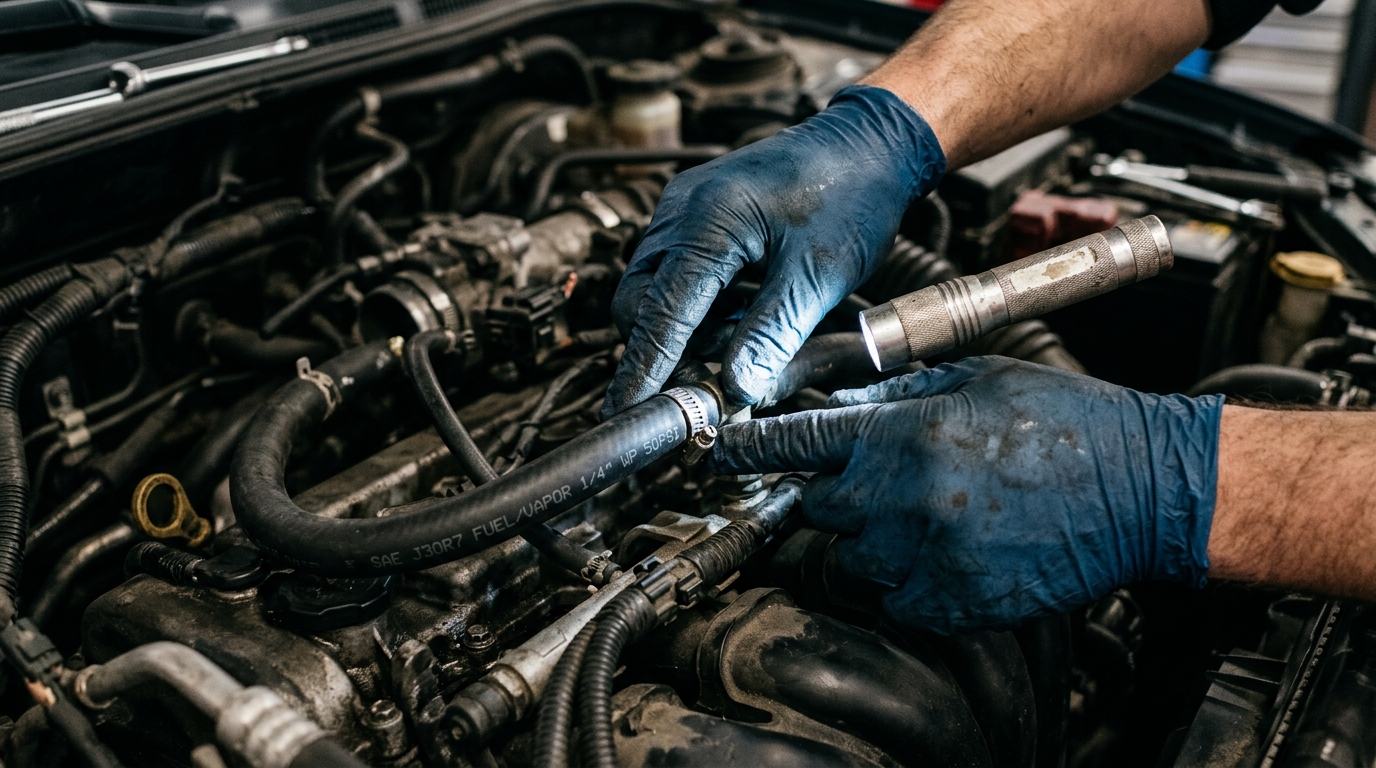
EVAP System Problems
The evaporative emission control (EVAP) system is a part of your car that most people never think about. It captures fuel vapors from the gas tank and sends them to the engine to be burned. When it breaks, those vapors escape instead.
The EVAP system uses rubber and plastic hoses to move vapors. These hoses can crack or come loose over time because of heat, age, and vibration. When that happens, vapors escape and create a strong gas smell. A stuck or broken purge valve or charcoal canister can also cause this problem.
This kind of issue will often trigger the check engine light, too. A mechanic can run a simple diagnostic test to confirm it. It is not always expensive to fix, but it does need to be fixed.
Leaky Fuel Injectors
Your car’s fuel injectors spray pressurized fuel into the engine. They are sealed tightly. But when a seal breaks or an injector gets stuck open, raw fuel can escape.
An injector that sticks open sends too much fuel into the cylinder. This makes the fuel mixture “rich.” The unburned fuel does not fully burn and escapes through the exhaust system, which causes a gas smell.
You might also notice your engine running rough, your gas mileage going down, or black smoke from the exhaust. These are all signs your injectors may need attention.
Bad Spark Plugs or a Faulty Oil Cap
Here is something most guides skip. If your spark plugs are not properly tightened, their sealing rings can let fumes leak from the combustion chamber. Those fumes then enter through the air intake of the ventilation system and fill the cabin with a gas smell.
The same goes for the oil cap. If the oil cap has a bad gasket or O-ring, oil and gas fumes can escape and get pulled into the cabin through the air conditioning system. Check under the hood near the oil cap for dirt and grime. If you see a lot of buildup, that cap probably is not sealing properly.
Both of these are simple, inexpensive fixes. But they are easy to miss if you are only looking at the fuel system.
Exhaust System Leaks
If there is an exhaust leak, like a bad muffler, fumes can leak under your car and come up through the floor into the cabin. A bad oxygen sensor can also cause the engine to run rich, which produces extra unburned fuel in the exhaust.
If there is a crack in the exhaust manifold or the exhaust pipe, unburned fuel fumes can escape before they are fully processed by the catalytic converter. These fumes can then be pulled into the car through the ventilation system or through small openings in the body.
This is especially dangerous because exhaust fumes also contain carbon monoxide, which is colorless and odorless. If the gas smell is strong while driving, crack your windows open right away.
Simple and Innocent Causes
Not every gas smell means disaster. Here are the everyday reasons that are nothing to worry about:
If you notice the smell right after refueling, fumes may have just entered the cabin during your fill-up. The odor should go away after a few minutes.
If you get gas on your hands or clothes while filling up, the smell will linger in the cabin. It should go away once you wash your hands or change your clothes.
If you are driving in traffic, the gas smell could actually be coming from a nearby vehicle. Try pulling over and parking to see if the odor goes away.
Honestly, I have made the “panic mistake” myself. One time I was stuck in traffic behind an old truck and thought my car was leaking fuel. Pulled over, checked everything, then watched that truck roll away smoking. The smell disappeared in seconds. So always rule out the obvious first.
Is a Gas Smell in Your Car Dangerous?
Yes. And you should take it seriously every single time.
Gasoline is made up of volatile organic compounds (VOCs) that evaporate fast, especially in warm conditions. When you smell gas in your car, you are inhaling some of those harmful vapors. Consistent exposure to fuel vapors can lead to headaches, dizziness, respiratory issues, and more serious long-term effects.
According to the Agency for Toxic Substances and Disease Registry (ATSDR), breathing in high levels of gasoline for even short periods can cause harmful effects on the nervous system. Less serious effects include dizziness and headaches. More serious effects include coma and problems with breathing.
On top of the health risks, there is also a fire risk. Gasoline is highly flammable. Fuel that drips onto hot engine components like the exhaust pipe or catalytic converter can greatly raise the chance of an engine fire. All it takes is a spark from an electrical short or ignition switch to set fuel fumes alight.
So no, this is not something to wait on.
What to Do If You Smell Gas in Your Car
Here is a simple, clear plan:
First, if the engine is running, turn it off right away. A running engine creates very high heat in the exhaust system, and you do not want a fire to start. If you are smoking, put out your cigarette far from the smell.
Next, step out of the car and look underneath for any puddles or wet spots. Check around the fuel cap. Check for stains on the ground. Open the hood carefully only if it is cool to the touch.
Then, figure out what kind of smell it is. Did you just fill up? Did you spill gas on your shoes? Or is the smell strong and constant? If it is constant or gets worse, do not drive. Call a tow truck.
According to the NIOSH Pocket Guide to Chemical Hazards, symptoms of gasoline exposure include headache, dizziness, blurred vision, confusion, and convulsions. If you or a passenger feels any of these, get fresh air immediately and seek medical help.
How to Prevent a Gas Smell in Your Car
The best thing you can do is stay ahead of the problem. A few simple habits go a long way.
Always make sure you hear the click when you tighten your gas cap. Replace old gas caps every few years, especially if they look worn. Do not overfill the tank. When the pump clicks, you are done.
Get your fuel system checked during regular oil changes. A mechanic can spot a small crack or loose connection before it becomes a bigger and more expensive problem. Pay attention to your check engine light and do not ignore it for weeks.
If you notice that you are filling up your tank more often than usual, that could be a sign of a slow fuel leak. Watch your gas mileage. If it drops suddenly, something is probably wrong.
Conclusion
So why do you smell gas in your car? It could be as simple as a loose gas cap or as serious as a cracked fuel line. Either way, the answer is the same: do not ignore it.
Check the easy stuff first. Then if the smell stays, or if you see fuel under the car or feel any dizziness, stop driving and get help from a mechanic. Your car can be fixed. Stay safe.
I would love to hear from you. Have you ever dealt with a gas smell in your car? What was the cause? Drop a comment and let me know.
FAQs
Why do I smell gas in my car but see no leak?
You might not always see a leak, but it can still be there. A small crack in a fuel line, a worn EVAP hose, or a bad gas cap seal can let vapors escape without leaving a visible puddle. An oxygen sensor problem or leaky fuel injector can also cause a fuel smell with no visible drip. If the smell is strong and keeps coming back, take your car to a mechanic for a proper diagnosis.
Is it safe to drive if my car smells like gas?
No, it is not safe. A constant gas smell while driving could mean a fuel leak near a hot engine or exhaust part. That is a real fire risk. It also means you are breathing in volatile organic compounds (VOCs) which can cause headaches and dizziness. If the smell is strong or keeps coming back, stop driving and get it checked right away.
Why do I smell gas in my car only when I start it?
This is common, especially on cold mornings. When you first start the car, the engine runs on a richer fuel mixture to warm up. This can cause a brief gas smell that goes away in a minute or two. But if the smell lingers or gets stronger after the engine warms up, it could be a leaky fuel injector, a loose gas cap, or a worn-out EVAP system part.
Can a bad gas cap cause a gas smell inside the car?
Yes, absolutely. A loose, cracked, or worn gas cap is one of the most common reasons people notice a gas smell in their car. The cap seals the fuel tank and stops vapors from escaping. When it fails, those vapors can travel into the cabin through the ventilation system. Tighten the cap or replace it and see if the smell goes away.
How much does it cost to fix a gas smell in a car?
It depends on the cause. A new gas cap costs around $10 to $25. An EVAP system repair can range from $100 to $600. A fuel line repair can cost anywhere from $150 to $800 or more, depending on the damage. A fuel injector replacement usually runs between $200 and $1,000. The sooner you get it checked, the more likely it is to be a small fix.