
Your car tried to tell you something last week. The headlights flickered. The radio cut out for a second. The engine cranked a little slower than usual. Most of us just shrug it off and keep driving. But those small signs? They are your car waving a red flag. Electrical issues in cars can go from tiny annoyances to full breakdowns fast. Knowing what to watch for can save you a lot of money and a lot of stress.
Why Your Car’s Electrical System Matters
Think of your car’s electrical system like the nervous system of your body. It connects everything. It powers your starter motor, your alternator, your lights, your dashboard warning lights, your power windows, and even your engine control module. Without it working properly, nothing else works right either.
I once drove a car where the battery light came on for two days. I kept ignoring it because the car was still starting fine. Then on the third morning, a dead battery. The alternator had quietly stopped charging it. That little light was telling me everything I needed to know. I just was not listening.
The car’s electrical system is made up of three big parts: the battery, the alternator, and the wiring harness. These three work together to keep power flowing to every corner of your vehicle. When any one of them fails, the others start to suffer too.
How the Battery, Alternator, and Wiring Work Together
The battery gives the car the first spark of power to start. Once the engine is running, the alternator takes over. It creates electricity from the engine’s movement and sends that power back to the battery to keep it charged. The wiring carries all that electricity to every part of the car.
When the alternator is weak, it cannot keep the battery charged. The battery then drains. When the wiring is damaged or corroded, the electricity cannot flow cleanly. This causes random failures all over the car. It is all connected. That is why fixing just one part does not always solve the problem. You need to check the whole system.
Common Warning Signs of Electrical Problems
Dimming or Flickering Lights
This is one of the most common signs of electrical issues in cars. If your headlights dim when you slow down, or your interior lights flicker without reason, it usually points to a weak battery or a failing alternator. Sometimes it is loose wiring connections, too.
Do not ignore this. Dim headlights make it harder to see at night. And in most states, driving with broken headlights or taillights is actually illegal.
Your Car Is Slow to start.
If you turn the key and hear a slow, sluggish crank, that is a big sign. The battery might not have enough power to kick the starter motor into action. It could also mean the starter itself is starting to fail. Either way, this is your car telling you to act now before it will not start at all.
Power Features Stop Working
When power windows, door locks, or your radio suddenly stop working or act strangely, it is often an electrical problem. These accessories run on the car’s electrical circuit. A blown fuse, a short circuit, or low voltage from a weak alternator can cause them to fail. Check the fuse box first. It is the cheapest and easiest thing to check.
You Smell Something Burning
Honestly, this one scared me the first time it happened to a friend’s car. We were driving, and out of nowhere came this sharp smell of burning plastic. That is never a good sign. A burning smell usually means a wire is overheating. Short circuits cause wires to carry more current than they can handle. The insulation around the wire melts. If you smell this, stop driving immediately and get it checked. There is a real fire risk here.
Dashboard Warning Lights Come On
Your check engine light, battery warning light, or other dashboard warning lights are not just decorations. They are the car’s way of talking to you. The battery warning light usually means the charging system is not working properly. The check engine light can come on because of a faulty oxygen sensor, loose wiring, or other electrical faults. Do not ignore them. A mechanic can connect a scan tool and read the exact problem in minutes.
The Most Common Electrical Problems in Cars

Battery Failure
The car battery is the number one most common electrical problem. According to a study published by AAA, battery failure is one of the top causes of roadside breakdowns in the United States. Most batteries last about 3 to 5 years. In very hot or very cold climates, they can fail even sooner. Signs include slow starting, dim lights, and a swollen battery case.
The fix is usually simple. Clean the battery terminals if you see white or greenish buildup. That buildup is corrosion, and it blocks electricity. If the battery is old, replace it. A new battery costs around $100 to $200, depending on your car.
Alternator Problems
The alternator is what keeps your battery charged while the car is running. A failing alternator cannot do that job. So even with a brand new battery, your car will die if the alternator is bad. Signs of a bad alternator include dimming lights, a whining sound from the engine, or the battery light turning on.
Replacing an alternator usually costs between $350 and $600, including labor. It is not cheap, but it is a lot cheaper than getting stranded on the highway.
Blown Fuses
A blown fuse is your car’s way of protecting itself. Fuses are designed to melt when too much current flows through a circuit. This stops the wiring from catching fire. If one thing in your car stops working suddenly, like the radio or the power windows, check the fuse box first. Most cars have two fuse boxes. One under the hood and one inside the cabin near the driver’s seat.
Replacing a fuse is cheap and easy. But if a fuse keeps blowing over and over, there is a deeper problem. That means something is pulling too much power, and you need a mechanic to find it.
Starter Motor Failure
The starter motor uses battery power to spin the engine and get it going. When the starter fails, you turn the key and hear a clicking sound, but the engine does not start. That click is the starter solenoid trying to work but failing. Replacing a starter motor usually costs between $428 and $581, according to data from Synchrony.
Faulty Spark Plugs and Ignition Coils
Spark plugs create the tiny explosion in each engine cylinder that makes the car move. When they wear out, your engine misfires, uses more fuel, and loses power. Ignition coils send the electrical charge to the spark plugs. If a coil fails, one or more cylinders stop firing properly.
Replacing spark plugs costs roughly $265 to $390. Ignition coils run about $225 to $340. These are worth fixing fast because bad spark plugs cause poor fuel economy and can damage the catalytic converter over time.
Wiring and Ground Connection Problems
This is often the trickiest one to fix. Bad wiring can cause random, unpredictable failures across the whole car. One day, the dome light stops working. The next day, the clock resets. Then the windows act strangely. These random issues often come from a loose ground connection or a damaged wiring harness.
Rodents chewing through wires are more common than you think. If your car sits outside, this is a real risk. Replacing damaged wiring can cost anywhere from a few hundred dollars to over $2,000 if the whole wiring harness needs to go.
How to Prevent Electrical Issues Before They Start
Simple Maintenance Steps That Really Help
You do not need to be a mechanic to keep your car’s electrical system healthy. There are a few easy things you can do.
First, clean your battery terminals regularly. Just a little corrosion on those terminals can mess up the whole charging system. A simple cleaning with baking soda and water works great. Second, test your battery before winter and summer. Both extreme heat and extreme cold are very hard on car batteries. A quick voltage test at any auto parts store is free. Third, do not overload your car with too many aftermarket accessories. Extra speakers, lights, and chargers all pull power from the electrical system. Too many of them can overload circuits and blow fuses.
Fourth, schedule a full electrical inspection at least once a year or every 12,000 miles. A good mechanic will check the alternator output, test the battery charge, and inspect all major wiring connections. Catching a problem early is always cheaper than fixing a breakdown.
Using a Multimeter to Check Your Car
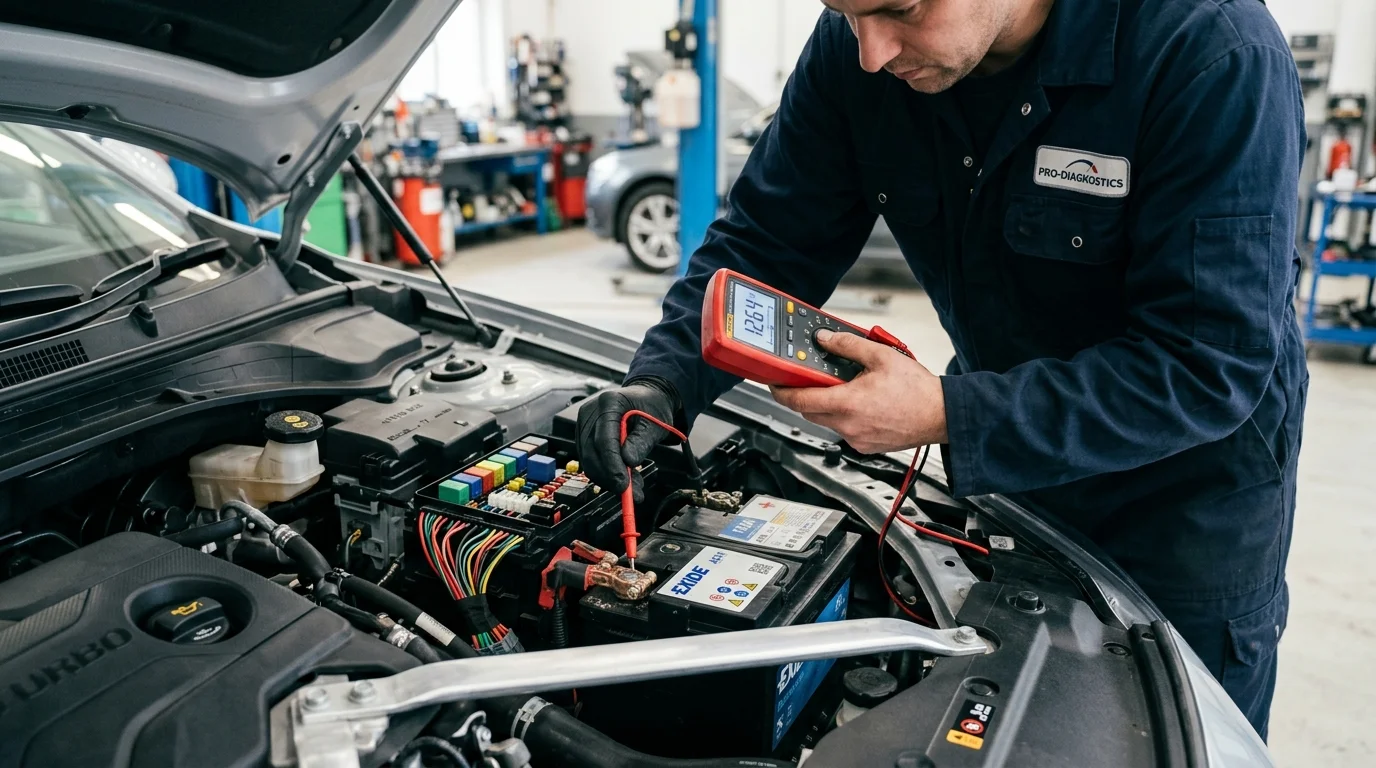
If you want to do a quick check yourself, a multimeter is a great tool. Set it to DC voltage and touch the probes to your battery terminals. A healthy battery reads about 12.6 volts when the engine is off. Start the engine and check again. A working alternator should push the reading up to between 13.8 and 14.4 volts. Anything outside that range means something needs attention.
When to See a Professional
Some electrical problems are easy to handle yourself. Replacing a fuse or cleaning battery terminals does not need a mechanic. But a lot of car electrical problems are tricky to track down without the right tools. Things like short circuits, wiring harness damage, or a failing engine control module need a professional with a proper scan tool and experience in electrical diagnosis.
Honestly, if you are chasing a problem that keeps coming back, or if you smell burning plastic, stop driving and call someone. Some things are not worth the risk.
Conclusion
Electrical issues in cars are some of the most common but also most overlooked problems drivers face. The signs are there early. Slow starts, dim lights, blown fuses, burning smells. If you catch them fast, the fix is usually simple and affordable. Wait too long, and what started as a $15 fuse becomes a $2,000 wiring repair. Pay attention to what your car is telling you. It is smarter than most people give it credit for.
Have you had a weird electrical problem in your car? I would love to hear what it turned out to be. Drop it in the comments below!
Frequently Asked Questions
What are the most common electrical issues in cars?
The most common ones are battery failure, alternator problems, blown fuses, starter motor failure, and faulty spark plugs. Each one shows up with different symptoms, but they all affect how your car starts and runs. Catching them early saves you money.
How do I know if my car has an electrical problem?
Watch for signs like dimming or flickering headlights, slow engine cranking, dashboard warning lights turning on, power accessories that stop working, or a burning smell inside the car. Any one of these is a reason to get your car checked soon.
Can a bad alternator drain a car battery?
Yes, absolutely. The alternator is supposed to charge the battery while the engine runs. If the alternator is failing, it cannot recharge the battery. Even a brand-new battery will go dead if the alternator is not doing its job. Always check both the battery and the alternator together.
How much does it cost to fix electrical problems in a car?
It depends on the problem. Replacing a fuse might cost just a dollar or two. A new battery costs $100 to $200. A new alternator is $350 to $600. Serious wiring repairs can run $1,200 to $2,000 or more. Getting a diagnosis first (usually $120 to $180) helps you know exactly what needs fixing.
Can I drive with electrical problems?
It depends on how serious the problem is. A blown fuse that killed your radio is fine to drive with for a short time. But dim headlights, a burning smell, or a car that barely starts are serious safety risks. Do not drive with those problems. Get the car checked right away.