
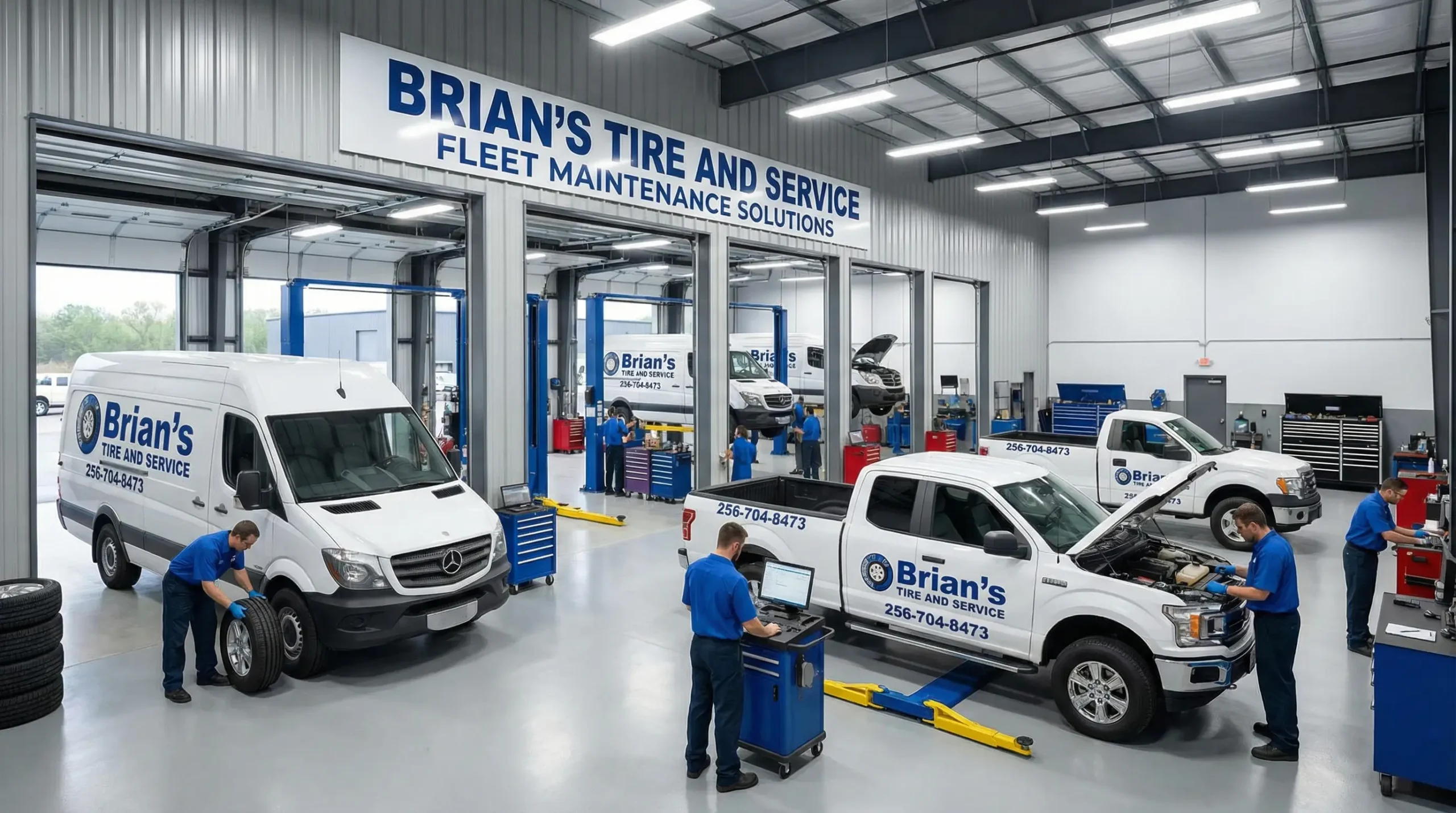
Running a business in Huntsville with trucks and vans is not easy. You need these vehicles working every single day. When one truck breaks down, you lose money fast. I know this because I worked with many Huntsville companies over the years.
Good fleet maintenance keeps your vehicles on the road. It saves you money. It keeps your drivers safe. In this guide, I will share everything you need to know about keeping your fleet in great shape in Huntsville, Alabama.
What Is Fleet Service Maintenance?
Fleet service maintenance means taking care of all your business vehicles. It is not just fixing broken trucks. It is a plan to keep every vehicle running well before problems start.
Think of it like this: You brush your teeth every day to stop cavities, right? Fleet maintenance works the same way. You check your vehicles, change the oil, and replace worn parts before they fail.
A good fleet maintenance program includes regular checks, oil changes, tire work, and fixing small problems fast. This stops big, expensive repairs later.
How Fleet Maintenance Differs from Regular Car Maintenance
Your personal car and your work trucks need different care. Here is why:
Commercial vehicles work harder. They drive more miles each week. They carry heavy loads. They run in all types of weather. Because of this hard work, they need service more often.
Your car might need an oil change every 5,000 miles. Your delivery van might need one every 3,000 miles. Fleet vehicles also need special checks that regular cars do not need. Things like brake systems get checked more often because safety is so important when drivers work all day.
Why Huntsville Businesses Need Strong Fleet Programs
Huntsville has grown so much in the past few years. More businesses mean more competition. You cannot afford to have trucks sitting in the shop when customers need deliveries.
I talked to a contractor in Huntsville last year. He lost a big job because his truck broke down during the project. The repair took three days. He told me it cost him $15,000 in lost work. That is when he started a real maintenance program.
Huntsville roads can be tough on vehicles too. Hot summers, occasional ice in winter, and construction zones all wear down trucks faster. A good fleet maintenance plan protects your investment and keeps your business moving.
Types of Fleet Vehicles in Huntsville
Not all fleet vehicles are the same. Understanding what you have helps you plan better care.
Common Commercial Vehicles
Most Huntsville businesses use these types:
Delivery vans are popular for local routes. They carry packages, tools, or supplies around town. Pickup trucks work great for contractors, landscapers, and service companies. You see them everywhere in Huntsville.
Box trucks handle bigger loads. Furniture stores, moving companies, and food distributors use them daily. Some companies run SUVs for sales teams or managers who visit job sites.
Each type needs different care. Vans get more city driving, which wears brakes faster. Trucks carrying heavy loads need more frequent tire checks and suspension work.
Specialized Fleet Vehicles
Some Huntsville businesses need special equipment. Construction companies use dump trucks and cement mixers. Utility companies have bucket trucks for power line work.
These vehicles cost a lot. A new bucket truck can cost $100,000 or more. You want them working, not broken. Special equipment often needs trained technicians who know how these machines work.
According to the U.S. Bureau of Labor Statistics, heavy vehicle technicians need special skills and training. Finding good help for specialty vehicles takes time, so preventing breakdowns matters even more.
The Main Types of Fleet Maintenance
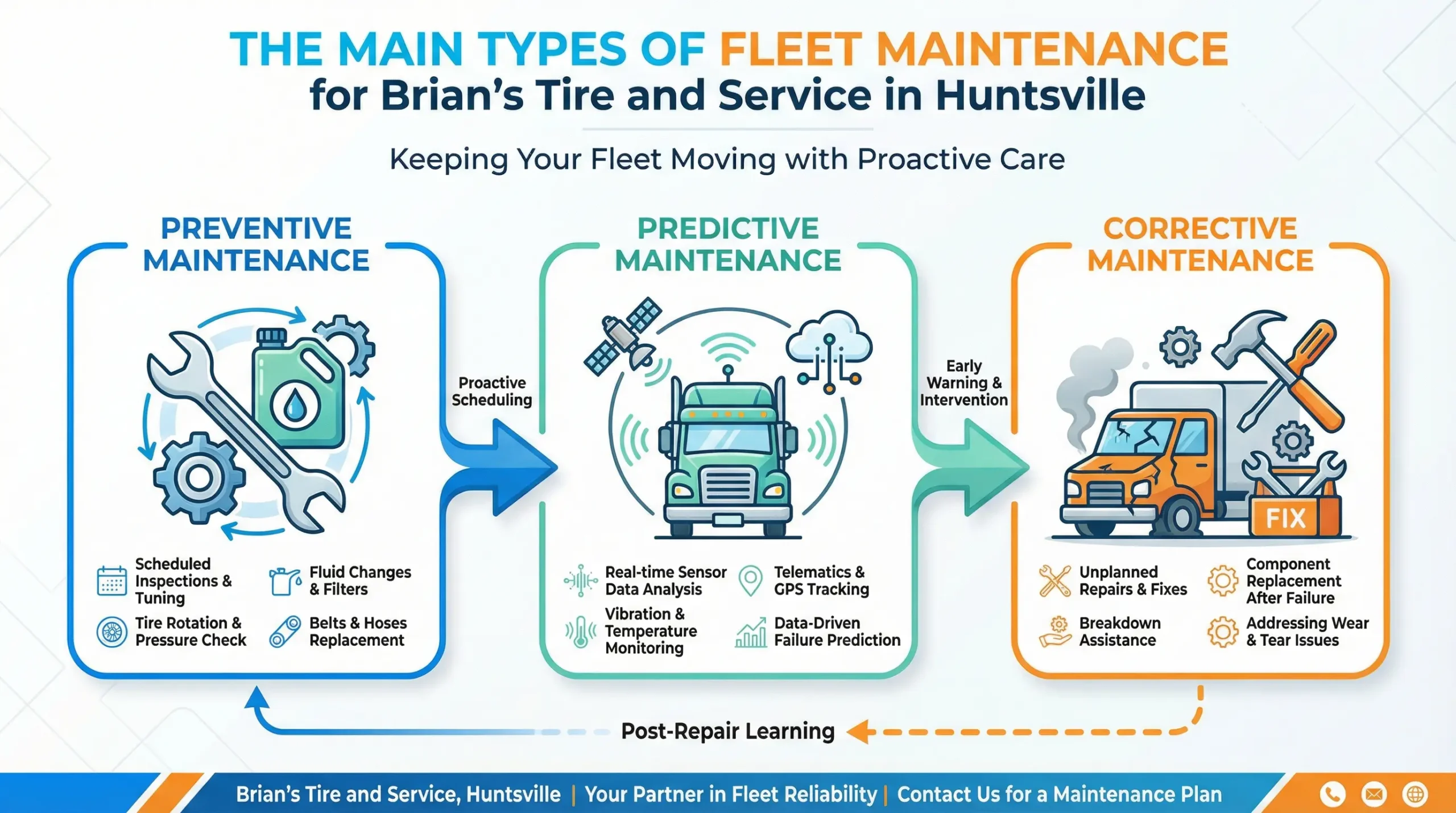
There are three main ways to maintain fleet vehicles. Smart companies use all three together.
Preventive Maintenance Explained
Preventive maintenance means servicing vehicles on a schedule. You do not wait for things to break. You change oil every so many miles. You rotate tires regularly. You replace parts based on time or use.
This is the most important type of maintenance. It stops about 70% of breakdowns before they happen. I saw a delivery company in Huntsville cut its repair bills by half just by starting regular oil changes and inspections.
Here is what preventive maintenance includes:
Regular oil changes keep engines running smoothly. Tire rotations make tires last longer and save money. Brake inspections catch problems before brakes fail. Fluid checks find leaks early. Filter changes keep engines clean and powerful.
Most experts say check commercial vehicles every month or every 5,000 miles. Heavy-use vehicles might need checks every 3,000 miles.
Predictive Maintenance and How It Works
Predictive maintenance uses technology to watch your vehicles. Special sensors and software tell you when parts will fail before they actually break.
Modern GPS tracking systems do more than show where trucks are. They monitor engine health, check if drivers are hard on brakes, and even measure fuel use. A computer learns how each vehicle runs and warns you about problems coming.
I know a plumbing company in Huntsville that started using telematics last year. The system warned them that a van’s battery was weak. They replaced it on Saturday. On Monday, they had a big emergency call. Without that battery change, the van would have died right when they needed it most.
This technology costs money to start. But it can cut emergency repairs by 30% to 40%. That saves a lot in the long run.
Key Components of a Fleet Maintenance Program
Building a good fleet maintenance program takes planning. Here are the most important parts.
Regular Inspections and Checks
Inspections are your first defense against breakdowns. You need to check vehicles before problems start.
Daily checks by drivers help a lot. Before starting each day, drivers should look at tires, lights, and fluid levels. This takes five minutes but catches many problems.
Monthly inspections should be deeper. A technician checks brakes, belts, hoses, and all fluids. They look under the vehicle for leaks or damage. They test the battery and charging system.
Many Huntsville companies skip this step to save time. That is a mistake. One flat tire on the highway costs more than a monthly check.
The Commercial Vehicle Safety Alliance recommends detailed inspections to keep vehicles safe and legal. Following their guidelines helps you stay compliant and avoid fines.
Scheduled Servicing and Repairs
Create a maintenance schedule for each vehicle. Write down when you did the last oil change. Note the current miles. Set a reminder for the next service.
Modern fleet management software makes this easy. It sends alerts when service is due. It tracks what work was done on each vehicle. Some programs even order parts automatically.
Without a schedule, you forget things. One missed oil change can damage an engine. That turns a $50 service into a $5,000 repair.
I use a simple rule: If a vehicle runs every day, inspect it every month and service it every quarter. Adjust based on how hard the vehicle works.
Benefits of Proper Fleet Maintenance
Good fleet maintenance helps your business in many ways. The benefits go way beyond just avoiding breakdowns.
Saving Money on Repairs and Downtime
When you maintain vehicles right, they break down less. Fewer breakdowns mean lower repair bills. You also save money on towing and emergency service calls.
But the biggest savings come from less downtime. Every hour a truck sits broken, you lose money. Deliveries get delayed. Customers get upset. Workers sit idle.
One Huntsville construction company told me they saved $40,000 last year with preventive maintenance. They spent $8,000 on regular service but avoided three major breakdowns that would have cost much more.
Regular maintenance also helps vehicles last longer. A well-maintained truck can run 300,000 miles or more. Poor maintenance might kill that same truck at 150,000 miles. That is like throwing away half your investment.
Keeping Drivers Safe on Huntsville Roads
Driver safety should be your top concern. Well-maintained vehicles are safer vehicles.
Good brakes stop faster. Proper tires grip better in rain. Working lights help other drivers see you. All of these things prevent accidents.
Accidents hurt people. They also cost your business through insurance claims, legal fees, and lost work time. The National Highway Traffic Safety Administration reports that poorly maintained tires cause thousands of accidents each year.
Taking care of your fleet shows you care about your team. Drivers notice when vehicles are clean, safe, and reliable. This helps with driver retention too. Good drivers want to work for companies that respect them.
Common Fleet Maintenance Challenges
Even with good plans, fleet maintenance has challenges. Here are the big ones I see in Huntsville.
Managing Costs and Budgets
Maintenance costs add up fast. Oil, tires, brakes, and labor all cost money. For a 10-truck fleet, you might spend $30,000 to $50,000 per year on maintenance.
The challenge is balancing current spending with future savings. Cheap maintenance might save money today but cost more later. Using quality parts and good service providers pays off over time.
I suggest setting aside 15% to 20% of your fleet operating budget for maintenance. Track every dollar spent. Look for patterns. If one vehicle costs way more than others, maybe it is time to replace it.
Tracking Multiple Vehicles
Managing one truck is easy. Managing 10 or 20 trucks gets complex fast. Each vehicle has different mileage, different service needs, and different problems.
Without good tracking, you lose information. You forget when the last service happened. You miss upcoming inspections. Records get lost.
Fleet management software solves this problem. It keeps all vehicle information in one place. You can see at a glance which trucks need service soon. You can compare costs across your whole fleet.
Many Huntsville companies still use paper records or spreadsheets. Those work for very small fleets, but they become a mess as you grow. Investing in good software saves time and prevents mistakes.
How Often Should You Service Fleet Vehicles?
This is one of the most common questions I get. The answer depends on several things.
Understanding Mileage and Time Intervals
Most fleet vehicles need service every 3,000 to 5,000 miles for oil changes. Heavy-duty trucks might need it more often. Check your vehicle manual for exact numbers.
But miles are not the only factor. Time matters too. If a vehicle sits unused for months, fluids can break down. Batteries can die. Tires can develop flat spots.
A good rule: Service vehicles every three months OR every 5,000 miles, whichever comes first. This keeps everything fresh and working.
Creating Your Maintenance Schedule
Start by listing all your vehicles. Write down the year, make, model, and current miles for each one. Check the manufacturer’s recommended maintenance schedule. Create a calendar showing when each vehicle needs service.
Spread out the work if possible. Do not schedule all vehicles for the same week. This keeps some trucks on the road while others are in the shop.
Use technology to help. Set phone reminders. Use fleet software that sends automatic alerts. Make it impossible to forget.
I learned this lesson the hard way years ago. I forgot about a van’s service. The engine seized up three weeks later. That $100 oil change became a $8,000 engine replacement.
Essential Fleet Maintenance Tasks
Some maintenance tasks matter more than others. Here are the most important ones.
Monthly Maintenance Checklist
Every month, check these things on each vehicle:
Tire pressure and tread depth – Low pressure wastes fuel and wears tires fast. Fluid levels – Check oil, coolant, brake fluid, and windshield washer fluid. Battery condition – Clean terminals and test the charge. Lights and signals – Replace any burned-out bulbs. Brakes – Listen for squealing or grinding sounds.
Also, walk around the vehicle looking for damage, leaks, or anything unusual. This takes 15 minutes per vehicle but prevents many problems.
Annual Maintenance Requirements
Once per year, do deeper work:
Transmission service – Flush and replace transmission fluid. Coolant flush – Replace engine coolant to prevent overheating. Brake system service – Replace brake pads and check all brake components. Exhaust system check – Look for leaks or damage. Suspension inspection – Check shocks, struts, and other parts.
Annual maintenance costs more, but it extends vehicle life significantly. Budget for it and do not skip it.
Choosing Between In-House and Outsourced Fleet Services
This decision depends on your fleet size and business needs.
Benefits of In-House Maintenance Teams
If you have many vehicles, hiring your own technicians makes sense. You get faster service. Your team learns your vehicles well. You have more control over quality and timing.
In-house maintenance works best for fleets of 20 or more vehicles. Smaller fleets usually cannot afford the equipment, space, and staff needed.
When to Outsource Fleet Services in Huntsville
Most Huntsville businesses should outsource. Good fleet service shops have all the tools and expertise. They can handle multiple vehicle types. They often get better prices on parts.
Outsourcing also means no headaches about hiring, training, or managing technicians. You pay for the work you need, when you need it.
The key is finding a reliable fleet service provider in Huntsville who understands commercial vehicles. Look for shops with ASE-certified technicians and good reviews from other businesses.
Fleet Maintenance Technology and Tools
Technology has changed fleet maintenance dramatically in recent years. Here are the tools that help most.
GPS Tracking and Telematics
GPS tracking shows where your vehicles are at all times. But modern systems do much more. They track driving behavior, monitor engine performance, and alert you to problems.
Telematics can tell you if a driver is speeding, braking hard, or wasting fuel. This information helps you coach drivers to be safer and more efficient.
The data also helps plan maintenance. The system tracks miles automatically. It reminds you about upcoming service. Some systems even diagnose check engine lights remotely.
Prices have dropped a lot. You can now get basic GPS tracking for $20 to $30 per vehicle per month. For a small fleet, this is affordable and very valuable.
Fleet Management Software
Fleet management software brings everything together in one place. You can track maintenance, schedule service, order parts, and view reports.
Good software saves time. Instead of paper files or spreadsheets, everything is digital and searchable. You can pull up any vehicle’s history in seconds. You can see which vehicles cost the most to maintain. You can generate reports for taxes or insurance.
Many programs also connect to your GPS system and accounting software. This creates one complete picture of your fleet operations.
Finding Quality Fleet Service Providers in Huntsville
Choosing the right shop for your fleet matters a lot. Here is what to look for.
What to Look for in a Fleet Service Shop
First, make sure they have experience with commercial vehicles. Regular car shops might not understand the needs of trucks and vans.
Look for ASE-certified technicians. This certification shows they have proper training and skills. Ask about their warranty on parts and labor. Good shops stand behind their work.
Location matters too. Find a shop close to your business or routes. This makes drop-offs and pickups easier. Some shops even offer pickup and delivery service for fleet customers.
Questions to Ask Your Fleet Service Provider
Before choosing a shop, ask these questions:
How many fleet accounts do you currently serve? What is your average turnaround time for common repairs? Can you handle all makes and models in our fleet? Do you offer discounts for multiple vehicles? Can you work with our maintenance schedule?
Also ask about communication. Will they call or email when work is needed? Can you get detailed reports on what was done?
A good fleet service shop becomes a partner in keeping your vehicles running. Take time to find the right one.
Conclusion
Fleet service maintenance is not exciting work, but it is essential for any Huntsville business with vehicles. Good maintenance saves you money, keeps drivers safe, and prevents costly breakdowns.
Start with a simple plan. Schedule regular inspections. Do preventive maintenance on time. Keep good records. Whether you do work in-house or use a local service provider, consistency matters most.
Technology can help a lot. GPS tracking, telematics, and fleet management software make managing vehicles easier than ever. These tools pay for themselves through better efficiency and fewer problems.
If you run vehicles in Huntsville, invest in proper fleet maintenance today. Your business, your drivers, and your bank account will all benefit. Take it from someone who has seen what happens when companies skip this important work. The cost of prevention is always less than the cost of breakdowns.
Need expert fleet service in Huntsville? Contact Brian’s Tire and Service for professional fleet maintenance solutions that keep your vehicles running strong. Our experienced team understands the unique needs of Huntsville businesses.
Frequently Asked Questions
What is the difference between fleet maintenance and fleet management?
Fleet maintenance focuses on keeping vehicles in good working condition through service and repairs. Fleet management is broader – it includes maintenance but also covers tracking vehicles, managing drivers, planning routes, and controlling costs. Think of maintenance as one important part of overall fleet management.
How much does fleet maintenance cost in Huntsville?
Costs vary based on fleet size and vehicle types. For a typical delivery van, expect $2,000 to $4,000 per year in maintenance costs. Trucks might cost $3,000 to $6,000 annually. Setting aside 15% to 20% of your total fleet budget for maintenance is a good planning number.
What are the most important fleet maintenance tasks?
The most critical tasks are regular oil changes, tire inspections and rotations, brake checks, fluid level monitoring, and battery testing. These simple things prevent most breakdowns and keep vehicles safe. Do not skip monthly inspections – they catch small problems before they become big expensive ones.
How can I reduce my fleet maintenance costs?
Start with good preventive maintenance – it costs less than emergency repairs. Train drivers to report problems early. Keep detailed records to spot patterns and high-cost vehicles. Consider telematics to monitor vehicle health and driver behavior. Sometimes replacing an old, expensive-to-maintain vehicle saves money compared to constant repairs.
Do I need special insurance for fleet vehicles?
Yes, commercial vehicle insurance is different from personal auto insurance. Fleet policies can cover multiple vehicles under one plan, often saving money. Talk to an insurance agent who specializes in commercial fleets. They can explain coverage options and help you get the right protection for your Huntsville business.