
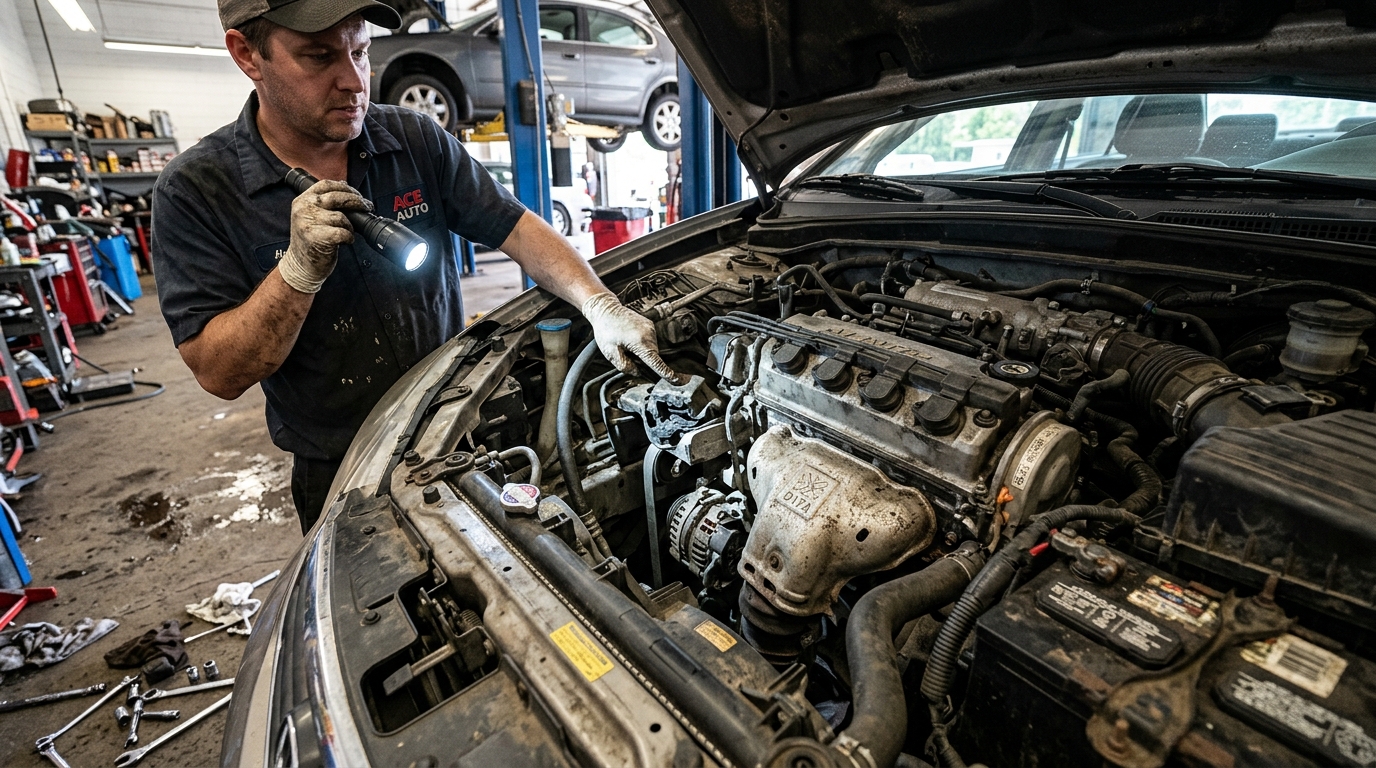
Your car starts shaking a little more than usual. You hear a clunk from under the hood when you shift gears. Most people ignore it. But that clunk? That shake? It could be your engine mount telling you it is done. And if you keep ignoring it, the repair bill gets a lot worse real fast.
Signs of an engine mount replacement are easy to miss if you do not know what to look for. In this guide, I will walk you through every sign, its causes, how much it costs to fix, and whether you should do it yourself or take it to a mechanic. Let us get into it.
What Is an Engine Mount and Why Does It Matter?
An engine mount, also called a motor mount, is a small part that holds your engine to your car’s frame. Most cars have two to four of them. They are usually made of metal and rubber. The metal gives strength. The rubber absorbs the shaking and noise from the engine so you do not feel it in the cabin.
Think of it like this: your engine is always moving, spinning, and shaking. Without engine mounts, all of that shaking would go straight into the car’s body, your seat, and your hands on the steering wheel. The mounts take the hit so you do not have to.
They also keep the engine in the right place. If the engine moves too much, it can damage hoses, belts, the exhaust system, and even the transmission. So yes, these small parts do a very big job.
How Long Do Engine Mounts Last?
Honestly, there is no exact date when they will fail. But most motor mounts last between 5 to 10 years or around 60,000 to 100,000 miles under normal driving conditions. That is the general range.
I once had a car that hit 80,000 miles with zero mount issues. Then I bought an older used car and the mounts were shot at just 55,000 miles. Why? The previous owner drove hard and the engine had a slow oil leak that soaked the rubber. Oil on rubber is not good at all. It eats away at it and speeds up the breakdown.
Your driving style, your climate, and whether you have any leaks all affect how long your engine mounts hold up. That is why regular inspection matters, even during routine oil changes.
The 7 Clear Engine Mount Replacement Signs
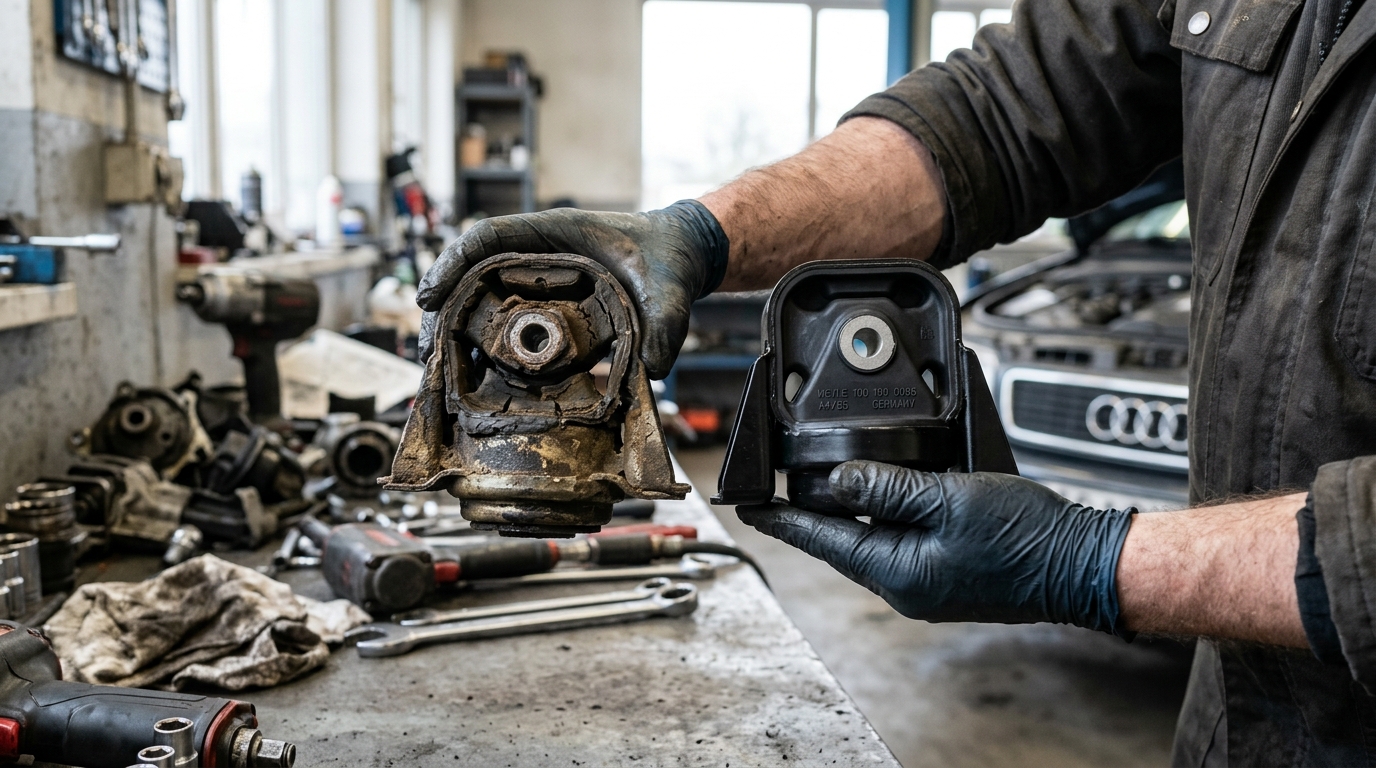
Sign 1: Excessive Vibration You Can Feel
This is the most common sign of a failing engine mount. When the rubber inside the mount starts to break down, it cannot absorb vibrations the way it should. So what happens? That vibration travels straight into the cabin.
You will feel it in your steering wheel, your seat, or even the floor under your feet. It is worse when the car is idling or when you accelerate. Some light vibration is normal in any car. But if it suddenly gets stronger or feels different, that is your sign something is wrong.
According to AutoZone’s motor mount guide, excessive vibration from worn mounts can even trigger a Check Engine Light because the engine movement can cause false knock sensor or misfire codes. So do not just clear that warning light without checking the mounts.
Sign 2: Clunking or Banging Noises From the Engine Bay
Do you hear a loud clunk or bang when you start the car? What about when you shift gears or speed up? That noise is the engine physically moving inside the engine bay and hitting other parts. That is a bad sign.
When an engine mount wears out or breaks, it can no longer hold the engine still. The engine rocks around and makes contact with other components. That contact creates that scary clunking sound. The longer you wait, the more damage it causes to nearby parts like radiator hoses, fan belts, and the exhaust system.
To be fair, not every clunk is a bad mount. But combined with vibration or rough shifting, clunking noises are a strong signal to get your mounts checked right away.
Sign 3: Engine Lurching at Startup or When Shifting Gears
Here is one that surprises a lot of people. You turn the key, the engine fires up, and the car sort of jumps or lurches forward. Then it settles. You turn the car off and it does it again. That lurch is the engine moving because the mount is not holding it tight enough.
The same thing can happen when you shift from Park to Drive or when you change gears in a manual car. There is a jolt or thump that you should not be feeling. That is the engine torque pushing the engine around with nothing to stop it properly.
I remember driving my old hatchback and every time I took off from a traffic light, there was this thud under the hood. I thought it was the transmission at first. Turned out, both front motor mounts were completely gone. Lesson learned. Never assume.
Sign 4: Engine Misalignment or Visible Sagging
Pop the hood and take a look. Is the engine sitting straight? Or does it look like it is leaning or sagging to one side? If the mounts are badly worn, the engine can actually droop or shift position inside the engine bay.
This engine misalignment is a serious problem. It puts stress on the driveshaft, exhaust system, and transmission. It can cause uneven wear on other parts and make your vehicle pull slightly to one side when you drive.
A quick visual check during your oil change can catch this early. If something looks off with how the engine sits, tell your mechanic to check the mounts right away.
Sign 5: Unusual Movement When You Accelerate or Turn
If your engine rocks visibly when you press the gas, that is a red flag. Good motor mounts hold the engine steady during acceleration, cornering, and sudden braking. If the mounts are weak, you can sometimes see the engine shifting or rocking when you rev it hard.
This excessive movement can stretch hoses and snap belts. Over time, it can also damage the engine’s connection to the transmission. That means bigger and far more expensive repairs down the road.
Sign 6: Visual Damage: Cracks, Corrosion, or Fluid Leaks
Sometimes your eyes are the best diagnostic tool. If you can see the engine mount and it looks cracked, corroded, or warped, it is time to replace it. Rubber that has cracked has already lost most of its ability to absorb vibration and shock.
If you have a fluid-filled hydraulic mount, look for any signs of leaking fluid around it. Once that fluid is gone, the mount loses its dampening ability almost completely. Any leak from a hydraulic mount means replacement, not repair.
Also watch for oil stains on the rubber. According to Autoscope Car Care, oil leaks that drip onto rubber mounts can eat away at them and cause premature failure, so fixing any oil leak quickly helps protect your mounts too.
Sign 7: Rough or Jerky Gear Changes
This one is easy to miss because people usually blame the transmission first. But if your gear changes feel rough, jerky, or delayed, a worn engine mount could be the reason.
The engine and transmission need to be properly aligned and stable for gears to shift smoothly. When mounts are failing, the engine shifts slightly out of position. That affects how the transmission connects and how power moves through the drivetrain. You feel it as a jerk or thud when the gear engages.
Before spending money on transmission repairs, always have your engine mounts inspected. It could save you a lot of money.
What Causes Engine Mounts to Fail?
Common Causes of Engine Mount Damage
The biggest enemy of your engine mount is time. The rubber simply wears out with age and stress. It loses its elasticity, just like an old rubber band that snaps when you stretch it too far. Small cracks form over time and eventually the whole mount loses its ability to do its job.
But there are other things that speed up the process. Oil leaks that drip onto the rubber are a major one. Aggressive driving, hard launches, over-revving, and slamming the clutch all put extra stress on the mounts. If you modified your engine for more power, your stock mounts may not handle the increased load.
Hot weather and extreme temperatures also affect rubber over time. The more heat cycles the rubber goes through, the faster it breaks down. That is why regular inspection is the best defense.
Engine Mount Replacement Cost: What to Expect
Here is a simple breakdown to help you plan your budget. Keep in mind that costs vary by vehicle, location, and shop rates.
| Vehicle Type | Parts Cost (Per Mount) | Labor Cost | Total Estimate |
| Economy/Compact Cars | $10 – $60 | $80 – $150 | $100 – $300 |
| Mid-Size Sedans/SUVs | $50 – $120 | $100 – $200 | $200 – $450 |
| Trucks / Large SUVs | $80 – $150 | $150 – $300 | $300 – $600 |
| Luxury / Performance Cars | $100 – $250+ | $200 – $400+ | $400 – $900+ |
| Hydraulic/Electronic Mounts | $150 – $400 | $200 – $500 | $400 – $1000+ |
Cost ranges based on commonly reported figures from automotive repair sources (2024-2025). Actual costs may vary by region and vehicle.
One tip: if one mount is gone, the others are probably not far behind. Many mechanics recommend replacing all mounts at the same time to keep the engine balanced and avoid coming back in a few months to do it again.
What Happens If You Ignore the Signs?
Can You Drive With a Bad Engine Mount?
Technically yes, but you really should not. Driving with a badly worn or broken engine mount puts your entire engine at risk. The engine can shift around and damage hoses, belts, the exhaust, and the transmission. In extreme cases, a mount that fully breaks can allow the engine to move so much that it drops debris on the road, creating a hazard for other drivers.
There is also a real safety risk. Engine movement affects the handling of your car. In an emergency where you need to brake hard or swerve, a loose engine can make your car respond in unpredictable ways. That is not something you want to find out at 60 mph.
The bottom line: if you spot any of these engine mount replacement signs, get it checked and fixed quickly. Waiting always costs more in the end.
DIY or Professional Replacement?
If you are handy with tools and comfortable working under a car with a floor jack and jack stands, replacing a non-load-bearing engine mount is possible at home. You find the mount, unbolt the old one, and bolt in the new one. Some people can knock it out in an afternoon.
But load-bearing mounts are a different story. These support part of the engine’s weight. To replace them, you need to safely support the engine with a jack while you work. If you get that wrong, the engine drops. That is dangerous and expensive. For those jobs, a professional mechanic is the safer call.
Also think about your engine bay. Some cars are very tight and you need to remove other parts just to reach the mount. For complex jobs, let a pro handle it. The labor cost is worth the peace of mind.
Conclusion
Engine mounts are small parts that do a huge job. They keep your engine still, absorb the vibration, and protect everything around it. When they wear out, your whole car feels it. The good news is that the signs are clear if you know what to look for.
Watch for excessive vibration, clunking noises, engine lurching, misalignment, unusual movement, visible damage, or rough gear changes. Any one of these is worth investigating. All of them together means it is time to act right now.
I would love to hear if this helped you figure out what is going on with your car. Have you dealt with a bad engine mount before? Drop your experience in the comments. It might help someone else going through the same thing.
Frequently Asked Questions
How do I know if my engine mount needs to be replaced?
The most common engine mount replacement signs include strong vibrations you can feel in the cabin, clunking or banging noises from the engine bay, the engine lurching at startup or gear change, visible cracks or fluid leaks on the mount, and rough gear shifting. If you notice one or more of these signs, have your mounts inspected by a mechanic right away.
How long does an engine mount last?
Under normal driving conditions, most engine mounts last between 5 to 10 years or 60,000 to 100,000 miles. However, aggressive driving, oil leaks on the rubber, and extreme heat can shorten that lifespan significantly. Regular inspection during routine maintenance helps catch wear early.
Can a bad engine mount damage other car parts?
Yes. A worn or broken motor mount allows the engine to move more than it should. This excessive movement can damage radiator hoses, fan belts, the exhaust system, and even the transmission. It can also put extra stress on the driveshaft and chassis, leading to expensive repairs if ignored.
How much does it cost to replace engine mounts?
The cost to replace an engine mount ranges from around $100 to $900 or more depending on your vehicle type, the number of mounts being replaced, and labor rates in your area. Economy cars are on the lower end. Luxury vehicles and hydraulic mounts cost more. Getting all mounts replaced at once can save on labor costs overall.
Is it safe to drive with a bad engine mount?
It is not recommended. Driving with a failing engine mount puts stress on other components and can lead to serious mechanical damage. In extreme cases, a fully broken mount can allow the engine to move freely, which creates a safety hazard on the road. If you spot any engine mount replacement signs, get the car inspected as soon as possible.