
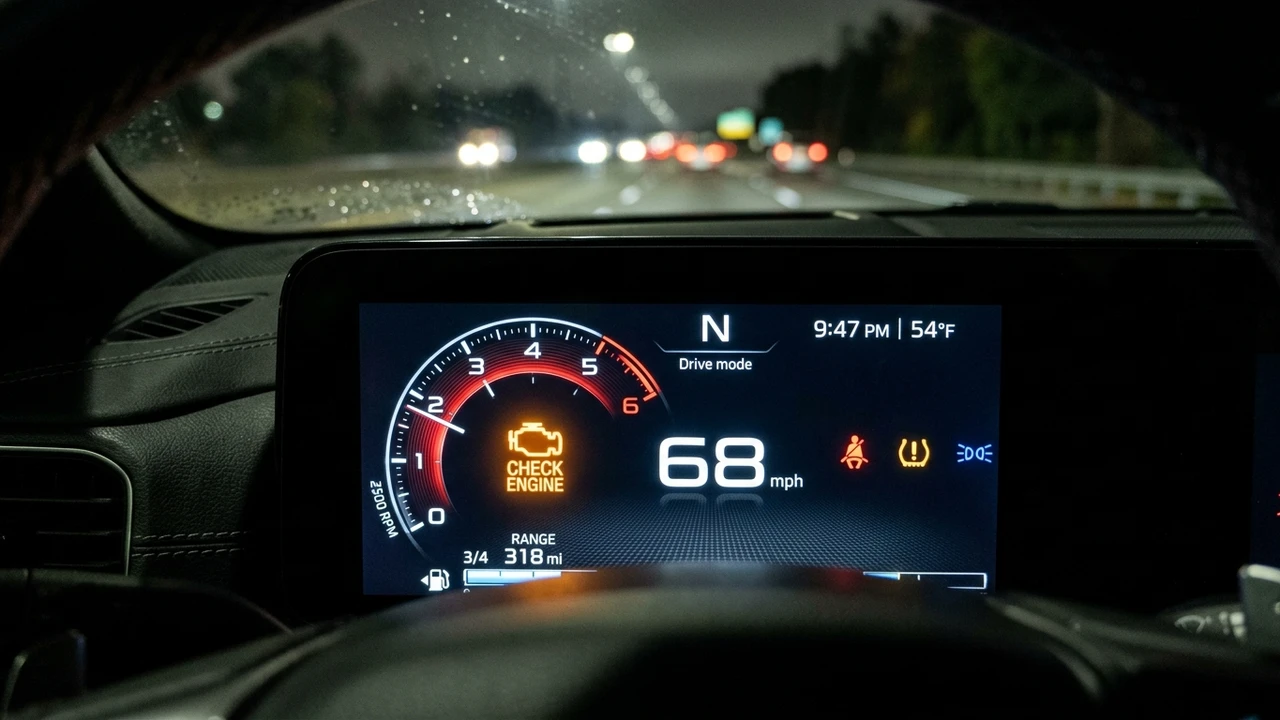
You paid for the fix. You drove away happy. Then that little glow popped back up on your dash. Ugh. It feels like a punch to the gut, right? A returning check engine light does not always mean bad news. But it always means your vehicle is still trying to tell you something, and the smart move is to listen before you spend another dollar.
Why the Check Engine Light Comes Back After a Repair

The light is not broken. It is doing its job. Your car’s computer watches dozens of sensors all day long. When one reading looks wrong, it turns on the light and saves a code. So when that same glow returns after a repair, the system is telling you the trouble it saw before has not fully gone away.
In my years under the hood, 9 out of 10 repeat lights I see come from one simple thing. The first repair treated a symptom, not the root cause. Someone swapped a part. The part was fine. The real fault sat somewhere else, quiet, waiting to trip the light again.
Here is the part that trips people up. A check engine light can turn off, stay off for a day or two, then come back. That gap does not mean the problem left. It means your car’s monitors had not finished re-testing the repair yet. Once they did, the fault showed up again.
If your light glows but the car drives fine, that is common and worth understanding on its own. Our guide on what it means when your check engine light is on but the car runs fine walks through why a steady light can hide a slow, sneaky cause.
How Your Car Decides to Turn the Light On
I’ve handled cases exactly like this hundreds of times, and the biggest surprise for most drivers is this: your car does not trust one bad reading. Since 1996, every car sold in the U.S. runs a system called OBD-II (short for On-Board Diagnostics, the built-in health checker for your engine). It runs self-tests called monitors, and it needs proof before it warns you.
Those self-tests only run under the right conditions. Cold start. Highway speed. Slow city driving. Each little test is part of a drive cycle (a set pattern of driving that lets the car check itself). Most faults must show up on two trips in a row before the light turns on for good.
That is why timing feels weird. The light may not come on the moment something breaks. The module waits, watches, and confirms. In my experience, this two-strike rule fools about 8 out of 10 drivers into thinking a problem “went away” when the car was really just still watching.
Your scanner can read three kinds of codes, and knowing the difference saves you money and worry.
| Code type | What it means | How it clears |
|---|---|---|
| Pending | A suspected fault seen once | Goes away on its own if it does not happen again |
| Confirmed | A fault seen enough times to turn on the light | Clears after a real fix plus clean drive cycles |
| Permanent | A hard-stored code that blocks cheating | Only the car’s computer can clear it after a verified fix |
What a “Drive Cycle” Really Means
A drive cycle is not one lap around the block. It is a mix of idling, city speed, and highway speed that lets each monitor finish. Skip a step and the test does not complete. That is why a car can feel fixed while the readiness check is still not done.

The Light Went Off and Then Returned, What That Means
Honestly, this is the scenario that scares folks the most. The light vanished, so the repair felt like a win. Then a few days later, it was back. To be fair, that pattern is normal, and it usually points to a fault that comes and goes with certain conditions.
Think about a loose wire or a weak sensor. When it works, the light stays off. When it fails, the code sets again. About 1 in 4 repeat-light cars I inspect have this on-and-off pattern, and it almost always traces back to heat, moisture, or a connection that shakes loose while you drive.
Electrical gremlins love to hide like this. A frayed wire or a corroded plug can pass one test and fail the next. If your car has flaky power or odd warning lights, our notes on common electrical problems in cars and what to watch for explain how a small connection fault can trip big warnings.
The lesson is simple. A light that returns is giving you data, not drama. It is telling you the repair did not hold, or a related part is now under stress. Do not clear it and hope. Read it.
Common Reasons the Same Code Shows Up Again
In our field work, I’ve found that a repeat code almost always fits one of four patterns. The trick is matching what you see to the likely cause. Roughly 7 out of 10 “comeback” jobs I handle land in the table below, so this is a solid place to start.
| What you see | Likely reason | Plain meaning |
|---|---|---|
| Same code, days later | Root cause missed | The swapped part was not the real problem |
| Same code, minutes later | Bad or wrong part | The new part is faulty or the wrong fit |
| New code near the old one | Related system stressed | The first fault hurt a second part |
| Light off, then on again | Monitor re-ran and failed | The car retested and still sees the fault |
Misfires are a classic repeat offender. A shop replaces one coil, the light clears, and then it returns because a worn plug in another cylinder was the real story. Getting ahead of that means knowing when to replace your spark plugs as a set, not one at a time.
Fuel and vapor faults come back a lot too. A gas smell, a rough idle, or an EVAP code (the system that traps fuel vapors so they do not escape) often returns when a small leak was patched but not found. If you catch a fuel odor, our page on why you smell gas in your car covers the usual leaks that fool a quick fix.
New Problem or Old Problem? How to Read the Difference
Here is a habit that will save you cash. Before you assume the repair failed, plug in a scanner and pull the code number. If it matches the old one, the first fix likely missed the root cause. If it is a brand-new number, you may have a separate issue that just happened to show up now.
The gold in your car’s computer is the freeze-frame data. This is a snapshot the module takes the moment a fault trips. It shows speed, engine temp, and load at that exact second. In practice, freeze-frame cuts my diagnosis time by about 30% because it tells me the exact conditions when things went sideways.
A basic code reader gives you the generic number. A full diagnostic tool gives you live data, pending codes, and readiness status. That gap matters. A cheap reader might say “all clear” while a permanent code still sits stored deep in the module.
If the trouble feels engine-deep, a proper test tells the truth fast. Our breakdown of the engine compression test explained shows how a real measurement beats a lucky guess when a code keeps coming back.
Did the Repair Actually Fix the Root Cause?
I’ve seen this pattern many times in my work, and it is the heart of the whole issue. A part getting replaced does not prove a problem got solved. The only proof is this: the car runs its monitors, finishes a clean drive cycle, and the light stays off on its own. No shortcut counts.
Good shops verify. We fix the fault, clear the codes, then drive the car so the system can re-test itself. If the light stays off through a complete cycle, the repair held. Skipping that step is why maybe 2 out of 10 quick jobs bounce back within a week.
Sometimes the swapped part was never the issue. A car throws an oxygen sensor code, someone replaces the sensor, and the light returns because a vacuum leak was skewing the reading the whole time. The part was innocent. The cause was upstream.
Catching the real story early beats chasing parts. Our guide on engine problems and how to catch them shows the small clues that point to a root cause instead of a random guess. That mindset is what stops the repeat visits.
Clearing a Code Is Not the Same as Fixing It
Let me be blunt about this one. Clearing a code turns off the light. It does not repair anything. When you erase codes, the car wipes its readiness monitors back to a “not ready” state, and the underlying fault is still there, hiding.
That reset has a real cost. After codes are cleared, the car must complete fresh drive cycles before those monitors read “ready” again. Until then, the car cannot pass a state emissions test, even if the light is currently off. Inspectors see the “not ready” flag right away.
Battery work causes the same reset. Disconnect the battery, and the module loses its memory, the monitors drop to zero, and the light may stay off for a while for no good reason. If your battery keeps dying and getting swapped, our page on how long car batteries last helps you avoid that constant reset loop.
So if a shop just “cleared it” and sent you off, that is a red flag. The fault was not confirmed as fixed. It was hidden. And a hidden fault almost always comes back, usually at the worst time.
What to Do the Moment the Light Returns
I’ve handled cases exactly like this before, and the drivers who stay calm save the most money. A returning light is a message, not an emergency siren, unless it is flashing. Take a breath, then work the problem in order.
Here is the simple routine I give every customer:
- Look at the light. Is it steady or blinking? A steady glow means “get it checked soon.” A blinking or flashing light means “stop soon and get help now.”
- Notice the conditions. Did it come on after gas, in the rain, or going uphill? That clue helps pin the cause.
- Scan it. Pull the code with a scanner and write it down. Do not clear it yet, so the data stays for the shop.
- Check the basics. A loose gas cap trips the EVAP light more than you’d think. Tighten it and drive.
- Do not panic-buy parts. Get the root cause confirmed first.
Following this order matters. In my experience, drivers who scan and note conditions before touching anything get an accurate diagnosis about 40% faster, because the shop is not starting from scratch. If you’re not sure what a code means, let’s take a look together and read the live data the right way.
When a Returning Light Means Stop Driving
Not all lights are equal, and this is where I get serious. A blinking or flashing check engine light is your car begging for help. It usually means a live misfire is dumping raw fuel into the exhaust, which can wreck your catalytic converter in minutes.
State inspection programs treat this the same way. According to the Missouri Gateway Vehicle Inspection Program, a blinking light warns of an active problem that “may ruin the catalytic converter, the most expensive emissions-control part on the vehicle,” and they advise you to have it serviced at once (Missouri GVIP). That same state guidance says a trained technician should test any car whose warning light stays on for more than one month.
So how do you judge it? Steady light, car feels normal: drive gently and book a check soon. Steady light with shaking, power loss, or smoke: get off the road. Blinking light: pull over safely and call for help.
If the car shakes or bogs down when the light returns, that is a strong warning sign. Our page on why your car loses power while driving explains why a returning light plus lost power should never wait.
How We Find the Real Cause in the Shop
In our field work, the difference between a lasting fix and a repeat visit is the diagnostic process, not the parts bin. Here in Huntsville, our hilly roads and hot summers put real stress on engines, so we test under conditions like the ones that trip your light in the first place. We do not guess.
We start by pulling every code, including the pending and permanent ones a basic reader skips. Then we study the freeze-frame data to see the exact moment the fault hit. Live sensor readings come next, so we can watch the system work and spot the part that is lying. This method finds the root cause on the first pass far more often than a parts-swap approach.
Only after the fault is confirmed do we repair it. Then we drive the car through a full drive cycle so the monitors re-run and the light proves it will stay off. If you’re tired of the same code coming back, bring it to Brian’s Tire and Service and we can scan it, read the real data, and find what’s actually happening.
The payoff is fewer surprises and a lighter bill over time. According to the U.S. Environmental Protection Agency, early diagnosis and timely repair often prevent far more costly damage to the engine and emissions parts down the road (EPA). Catching the cause early is cheaper than chasing it later.
How Long Before the Light Turns Off After a Good Fix
This is the question I get most, and the honest answer is: it depends on how much you drive. After a real repair, the car does not switch the light off instantly. The module waits to re-run its self-tests, and that can take a few trips. Patience here is normal.
The federal rule is clear. Per the U.S. Environmental Protection Agency, the malfunction light turns itself off after three consecutive trips where the problem does not happen again (EPA). No scanner needed. If the fix was real, the light goes dark on its own.
If you cleared the codes or need to pass emissions, you must drive a proper cycle. Ohio EPA’s OBD guidance lays out a solid pattern you can follow (Ohio EPA):
| Step | What to do | Why it matters |
|---|---|---|
| Cold rest | Let the car sit about 8 hours, then start | Lets sensors read from cold |
| Warm up | Idle a few minutes | O 2 sensor heaters wake up |
| Highway | Drive 10+ minutes at 55 mph or more | Tests the catalytic converter |
| City | About 20 minutes of stop-and-go with at least 4 idle stops | Tests EGR and EVAP |
| Repeat | Run it 2 to 5 times | Some monitors need more than one clean pass |
That same Ohio EPA guidance gives a smart tip: if you or your shop are working on the car, do not clear the codes. If the correct repair was made, the light turns off on its own during the drive cycle, which is your signal the car is truly ready.
Easy Habits That Keep the Light Off for Good
Well, the best repair is the one you never need. Small habits stop most repeat lights before they start. I’ve watched careful owners cut their surprise visits by more than half just by staying ahead of simple wear items.
Tighten your gas cap until it clicks. Change oil on time. Replace plugs as a set. Fix small leaks while they are small. These sound boring, but a loose cap or a tired plug is behind a huge share of the check engine lights I see, and both are cheap to handle early.
Keep a log too. Write down each code, the date, and what got fixed. If a number returns, you will know instantly whether it is the same old fault or something new. That simple note saves guesswork and helps any shop find the cause fast.
Have you tried keeping a little glovebox log? It sounds old-school, but it works. And if a light returns despite good care, that is real information worth acting on, not ignoring.
Final Thoughts
A returning check engine light is not the end of the world. It is your car repeating a message you have not fully answered yet. The first repair likely missed the root cause, cleared a code without a real fix, or ran into a related part under stress. None of that is hopeless.
Read the light. Note the conditions. Scan the codes and keep the freeze-frame data. Then get the fault confirmed before buying parts. Do that, drive a complete cycle, and a real fix will let the light turn off on its own. Your wallet and your engine will thank you.
Frequently Asked Questions
Why did my check engine light come back on right after I left the shop?
Most likely the repair treated a symptom, not the root cause, or a permanent code was still stored in the computer. Your car re-ran its monitors during the drive cycle and saw the same fault again. In my experience, about 2 out of 10 rushed jobs bounce back this way. Pull the code and check if it matches the old one before spending more.
How many times do I need to drive before the light turns off?
Per the U.S. Environmental Protection Agency, the light turns itself off after three clean trips in a row where the problem does not return. If codes were cleared or the battery was disconnected, you may need to repeat a full drive cycle 2 to 5 times so the readiness monitors finish. Highway and city driving both matter, so mix your trips.
Is it safe to drive with a check engine light that came back?
A steady light with a car that runs fine usually means drive gently and book a check soon. A blinking or flashing light means stop soon, because an active misfire can damage your catalytic converter. State inspection guidance says a technician should test any car with the light on for more than one month. When in doubt, get it scanned.
Can I just clear the code myself to make the light go away?
You can, but it does not fix anything. Clearing the code wipes the readiness monitors and hides the fault, so it almost always returns. It also means your car will fail an emissions test until the monitors re-run. Clear codes only after a confirmed repair, never as the fix itself.
What is the difference between a pending code and a permanent code?
A pending code is a suspected fault the car saw once and is still watching. It can clear on its own if the issue does not repeat. A permanent code is hard-stored to stop people from erasing problems to pass tests, and only the car’s computer can remove it after it verifies a real fix through a drive cycle. A basic scanner often shows only the generic codes and misses these.