

Your car gives you hints all the time. A rough start in the morning. A little shake at a red light. Gas running out faster than it should. Most people blame the fuel or the cold weather. But a lot of the time, the real problem is much smaller — and sits right inside your engine. Knowing when to replace spark plugs can save you money, protect your engine, and keep your car running the way it should.
What Do Spark Plugs Actually Do?
A spark plug has one simple job. It creates a tiny spark inside the combustion chamber to light up the air-fuel mixture. That tiny explosion pushes the piston down and makes your engine run.
Every cylinder in your engine has one spark plug. So a 4-cylinder car has four of them. A V6 has six. They fire thousands of times every minute, every single time you drive.
When they work well, your engine runs smooth. When they start to wear out, everything suffers — your fuel economy, your power, and your starts. Honestly, most car problems I hear about from friends trace back to spark plugs no one thought to check.
How Long Do Spark Plugs Last? Mileage Intervals by Plug Type
This is the question most drivers want answered first. And the honest answer is — it depends on the type of plug in your car.
Here is a simple breakdown:
| Spark Plug Type | Replacement Interval |
| Copper (conventional) | 20,000 to 30,000 miles |
| Platinum | 60,000 to 100,000 miles |
| Iridium (long-life) | 80,000 to 150,000 miles |
Conventional spark plugs (copper) need to go every 30,000 to 50,000 miles. Long-life spark plugs — the ones tipped with iridium or platinum — can go anywhere from 60,000 to 150,000 miles, depending on your car.
The best place to check is your owner’s manual. The maintenance schedule inside will tell you the exact service interval for your specific make and model. Don’t guess — just look it up.
Warning Signs Your Spark Plugs Need to Be Replaced
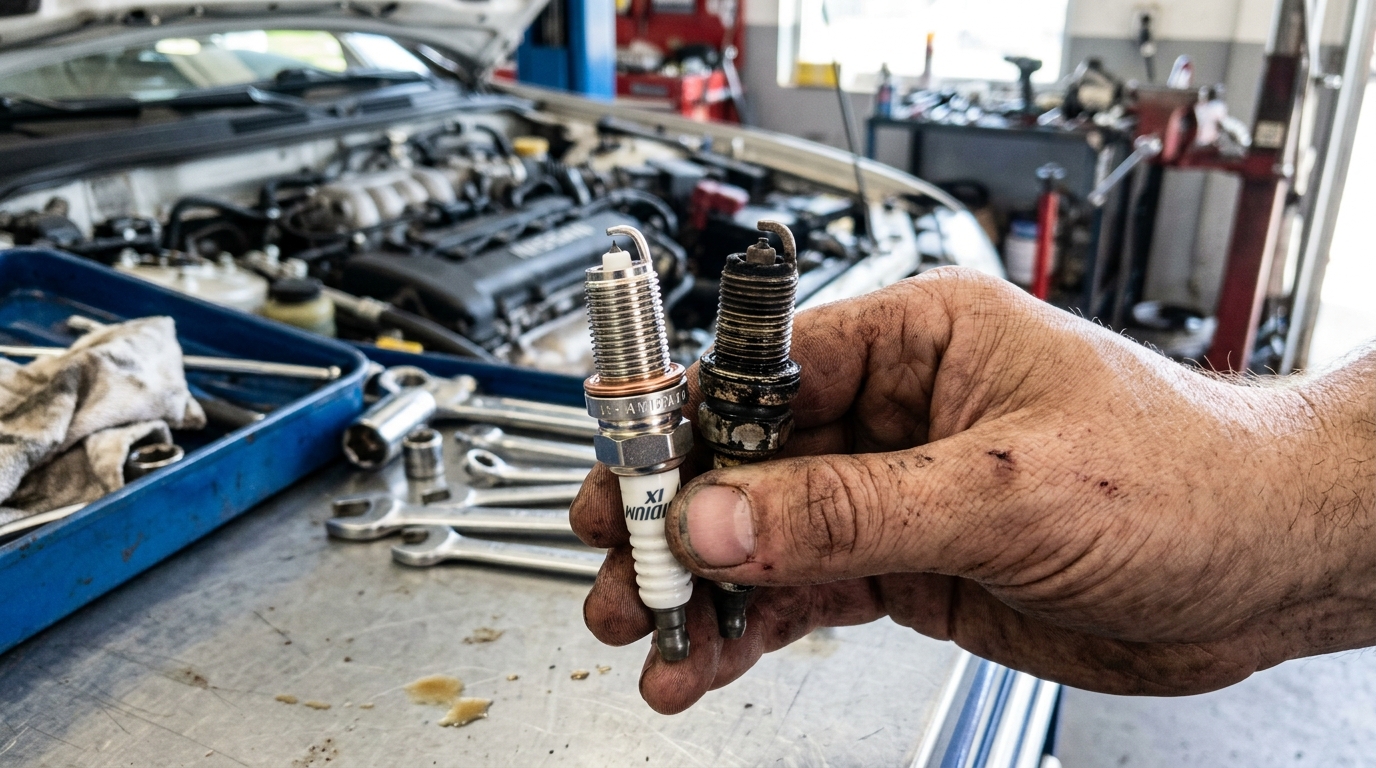
Your car will usually tell you when something is wrong. You just have to know what to listen for. Here are the most important signs that your spark plugs are wearing out.
Rough Idle, Hard Starts, and Engine Misfires
I had a neighbor once whose car shook so badly at a stoplight that people would stare. She thought the transmission was going out. Turns out, it was a single fouled spark plug causing an engine misfire.
When a plug stops firing right, that cylinder goes quiet. The engine tries to keep running on fewer cylinders and starts to shake. You will feel a rough idle — the kind where the car vibrates even when you are sitting still.
Hard starts are another big sign. If your engine cranks longer than usual before it catches, the spark plugs might not be giving a strong enough spark. Cold mornings make this even worse.
The check engine light is the most obvious alert. Your car’s computer picks up on misfires immediately and turns on the warning light. A misfire code like P0300 almost always points to a plug problem. Do not ignore that light — a misfiring engine puts stress on your catalytic converter and can cause expensive damage fast.
Poor Fuel Economy and Weak Acceleration
This one sneaks up on you. You don’t notice it right away. But over time, worn spark plugs force your engine to use more fuel to do the same work.
According to the National Institute for Automotive Service Excellence (ASE) (ase.com), misfiring spark plugs can lower fuel efficiency by up to 30%. Think about that — your car could be burning almost a third more gas than it needs to, just because of old plugs.
You might also feel that the car doesn’t accelerate like it used to. When you push the pedal, it hesitates. It feels slow and weak. That loss of horsepower happens because incomplete combustion is not giving the engine the full push it needs.
If you are filling up more often and the car feels sluggish, check those plugs before spending money anywhere else.
Types of Spark Plugs and How They Affect Replacement Time
Not all spark plugs are the same. The type your car uses makes a big difference in how long they last.
Copper vs. Platinum vs. Iridium Spark Plugs
Copper spark plugs are the oldest and most basic type. They conduct electricity very well, but the soft copper electrode wears down fast. They need to be replaced most often — usually every 20,000 to 30,000 miles. Older cars often use these.
Platinum spark plugs last longer. The harder platinum disc on the electrode holds up better under heat and pressure. These can go 60,000 to 100,000 miles. Many modern cars come with platinum plugs from the factory.
Iridium spark plugs are the best of the three. The fine-wire iridium electrode is much smaller, which means it needs less voltage to fire. This makes the spark more efficient and helps with fuel economy. They can last up to 150,000 miles in some vehicles.
The right plug for your car is the one the manufacturer recommends. Swapping to a “better” plug without checking your manual is not always a good idea. Match the heat range and type to what your engine needs.
Should You Replace All Spark Plugs at Once?
Yes — always replace the full set at the same time. Even if only one plug is giving you trouble, the others are just as old and just as worn. Replacing them all at once saves you labor costs later and makes sure every cylinder is getting a fresh, strong spark.
The only exception is if your car is very new and one plug failed due to a clear defect. But in most cases, if one is done, the others are close behind.
What Happens If You Wait Too Long to Replace Spark Plugs?
Skipping spark plug replacement is one of those things that seems fine at first. Then one day your car will not start, or a repair bill shows up that makes your jaw drop.
Damage to the Ignition Coil and Catalytic Converter
Old, worn spark plugs make your ignition coil work harder than it should. The coil has to push more voltage to force a weak spark through a worn electrode. Do that long enough and the coil itself burns out. Replacing an ignition coil costs a lot more than a set of spark plugs.
The catalytic converter suffers too. When a cylinder misfires, raw unburned fuel passes through the exhaust. That fuel burns inside the catalytic converter and can destroy it. A new catalytic converter can cost hundreds or even thousands of dollars. All of that is avoidable with a simple, affordable plug change.
According to the U.S. Environmental Protection Agency (EPA) (epa.gov), regular engine maintenance including spark plug replacement directly reduces harmful emissions and helps your car burn fuel more cleanly. It is better for your wallet and better for the air.
How to Check Your Owner’s Manual for the Right Interval
This is the easiest step and the one most people skip. Open your owner’s manual and look for the maintenance schedule section. It will list every service your car needs and at exactly which mileage.
If you don’t have a physical copy, most car brands let you find it online. Just search your car’s year, make, and model along with “owner’s manual PDF.” You can also ask a mechanic or call your dealer’s service department and they’ll tell you in two minutes.
Once you know the interval, write it down. Track your mileage. Set a reminder on your phone when you get close. Preventive maintenance is always cheaper than emergency repairs.
Conclusion
Spark plugs are small, cheap, and easy to forget. But they are working hard every single minute your engine runs. Knowing when to replace spark plugs — and doing it on time — keeps your car starting strong, running smooth, and using fuel the right way. Watch for the warning signs: rough idle, hard starts, misfires, poor gas mileage, and weak acceleration. Check your plug type and match it to the right service interval. And never wait until something breaks. A little attention now saves a lot of money later. Have you noticed any of these signs in your own car? I’d love to hear your experience in the comments.
Frequently Asked Questions
How often should I replace spark plugs?
It depends on the plug type. Copper spark plugs should be replaced every 20,000 to 30,000 miles. Platinum plugs last 60,000 to 100,000 miles. Iridium plugs can go up to 150,000 miles. Always check your owner’s manual for the exact interval for your car.
Can I drive with bad spark plugs?
You can, but it is not a good idea. Worn spark plugs cause engine misfires, poor fuel economy, rough idling, and weak acceleration. Over time, they can also damage your ignition coil and catalytic converter, leading to much more expensive repairs.
What are the signs that spark plugs are worn out?
The most common signs are a rough or shaky idle, hard starts (especially in the cold), the check engine light turning on, sluggish acceleration, and noticeably worse gas mileage. If you notice any of these, get your plugs checked soon.
Do I need to replace all spark plugs at the same time?
Yes. Even if only one plug fails, the others are just as old. Replacing all of them at once gives every cylinder a fresh spark and saves you from going back to the shop a few months later. It also keeps your labor cost to just one visit.
How much does it cost to replace spark plugs?
Copper spark plugs cost around $6 to $10 each. Platinum and iridium plugs cost $15 to $40 each. Labor at a repair shop usually runs 0.8 to 1.2 hours for a standard 4-cylinder engine. Some V6 engines are harder to access and may cost more in labor. Overall, it is one of the most affordable car maintenance jobs you can do.