
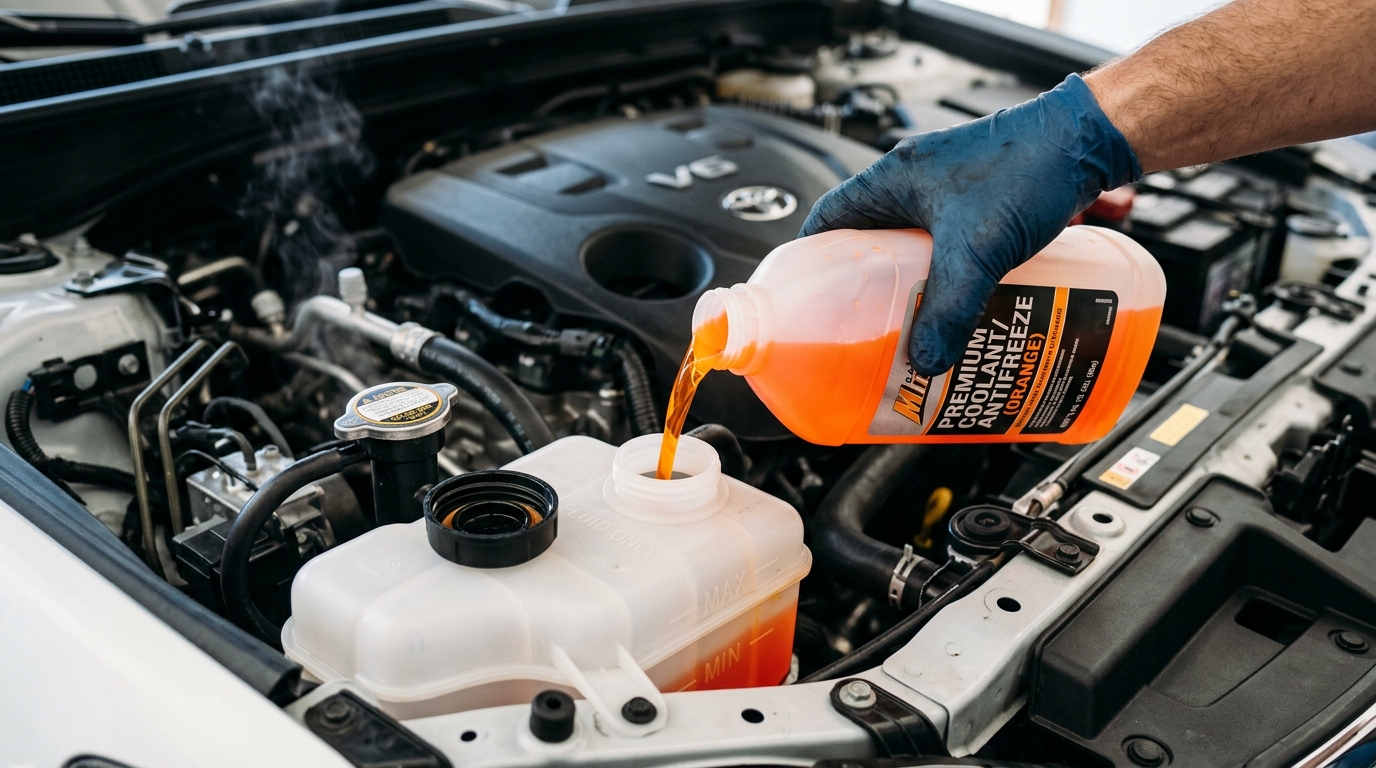
What is engine coolant? Well, here is a simple truth: your car’s engine can reach temperatures close to 2,000°F when it is running. Without coolant, those parts would melt in minutes. That one small bottle of liquid in your car does more work than most drivers ever realize.
What Is Engine Coolant?
A Simple Definition You Will Never Forget
Engine coolant, also called antifreeze or radiator fluid, is a liquid that flows through your car’s engine to keep it from getting too hot or too cold. Think of it like a blanket in winter and a fan in summer, but for your engine.
It is usually a mix of about 50% water and 50% glycol. The glycol part is key. It stops the liquid from freezing when it is cold outside and stops it from boiling away when the engine gets hot. Water alone cannot do both of these things, which is why coolant is such an important fluid.
According to the Universal Technical Institute (UTI), average combustion temperatures inside an engine can get as high as 4,500°F in some cases. Aluminum parts in the engine melt at just 1,225°F. Without coolant, you can imagine what would happen.
What Makes Coolant Different From Plain Water?
A lot of people ask, why not just use water? Honestly, I thought the same thing when I first started learning about cars. Water does move heat well. But it also freezes at 0°C and boils at 100°C. Your engine goes way beyond that range on both sides.
Water also creates rust on iron engine parts. That rust gets carried around the cooling system and can block the radiator or damage important parts. Ethylene glycol (the main type of glycol in coolant) solves both problems. It lowers the freezing point and raises the boiling point of the mix. That means your engine stays safe whether you are driving in a cold winter or a blazing hot summer.
Coolant also contains corrosion inhibitors that form a thin protective layer on metal parts inside the engine. These stop rust and metal decay from happening. Without them, your radiator, water pump, and engine block would wear out much faster.
What Is Engine Coolant Importance for Your Engine?
It Stops Your Engine From Overheating
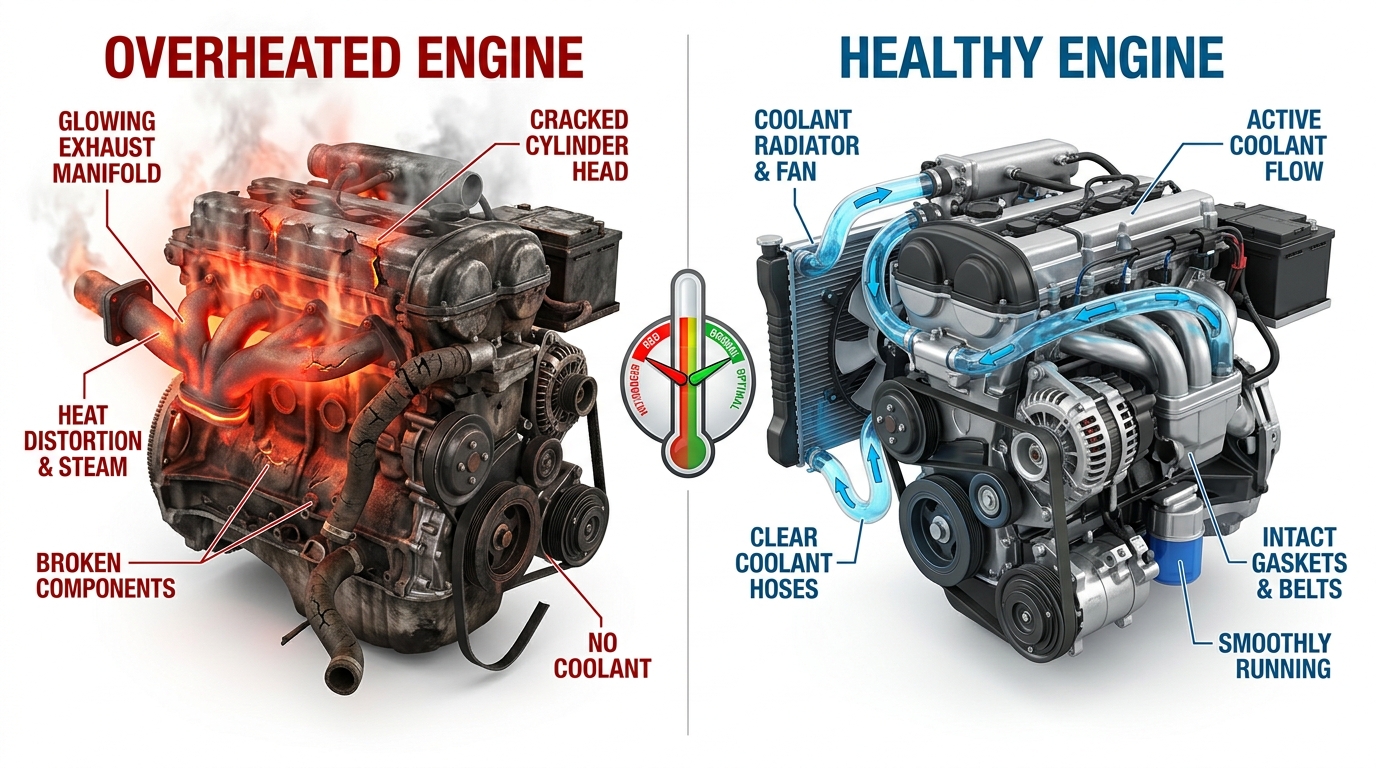
The biggest reason to care about engine coolant importance is simple: overheating kills engines. When an engine gets too hot, metal parts warp. The head gasket can crack. Engine oil breaks down faster. In bad cases, the engine seizes completely and stops working.
Here is how it works. The coolant flows through channels inside the engine block. It absorbs heat from the burning fuel and the moving parts. Then it travels to the radiator, where that heat gets released into the air. Then it goes back into the engine and does it all over again. It is a loop that never stops as long as the car is running.
I remember one summer road trip where the temperature gauge in my old car crept toward the red zone. I pulled over fast. Turns out the coolant level was dangerously low. The mechanic told me that another 10 minutes of driving, and the engine would have been done. That was the day I started checking coolant regularly.
According to Machinery Lubrication, in a heavy-duty diesel engine, about one-third of all heat produced is removed by the coolant. It plays that big of a role in keeping the engine heat balance stable.
It Protects Against Freezing in Cold Weather
In cold climates, a car sitting overnight can face temperatures well below freezing. If the water inside your engine freezes, it expands. That expansion can crack the engine block or split the radiator. Repairs like that can cost thousands of dollars.
This is why coolant is also called antifreeze. The glycol in it drops the freezing point of the liquid to around -37°C or lower, depending on the mix. So even if you park your car in freezing cold weather, the liquid inside stays fluid and your engine stays safe.
It also keeps your car’s heater core working. The heater inside your car actually uses warm coolant to heat the air that blows into the cabin. If the coolant is low, your heater will not work well. So in winter, low coolant means a cold engine and a cold you.
Types of Engine Coolant: Which One Does Your Car Need?
The Three Main Coolant Types Explained Simply
Not all coolants are the same. There are three main types used in cars today. Using the wrong one can actually damage your engine, so it is worth knowing the difference.
| Type | Full Name | Best For | Color |
| IAT | Inorganic Acid Technology | Older vehicles | Green / Yellow |
| OAT | Organic Acid Technology | Most modern cars | Orange / Pink / Blue |
| HOAT | Hybrid Organic Acid Technology | Newer cars (BMW, Toyota, Honda) | Yellow / Amber / Purple / Red |
IAT coolant is the old-school green stuff. It works fine, but it needs to be changed more often because its corrosion inhibitors break down faster. OAT coolant lasts longer and is used in many modern cars. HOAT coolant is a mix of both technologies and is now the most popular choice for newer vehicles from brands like BMW, Toyota, Honda, and Volkswagen.
Always check your owner’s manual before adding coolant. Mixing the wrong types can create a gel-like mess inside your cooling system that blocks flow and causes overheating.
How Coolant Color Can Confuse You
Here is something that trips people up. Different brands color their coolant differently. So you cannot always trust color alone to identify the type. A blue coolant from one brand might be OAT, while another brand’s blue coolant is HOAT.
The only safe way is to check the label and compare it with what your car’s manual recommends. If the coolant in your reservoir looks rusty, brown, or cloudy, that is a sign it has broken down and needs to be replaced right away.
How the Engine Cooling System Actually Works
The Parts That Work Together Every Drive
The coolant does not work alone. It is part of a whole system. Understanding how these parts work together helps you spot problems early.
The water pump is the heart of the system. It pushes coolant through the engine block. The coolant absorbs heat as it travels. Then it flows into the radiator, which is basically a grid of small tubes. Air passes over these tubes (from the fan or the car’s movement) and cools the liquid down. Then the cooled coolant goes back to the water pump and the cycle starts again.
The thermostat acts like a gatekeeper. It stays closed when the engine is cold so the engine warms up faster. Once the engine reaches the right temperature, the thermostat opens and lets coolant flow. This is why your temperature gauge should settle in the middle after a few minutes of driving.
What Happens When the System Fails?
Most engine problems are connected to cooling in some way. A failed water pump means no flow. A clogged radiator means the heat cannot escape. A broken thermostat that stays closed means the engine overheats fast. A cracked hose means coolant leaks out.
My neighbor once ignored a small coolant leak for weeks. “It’s just a tiny drip,” he said. Three weeks later his engine was gone. The repair cost more than the car was worth. Preventive maintenance is always cheaper than a new engine.
Coolant University notes that roughly 60% of engine downtime in the commercial trucking industry is related to coolant problems. That number says everything you need to know about how serious this is.
Signs Your Engine Coolant Needs Attention Right Now
Warning Signs Every Driver Should Know
Your car usually tells you when something is wrong, you just have to listen. Here are the signs that your coolant or cooling system needs attention.
The most obvious sign is the temperature warning light or the temperature gauge moving toward the red zone. If you see either of these, pull over safely and turn off the engine. Do not keep driving.
Another sign is a sweet smell coming from the engine or inside your car. Coolant has a distinct sweet smell, and if you notice it, there may be a leak somewhere. Look under your car for pink, yellow, green, or orange puddles on the ground. These are signs of a coolant leak and need attention quickly.
How Often Should You Check and Change Coolant?
You should check your coolant level at least twice a year, once before summer and once before winter. It takes less than two minutes and could save you from a very expensive repair.
For changing the coolant entirely, most vehicles need a coolant flush every 50,000 miles. Some newer models may need it sooner, around every 10,000 miles. Always follow the schedule in your car’s owner’s manual. When you flush the old coolant out, you also remove rust particles and dirt that build up over time and can block the system.
Source: Universal Technical Institute recommends flushing and changing coolant at least every 50,000 miles, with some newer models requiring more frequent service. Read more at UTI
One important safety note: never open the radiator cap when the engine is hot. The coolant inside is under pressure and can spray out and cause serious burns. Always wait at least 30 minutes after driving before checking or adding coolant.
What Happens to Your Engine Without Coolant?
The Real Cost of Ignoring Coolant
Let’s be honest about this. Skipping coolant or letting it run low is one of the most expensive mistakes a car owner can make. The damage happens fast and it is often not reversible.
Without coolant, the engine overheats within minutes of running. The first things to go are the soft metal parts. The head gasket fails. This lets coolant mix with engine oil, which ruins both fluids and causes further damage. The cylinder head can warp. The engine block can crack. In worst cases, the engine melts or seizes completely.
A new head gasket alone can cost anywhere from $1,000 to $2,000 to replace. A full engine replacement can cost $3,000 to $10,000 or more depending on the car. All of that for lack of a fluid that costs under $20 a bottle.
How Coolant Also Protects the Heater and Other Parts
Most people do not realize that coolant does more than just cool. It also lubricates the moving parts it touches. The water pump relies on coolant for lubrication. Without it, the pump’s seals and bearings dry out and fail. The pump then stops circulating coolant, and overheating follows quickly.
As mentioned earlier, your car’s cabin heater also depends on warm coolant flowing through the heater core. So if you ever notice your car is not heating well in winter, low coolant could be part of the problem. Checking it is always the first step before assuming something bigger is wrong.
Conclusion
Understanding the importance of engine coolant is one of the most useful things you can know as a car owner. This one fluid does so many jobs at once. It stops your engine from overheating. It stops it from freezing. It prevents rust and corrosion inside the cooling system. And it even helps keep your heater working.
The good news is that taking care of your coolant is not hard. Check it twice a year. Flush and replace it every 50,000 miles. Use the right type for your car. And if you ever see a warning light or a strange smell, get it checked right away.
I hope this guide made things simple and clear. If you have ever had a coolant issue or a story about your car overheating, I would love to hear your thoughts in the comments below. Have you checked your coolant level recently?
Frequently Asked Questions (FAQs)
What is the main purpose of engine coolant?
The main purpose of engine coolant is to keep your car’s engine at a safe temperature. It absorbs heat from the engine and carries it to the radiator, where the heat is released into the air. It also prevents the liquid from freezing in cold weather and protects metal parts from rust and corrosion.
Can I use water instead of engine coolant?
You can use plain water in an emergency, but it is not a long-term solution. Water alone freezes at 0°C and boils at 100°C, which is not safe for most engines. It also causes rust inside the engine. Always use the proper coolant mix as recommended by your vehicle’s manufacturer.
How often should engine coolant be changed?
Most cars need a coolant flush every 50,000 miles. Some newer models may need it more often, around every 10,000 miles. The best way to know for sure is to check your car’s owner’s manual. Also, if the coolant looks brown, cloudy, or rusty, change it right away no matter the mileage.
What happens if my coolant level is low?
If your coolant level is low, your engine can overheat quickly. In winter, it can also mean your car’s heater will not work properly. Low coolant is often a sign of a leak in the cooling system. Top it off temporarily and have a mechanic inspect the system as soon as possible.
What color is coolant and why does it change?
Fresh coolant can be green, orange, yellow, pink, blue, or red, depending on the type and brand. Over time, it darkens and can turn brown or muddy. This happens when the protective additives break down and the coolant picks up rust and dirt. If your coolant looks discolored, it is time to flush and replace it.