
Your car just gave up on you. The engine is making a horrible knocking sound, the check engine light is on, and your mechanic says it is serious. Now you have one big question: Should you go for an engine rebuild vs replace? This is a tough spot, and I have been there. Let me break it all down in simple words so you can make the right call.
What Is an Engine Rebuild?
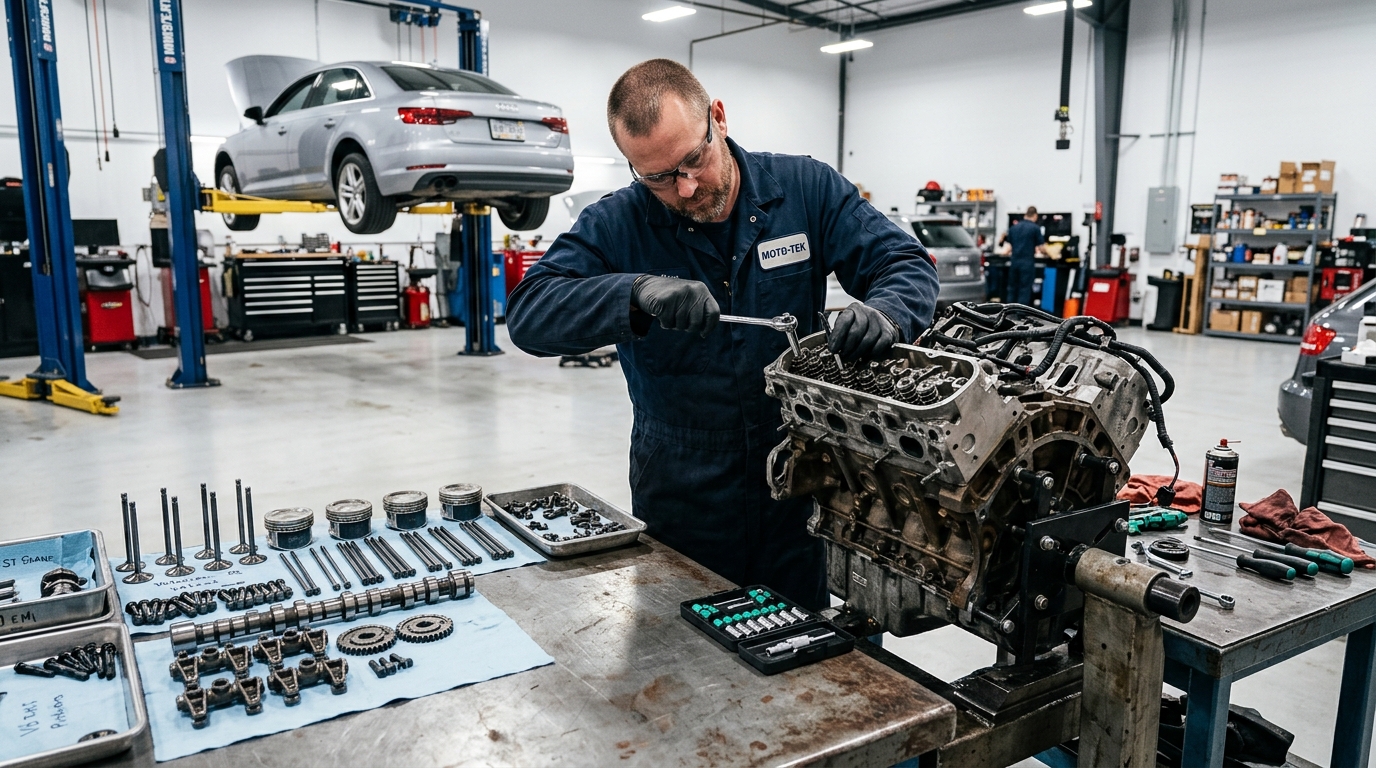
An engine rebuild is when a mechanic takes your car’s engine apart, cleans every piece, and checks what is broken. They keep the parts that are still good and replace the ones that are worn out or damaged. Things like piston rings, bearings, gaskets, seals, and valve springs are usually replaced. The engine block itself is often kept since it is the main body of the engine.
Think of it like fixing up an old house. You do not knock it down. You just fix the broken walls, change the pipes, and make it good again.
I once had a 2008 Honda Civic with 140,000 miles on it. The mechanic told me the engine had compression loss and excessive oil consumption. He said a rebuild would fix it without me having to spend a lot more money. And honestly, it worked out well.
When Does a Rebuild Make Sense?
A rebuild makes sense when the damage is not too severe. If your engine has a rough idle, engine knocking, poor acceleration, or burns oil fast, a rebuild can usually fix all of that. As long as the engine block is not cracked and the damage is only in certain parts, rebuilding is a smart move.
It also helps if you love your car and want to keep the original engine compatibility. With a rebuild, your car’s engine control unit (ECU) does not need to be reset or reprogrammed, which saves extra headaches and money.
What Is an Engine Replacement?
An engine replacement means your old engine comes out, and a brand new or remanufactured engine goes in. This is chosen when the damage is too big to fix. Things like a cracked engine block, broken crankshaft, or severe cylinder head warping usually mean it is time for a full swap.
You can choose from a few types of replacement engines. A brand new engine from the manufacturer is the most reliable but also the most expensive. A remanufactured engine is rebuilt in a factory to meet original standards and costs less. A used engine from a salvage yard is the cheapest but carries some risk since you do not always know its history.
When Is Replacement the Better Choice?
Replacement is usually better when your engine has over 150,000 miles and multiple systems are failing. If the repair cost is close to or more than the cost of a replacement engine, it does not make sense to rebuild.
Also, if you are getting metal shavings in the oil, that is a red flag. It means internal parts are grinding and breaking down badly. At that point, rebuilding might just delay the same problem from coming back. A fresh engine gives you a clean start.
According to data from ConsumerAffairs (2025), most car owners pay between $5,000 and $10,000 for a full engine replacement, depending on the car’s make and model.
Engine Rebuild vs Replace: Cost Comparison
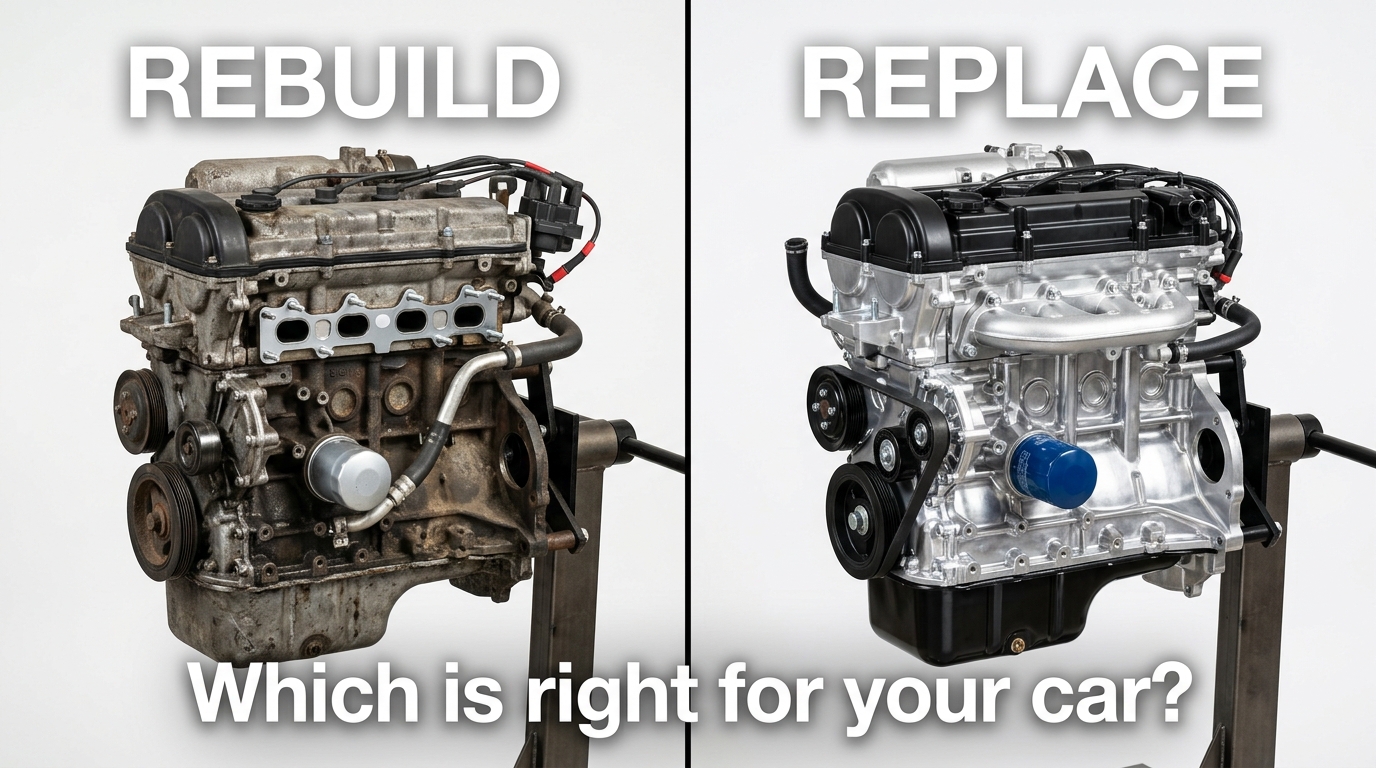
This is where most people make their decision, the money part.
A full engine rebuild in the US typically costs between $2,500 and $4,000 for parts and labor. Labor alone can run $70 to $150 per hour, and the whole process takes 15 to 25 hours on average.
An engine replacement costs more. Depending on whether you go with a new, used, or remanufactured engine, you could pay anywhere from $4,000 to $10,000 or more.
According to Airtasker (2025), the average cost of an engine replacement in the US ranges from $6,287 to $12,878, especially in major cities where labor rates are higher.
| Option | Average Cost (US) | Time to Complete |
| Engine Rebuild | $2,500 – $4,000 | 1–2 weeks |
| Used Engine Replacement | $1,500 – $4,000 | 2–4 days |
| Remanufactured Engine | $3,500 – $7,000 | 3–5 days |
| Brand New Engine | $6,000 – $12,000+ | 3–5 days |
To be fair, cost alone should not be the only thing you look at. A cheaper rebuild that fails in six months is not a good deal. Think long term.
Pros and Cons of Rebuilding Your Engine
Pros
Cost savings are the biggest reason people go with a rebuild. You can save up to 50% compared to buying a new engine. It also keeps your original engine, which means no ECU compatibility issues. Some mechanics even offer the chance to upgrade certain parts during the rebuild — like better piston rings or stronger valve springs, for extra performance.
Rebuilding is also better for the environment. You are reusing most of the existing parts instead of throwing them away.
Cons
Rebuilds take time. Expect your car to be in the shop for one to two weeks, sometimes longer. And there is always a chance of hidden damage that shows up once the engine is fully apart. If a mechanic misses something, you might face more problems later.
Also, the warranty on a rebuild is usually shorter and more limited than what you get with a new or remanufactured engine.
Pros and Cons of Replacing Your Engine
Pros
A fresh engine gives you reliability. Whether it is new or remanufactured, you start with clean, fresh parts. Many replacement engines come with a warranty of one to three years. This gives you real peace of mind.
Replacement is also faster. The job can be done in a few days instead of weeks. If you need your car back quickly, this matters a lot.
Cons
The cost is higher. That is the main downside. You might also face compatibility issues if the replacement engine is not the same model as your old one. The ECU, transmission, and other systems may need adjustments.
And honestly, if your car itself is old and worn out in other ways, spending $7,000 on a new engine might not make much sense. Sometimes the smarter move is just to buy a different car altogether.
Key Signs Your Engine Needs Attention
Not sure if you are at the rebuild or replace stage yet? Here are the warning signs to watch for:
Check the engine light is on and your mechanic says there is serious damage. Loud knocking sounds from under the hood usually point to worn bearings or broken piston rings. White smoke from the exhaust can mean coolant is leaking into the cylinders. Loss of power and trouble starting the car are also big red flags. Metal shavings in the oil are one of the worst signs, it means internal parts are breaking apart.
If you see any of these, do not wait. The longer you drive with a damaged engine, the worse and more expensive the problem gets.
Engine Rebuild vs Replace: Which Is Right for You?
Honestly, there is no one right answer for everyone. It comes down to a few things.
First, look at the overall condition of your car. If the body, transmission, and other systems are in good shape, it is worth fixing the engine. But if the car has other big problems too, putting money into the engine might not be worth it.
Second, think about the severity of the damage. Minor wear? Rebuild. Cracked block or broken crankshaft? Replace.
Third, check your budget. If you can only afford a rebuild, make sure you are working with a trusted mechanic who uses quality OEM parts or better. A bad rebuild with cheap parts will cost you more later.
I always say — get a second opinion. Ask two different mechanics what they recommend. It is your money, and you deserve to feel confident about where it goes.
Conclusion
The engine rebuild vs replace decision is never easy, but now you have the facts to make a smart choice. A rebuild saves money and keeps your original engine alive, but takes more time and works best when the damage is limited. A replacement costs more upfront but gives you a fresh start with better reliability and a stronger warranty. The right choice depends on your car’s condition, the damage level, and your budget. Take your time, talk to a trusted mechanic, and do not rush. I hope this helped you feel more confident about what to do next. And hey, if you have been through this before, I would love to hear how it went for you in the comments!
Frequently Asked Questions
Is it better to rebuild or replace an engine?
It depends on the damage and your budget. A rebuild is better when the damage is small and the engine block is still good. A replacement is better when there is major internal damage or when the rebuild cost is close to the replacement cost. Always get a mechanic’s full assessment before deciding.
How long does a rebuilt engine last?
A well-done rebuild can last another 100,000 miles or more if quality parts are used and the car is maintained properly. The lifespan depends on the mechanic’s skill, the parts used, and how well you care for the car after the rebuild.
Is a rebuilt engine as good as a new one?
A properly rebuilt engine can perform almost as well as a new one. However, a remanufactured engine built in a factory to OEM standards is generally closer to new than a shop rebuild. The key is the quality of parts and the skill of the person doing the work.
What are the signs that an engine needs to be rebuilt or replaced?
Common signs include loud engine knocking, white or blue smoke from the exhaust, the check engine light staying on, metal shavings in the oil, loss of engine power, rough idle, and unusually high oil consumption or fuel use.
How much does an engine rebuild cost in the US?
In 2025, a full engine rebuild typically costs between $2,500 and $4,000 in the US, including labor and parts. The exact cost depends on your car’s make and model, the extent of the damage, and local labor rates. An engine replacement can cost $5,000 to $10,000 or more.