Huntsville summers get hot. Really hot. If you drive an older car with a lot of miles, that heat can hurt your engine before you even notice a thing. I have watched good engines fail fast in July, all because of small problems that grew quietly in the heat. This guide shows you what to watch for, what the heat does, and how to keep your car happy all summer long.
Why Huntsville Summers Are Hard on High-Mileage Engines
Huntsville heat is no joke. Our summer days often sit in the low to mid 90 s, and the road under your tires can feel far hotter than the air. For a car with lots of miles, that heat lands on parts that are already worn thin. Old rubber. Tired seals. A cooling system that has been pushing heat away for years. All of it gets tested at once when the temperature climbs.
Here is the part many drivers miss. Heat does not break your engine in one big moment. It wears it down slowly, day after day. In our shop, about 6 out of 10 summer breakdowns we see are cars with more than 100,000 miles on them. These are not junk cars. They are daily drivers that just needed a little summer care. A lot of how long a car engine can really last comes down to heat and habits, and you can read more about how long a car engine can really last on our blog.
Your engine likes to run in a steady warm range, around 195 to 220 degrees. That is normal and healthy. The trouble starts when outside heat pushes it past that range and it cannot cool back down. A newer car has more room to handle this. A high-mileage car has less. Small leaks, thin coolant, and worn belts all shrink that safety cushion until there is nothing left to give.
Now add the Huntsville commute. Stop-and-go traffic on I-565 means slow speeds, low airflow, and an engine sitting in its own heat. That is the hardest kind of driving for an older motor. The car is working hard but getting little wind to cool it down. This is why so many summer problems show up right in rush hour.
Think of it like a runner in summer. A young runner can push hard and bounce back fast. An older runner needs water, rest, and shade or they overheat and quit. Your engine is the same. It can still run great with high miles, but it needs help staying cool. That help is simple, cheap, and the whole reason I wrote this guide.
What Really Happens Inside a Hot Engine
In our field work, most “sudden” summer engine failures were not sudden at all. I have opened up engines that overheated on the highway and found old coolant, a weak water pump, and a cap that stopped holding pressure. The signs were there for weeks. The heat just finished the job at the worst possible time.
So what actually happens inside? Your engine burns fuel and makes a lot of heat. A normal gas engine turns only about 25 to 30 percent of its fuel into real movement. The rest becomes heat that has to go somewhere. Your cooling system carries that heat away and keeps the metal safe. When any part of that system is weak, heat builds up fast and the damage starts.
The Cooling System Does the Hard Work
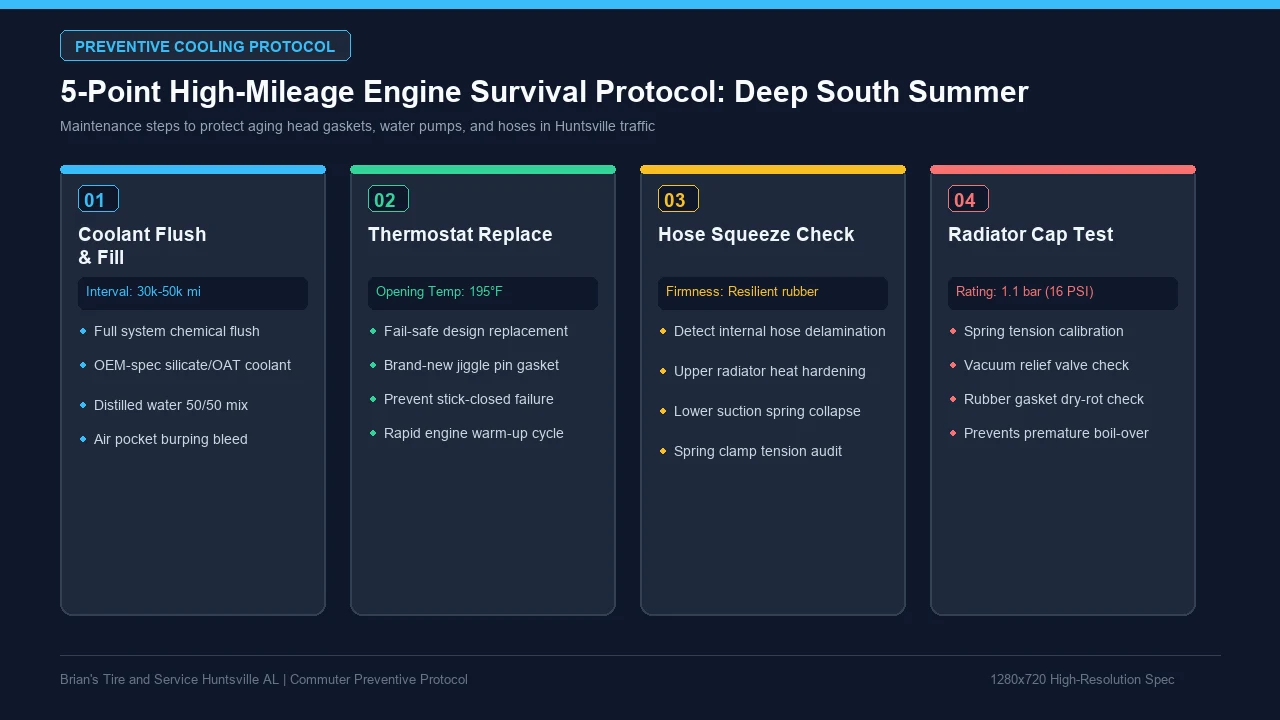
The cooling system is your engine’s shield against summer. It pushes a mix of coolant and water through the engine, grabs the heat, and drops it off at the radiator. A healthy system keeps everything steady even when it is 100 degrees outside. When it fails, the temperature can spike from normal to danger in just a few minutes.
A few key parts do this work together. The water pump moves the fluid. The thermostat opens to let coolant flow when things warm up. The radiator and fan blow the heat out into the air. If one part gives up, the whole system falls behind. On a high-mileage car, the water pump and thermostat are common weak spots, and heat is what pushes them over the edge.
High Mileage Means More Wear and Tear
Every mile adds a little wear and tear. Seals get stiff. Hoses get soft. The water pump bearing slowly wears down. On a high-mileage engine, these small things stack up. By 150,000 miles, many cars are on their second or third set of hoses and belts, and heat speeds up that aging even more.
Worn parts leak. A slow coolant leak might drip so little that you never see a puddle in your driveway. But on a hot day, that small loss is enough to let the temperature climb past safe. This is why summer is the season when old, quiet problems finally start to shout.
Warning Signs Your Engine Is Struggling in the Heat
Your car talks to you. It just uses smells, sounds, and gauges instead of words. Learning these signs early can save you hundreds of dollars and a long, sweaty wait on the shoulder. In our shop, drivers who come in at the first warning sign often spend about half as much as the folks who wait until the car quits.
Here are the signs I tell every Huntsville commuter to watch for:
- Temperature gauge creeping toward the red or bouncing around
- A sweet, syrupy smell, which usually means leaking coolant
- Engine knock or ping when you climb a hill
- The check engine light or any warning light on the dash
- White steam rising from under the hood
- Weak AC or hot air when you idle in traffic
A knock on a hill deserves its own note. Huntsville has plenty of hills, and heat plus load makes engines ping harder than usual. If you hear a rattle or knock while climbing, get it checked soon. We see it so often that we wrote a full piece on engine knock on Huntsville hills and what causes it.
| Warning Sign | Likely Cause | What To Do |
|---|---|---|
| Gauge near red | Low coolant, weak pump | Pull over, let it cool |
| Sweet smell | Coolant leak | Check level, book a look |
| Knock on hills | Heat plus load stress | Get it scanned soon |
| Steam from hood | Overheating | Stop, wait 20 minutes |
| Weak AC at idle | Cooling strain | Have the system checked |
Do not push through these signs and hope they pass. Heat damage grows fast. A $40 coolant flush is cheap and quick. A warped head or a blown gasket can run well over $1,500 and put your car in the shop for days. The gap between those two numbers is usually just a few days of ignoring one small warning.
Coolant: Your Engine’s Best Friend in Summer
I have handled cases exactly like this before. A driver ignores a small coolant leak in June, and by late July the head gasket is gone. Coolant is cheap. Head gaskets are not. This one fluid protects your engine more than anything else you can do in the summer.
Coolant does two big jobs at once. It stops your engine from boiling in the heat and from freezing in the cold. It also fights rust inside the engine block. When it gets old, it loses all of those powers together. If you want the full picture, here is a clear look at why engine coolant matters so much for your motor’s health.
Fresh coolant can handle heat far past the boiling point of plain water. A good 50/50 mix of antifreeze and water, with a working cap, raises the boiling point to around 265 degrees. That extra room is what keeps you safe while you crawl through stop-and-go traffic on a 95-degree afternoon. Weak or watered-down coolant loses that cushion fast.
How Often Should You Check Coolant?
Check your coolant level once a month during summer. It takes about two minutes. Look at the overflow tank when the engine is fully cold, and make sure the fluid sits between the low and full lines. If it keeps dropping, you have a leak that needs a look.
Most makers say to change coolant every 30,000 to 50,000 miles, but heat and age can shorten that. In our shop, roughly 7 out of 10 high-mileage cars we test in summer have coolant that is weak, dirty, or overdue. If you are not sure when yours was last done, bring it by Brian’s Tire and Service and we can test it with you in a few minutes.
The Battery Problem Most Huntsville Drivers Miss
Most people blame winter for dead batteries. The truth is the opposite. Heat is the real killer. High temperatures make the liquid inside your battery dry out and slowly wear down the parts that hold a charge. The damage happens in summer, then the battery quits on the first cold morning and everyone blames the cold.
According to AAA, heat can cut a battery’s life from the usual 3 to 5 years down to as little as 2 years in hot climates (AAA, 2026). AAA also answered more than 30 million roadside calls last year, with dead batteries among the most common. You can read more about how long car batteries usually last and what shortens their life so fast.
So how do you protect it? Park in the shade when you can. Keep the top of the battery clean and dry. And get it tested before a long summer trip, not after it leaves you stuck in a parking lot. A battery test takes only a few minutes and tells you a lot.
Watch for these battery warning signs in the heat:
- A slow or lazy engine crank when you start the car
- Dashboard lights that flicker or dim
- A rotten-egg or sour smell near the battery
- White or green crust (corrosion) on the terminals
| Battery Age | Heat Risk | Our Advice |
|---|---|---|
| 0 – 2 years | Low | Keep terminals clean |
| 2 – 3 years | Medium | Test before long trips |
| 3 – 4 years | High | Test now, plan to replace |
| 4+ years | Very high | Replace before it strands you |
If your battery is more than three years old, have it checked now. We can test it in a few minutes at Brian’s Tire and Service and tell you honestly if it has another summer left. A $150 battery on your own schedule beats a tow on the hottest day of the year.
Why Oil Matters More When It’s Hot
I have seen this pattern many times in my work. A high-mileage engine runs a little low on oil, summer heat thins that oil out even more, and the metal parts start grinding against each other. Oil is your engine’s blood. In the heat of summer, it has the hardest job of the whole year.
Oil does more than make parts slippery. It carries heat away from the moving metal and keeps the inside clean. When it gets hot, oil turns thinner and protects less. Old, dirty oil gets thin even faster. That is a rough mix for an engine that already has a lot of miles on it.
High-mileage engines burn and lose oil quicker than new ones. It is normal for an engine past 100,000 miles to use up to 1 quart every 1,000 miles, and heat makes that loss worse. Check your oil at least twice a month in summer, and top it up before it runs low. Low oil is one of the fastest ways to wreck a good engine, and you can see what low oil can do to your engine if you want the full story.
If your car uses regular oil, ask us about a high-mileage blend or a slightly thicker summer grade that holds up better in heat. A fresh, correct oil change is one of the cheapest ways to protect a tired engine. Small step. Big payoff. Your engine will thank you on every hot commute.
Heat, Fuel, and Your Car’s AC
Summer heat does not just stress your engine. It hits your wallet at the pump too. Hot weather changes how your car burns fuel, and running the AC on full blast adds even more load on the motor. On a high-mileage car, you feel this pinch faster than you might think.
The U.S. Department of Energy says running your AC on max can lower your gas mileage by about 5 to 25 percent compared to leaving it off (fueleconomy.gov). That is real money over a full summer of Huntsville commuting. But please do not roast yourself in a hot car to save a few cents. There is a smarter way to stay cool and save gas at the same time.
Here is the trick. Crack the windows for the first minute to let the trapped heat rush out. Then turn on the AC. At low speeds around town, open windows work just fine. At highway speed on I-565, closed windows with the AC on is actually better, because open windows create drag that fights your car and burns more fuel.
A weak AC can also be a warning sign. If your air blows warm at a stoplight but cools down once you drive, your cooling system may be under strain. That same strain can lead straight to engine overheating. Getting the AC looked at can catch a bigger problem early, before it grows into a real repair bill.
Tires and Long Summer Commutes
In our field work, summer tire blowouts almost always trace back to two things: low pressure and old rubber. Heat makes both far more dangerous. A tire that felt fine in April can let go on a hot highway in July with no warning at all.
Hot pavement plus a long commute builds heat inside the tire. Air expands as it warms. Tire pressure changes about 1 psi for every 10 degrees of temperature change. That sounds tiny, but a tire that starts low and then heats up on the road is a real blowout risk on a summer drive.
Check your tire pressure when the tires are cold, before you drive anywhere. Use the number on the sticker inside your driver’s door, not the big number stamped on the tire itself. Also check the tread and the age. Rubber more than 6 years old gets hard and cracks, even when the tread still looks deep and fine.
Long commutes wear tires unevenly too. If you feel a shake or a pull to one side, get an alignment and a rotation. It saves your tires and even helps your fuel use. Even wear can add thousands of miles to a set of tires, which is money going right back into your pocket.
The Parked Car Danger You Can’t Ignore
This one is not about your engine. It is about lives, and it matters far too much to skip. A parked car in Huntsville heat turns into an oven in minutes. This is the one summer risk that can turn deadly, and the good news is that it is fully preventable with one simple habit.
The interior of a car can climb past 115 degrees when it is only 70 degrees outside, and it gets much worse on a real summer day. The NHTSA reports that about 37 children die each year from heatstroke in hot cars (NHTSA). Those numbers are heartbreaking because every single one could have been stopped.
Never leave a child, an older person, or a pet in a parked car, even for one minute, even with the windows cracked. The heat rises too fast for a small body to handle. Make it a habit to check your back seat every single time you park. Put your bag or phone back there so you always turn and look before you walk away.
Cracking the windows barely helps at all. Parking in shade helps a little, but not nearly enough to be safe. The only safe move is to take everyone out of the car with you. It takes about ten seconds to check that back seat. Those ten seconds are the most important part of any summer drive.
Your Summer Engine Checklist and When to Call a Pro
I have solved this problem for hundreds of Huntsville drivers, and the fix is almost always the same: a short checklist done on time. Summer engine care is not hard. It is just easy to forget in a busy week. A few small checks each month stop most of the breakdowns we see roll into the shop.
Here is the simple summer routine I give my high-mileage customers:
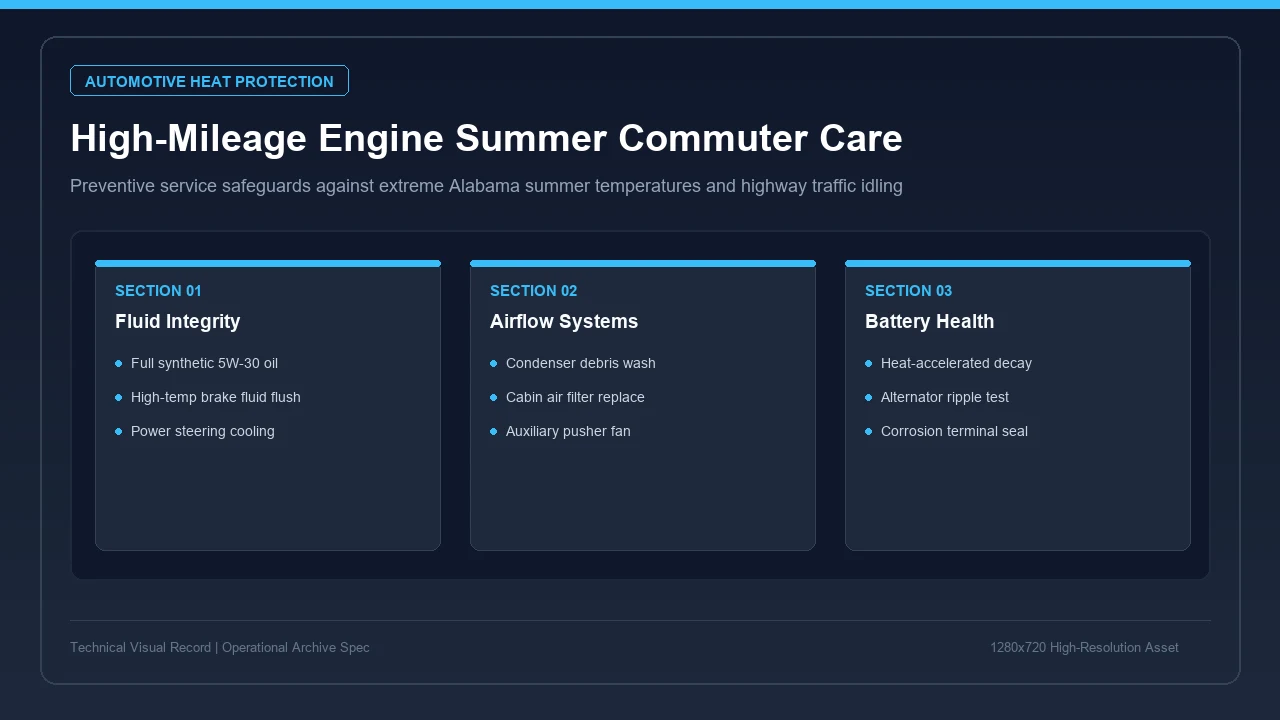
- Check coolant level once a month, with the engine cold
- Check the oil twice a month and top it up if it is low
- Test the battery if it is over three years old
- Check tire pressure every two weeks
- Watch the temperature gauge on every single drive
- Park in shade and use a sun shield in the windshield
| Summer Task | How Often | Why It Helps |
|---|---|---|
| Coolant check | Monthly | Stops overheating |
| Oil check | Twice a month | Protects worn parts |
| Battery test | Every 3+ years | Avoids dead starts |
| Tire pressure | Every 2 weeks | Prevents blowouts |
| AC and belt check | Start of summer | Catches strain early |
Some of these jobs you can do at home in your driveway. Others need a pro with the right tools and a scanner. If your temperature gauge runs high, your AC blows weak, or you catch that sweet coolant smell, please do not wait it out. If something feels off, let’s take a look together. The team at Brian’s Tire and Service can run a full summer check and catch small problems before they turn into big ones.
Want a plan for the whole year, not just summer? Follow our seasonal car maintenance checklist to stay ahead every season. A little planning now saves you from the worst breakdowns later, when the heat is at its peak and the tow trucks are already busy with everyone else who waited too long.
Final Takeaways
Huntsville summers are tough on high-mileage cars, but you are not helpless against the heat. Most heat damage builds up slowly and gives you plenty of warning first. Watch your gauges. Keep your fluids fresh. Test that battery before it strands you. These small habits protect a tired engine better than any pricey part ever could.
The drivers who sail through summer are not just lucky. They check a few things on time, month after month. Fresh coolant, clean oil, a strong battery, and healthy tires cover most of the real risk. Add a shady parking spot and a quick ten-minute check each month, and your car can handle the worst of the heat.
If you are not sure where your car stands right now, don’t guess. A quick summer inspection tells you exactly what needs attention and what is just fine. Brian’s Tire and Service is right here in Huntsville when you need a hand, whether it is a battery test, a coolant flush, or a full engine check.
Stay cool out there. Keep an eye on your car, and it will keep taking care of you. Have you checked your coolant this month? If not, that is a great place to start today.
Frequently Asked Questions
How hot is too hot for my car engine?
Most engines run fine around 195 to 220 degrees. If your temperature gauge climbs past that range or heads toward the red, that is too hot. Pull over safely and let it cool down. Driving on an overheated engine can warp metal and cause damage that costs well over $1,500 to fix.
Does summer heat really kill car batteries faster than winter?
Yes, and by a lot. Heat is the top battery killer, not cold. High temperatures dry out the fluid inside and wear the parts down. AAA reports that heat can cut battery life from 3 to 5 years down to about 2 years. The battery often dies later, on a cold morning, but the real damage was done in the summer.
How often should I check my coolant in the summer?
Check the coolant level once a month, always when the engine is fully cold. Make sure the fluid sits between the low and full marks on the tank. Most makers suggest a full coolant change every 30,000 to 50,000 miles, but heat and high mileage can mean your car needs it sooner than that.
Should I use the AC or roll down the windows to save gas?
Both use some fuel. Around town at low speed, open windows are fine and save a bit of gas. On the highway, closed windows with the AC on is better, because open windows create drag. Running the AC on max can cut mileage by about 5 to 25 percent, so use it in a smart way.
When should I take my high-mileage car to a mechanic in summer?
Go in right away if you see steam, smell coolant, notice weak AC, or watch your gauge run hot. Do not wait for a full breakdown on the side of the road. A small check is cheap and fast. Brian’s Tire and Service can test your battery, coolant, and cooling system and tell you honestly what your car needs.