

Ever feel like your car’s doing the cha-cha while you’re just trying to cruise down the road? That unnerving shaking sensation can sneak up on you, steady at first, then impossible to ignore. Let’s break down what might be causing it and what you can do to fix it.
Why Is My Car Shaking?
Car shaking usually comes from tire imbalance, worn suspension parts, or brake system issues. In most cases, it’s a warning sign that something mechanical needs attention, so don’t ignore it.
Tire Balance and Alignment Issues
Shaking at higher speeds is most commonly caused by one of the following:
Imbalanced Tires
When tires aren’t properly balanced, they rotate unevenly, causing vibrations that travel through the steering wheel, floorboards, or even the entire cabin. This is especially noticeable at highway speeds (50–70 mph) and tends to worsen over time.
Poor Wheel Alignment
Misaligned wheels, often the result of hitting a pothole or curb, can lead to uneven tire wear and a car that pulls to one side. This misalignment throws off the vehicle’s geometry and contributes to an unstable ride.
According to the National Highway Traffic Safety Administration (NHTSA), you should inspect tire inflation, tread wear, and balance monthly, especially if you notice performance issues like vibration or pulling.
Both Alignment and Balance Issues Combined
I once had a customer whose car shook like a washing machine on spin cycle. After inspection, we found that both front wheels were out of alignment, and one tire had a significant weight imbalance. After a quick alignment and rebalance, the car drove buttery smooth, and the customer immediately noticed the difference.
Ignoring these issues doesn’t just affect comfort—it can lead to:
-
Premature tire wear
-
Worsened fuel economy
-
Increased strain on suspension components
👉 Pro Tip: If your vehicle vibrates between 50 and 70 mph, start by getting your tire balance and wheel alignment checked. It’s a simple fix that can prevent costlier repairs down the road.
Uneven Tire Wear or Tread Damage
Uneven tire wear is another major culprit behind a shaking car. When your tires wear down inconsistently, due to improper rotation, alignment issues, or suspension problems, they can develop patterns like cupping, flat spots, or tread scalloping. These create small but persistent contact imbalances with the road.
Tires are designed to wear evenly across their surface. But if one side wears faster, say the inner edge, your car starts to vibrate, especially at higher speeds. This is not just annoying; it compromises grip and safety, especially in wet conditions.
Damage from road hazards like potholes or curbs can also cause hidden structural issues inside the tire, making the tread uneven even if it looks fine on the outside. These issues often go unnoticed until the vibration becomes pronounced.
Routine tire inspections and rotations every 5,000 to 7,500 miles can help prevent uneven wear and keep your ride smooth and predictable. However, if you drive an AWD vehicle or a high-performance model, tire rotation may be needed more frequently, every 3,000 to 5,000 miles, to maintain balanced wear across all wheels. Always check your vehicle’s owner manual for manufacturer-specific guidance.
Suspension and Steering Problems
Your car’s suspension system is designed to absorb shocks, keep your tires in contact with the road, and maintain control while driving. But when parts like shocks, struts, control arms, or bushings wear out, the result can be a noticeable shake, especially while turning or hitting bumps.
The steering system is closely connected. Worn tie rods, ball joints, or CV joints can cause instability, leading to shaking through the steering wheel, often during low-speed maneuvers or when cornering.
I once drove a vehicle with a worn-out lower control arm bushing. It felt fine at slow speeds, but every time I hit 45 mph, the front end would start to shimmy like it had a mind of its own. A quick inspection revealed the culprit, and replacing the bushing made an immediate difference.
If your car feels loose, sways in corners, or produces clunking noises in addition to shaking, don’t ignore it. These are signs that your suspension or steering components might be at fault, and continued driving can lead to dangerous handling.
Brake-Related Vibrations
If your car shakes when braking, your brake system is likely the source. One of the most common causes is warped brake rotors—they lose their smooth, flat surface due to heat or wear and cause pulsation in the brake pedal and steering wheel when slowing down.
Another common issue is worn or uneven brake pads. If one side grips harder than the other, it can throw off the balance of your braking force, creating a vibration that feels like it’s coming from the wheels.
Problems with wheel bearings or calipers can also produce a shake, especially during long braking sessions or downhill driving. Ignoring these symptoms can reduce braking performance and increase stopping distances.
Unlike tire-related shakes that often occur at high speeds, brake vibrations typically appear only when braking. That’s a clear signal to have your rotors and pads inspected—before they wear further or damage other components.
Road Force Imbalance or Bent Wheels
Even if your tires are properly balanced, your car might still shake due to a road force imbalance, a condition where the tire’s weight and shape cause uneven pressure on the road as it rolls. This can create subtle but persistent vibrations that standard balancing can’t fix.
That’s where a Road Force Balancer comes in. Unlike traditional balancing machines, this tool simulates road conditions and identifies out-of-round tires, internal structural inconsistencies, or wheel imperfections that create real-world imbalances.
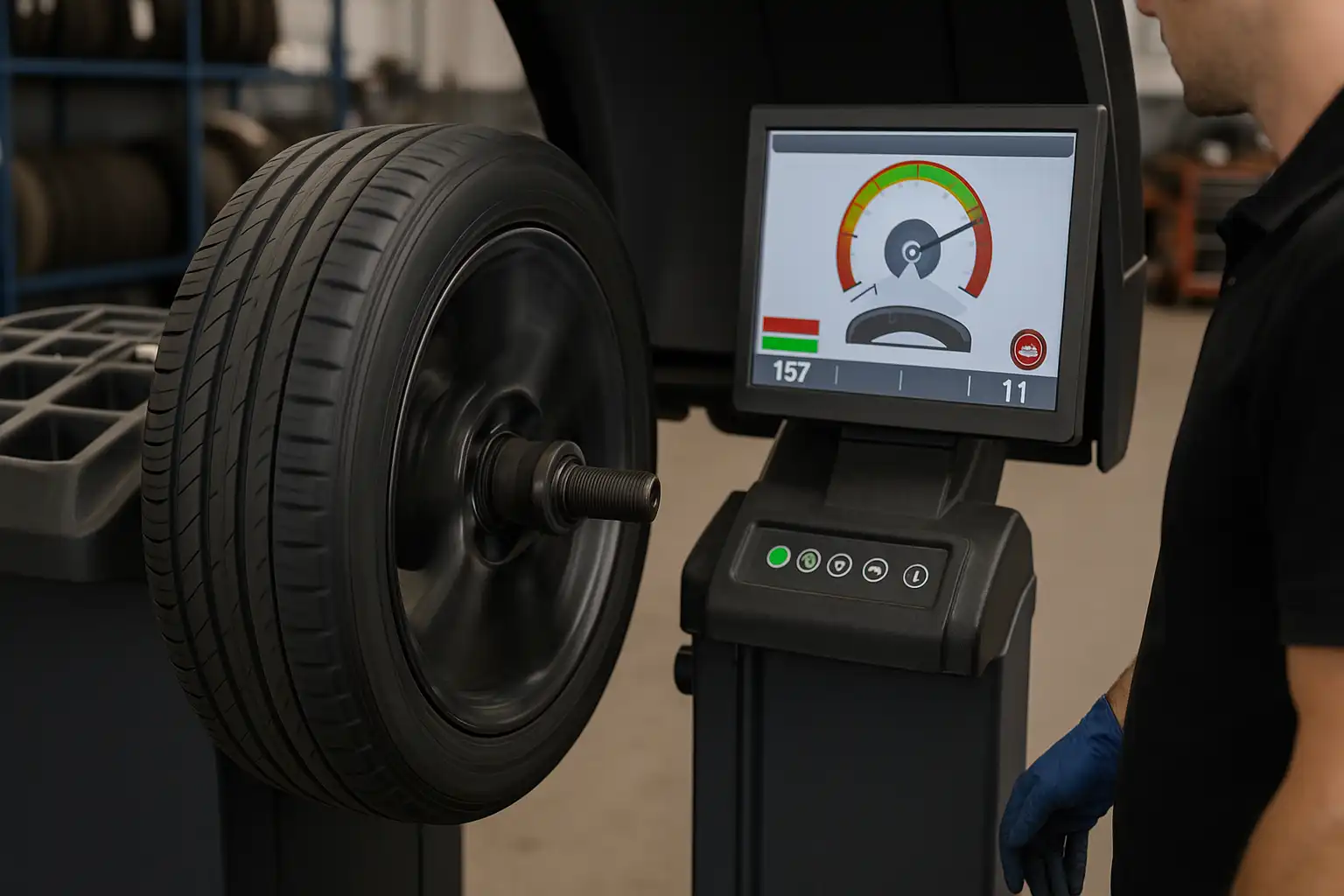
A bent wheel, from hitting a pothole, curb, or debris, can also lead to irregular tire rotation. This not only causes shaking at higher speeds, often above 50 mph, but also shortens the life of both the tire and suspension components.
If you’ve balanced your tires but still feel vibrations, a road force diagnosis or wheel inspection is your next step. It’s a more advanced solution, but one that often uncovers hidden problems standard checks can’t detect.
Seasonal Factors: Ice, Slush & Debris
Sometimes the reason your car shakes has nothing to do with mechanical parts and everything to do with the weather. In winter, ice or slush can accumulate inside the wheel wells or on the inner surface of your rims, throwing off the balance of the wheels.
This can cause low-speed vibrations that disappear once the debris melts or is dislodged. Drivers often report their car shakes first thing in the morning, but smooths out as the day warms up, a classic sign of frozen buildup.
Road grime, small stones, or packed snow can also get lodged in rim gaps or tire treads, causing uneven rotation. While these issues are temporary, they can feel just as intense as mechanical problems when driving.
A quick solution? Wash down your wheels thoroughly if you suspect buildup. And during cold months, check them regularly, especially if you park outdoors or drive in snowy conditions.
When to Schedule a Tire Inspection
If your car is shaking, use this table to decide when it’s time to get your tires professionally inspected:
| Symptom | Possible Cause | Action to Take |
| Shaking at high speeds (50–70 mph) | Tire imbalance, bent wheel | Schedule a tire balance & wheel check |
| Steering wheel vibration when braking | Warped rotors, uneven brake wear | Inspect brakes and rotors |
| Vibration after hitting a pothole | Misalignment, suspension damage | Get alignment and suspension checked |
| Uneven tread wear | Poor rotation habits, alignment issues | Rotate tires, check alignment |
| Shaking after recent tire install | Improper balancing or a defective tire | Rebalance or replace the tire |
| Seasonal vibration in cold weather | Ice/slush buildup | Clean wheels and monitor |
If any of these signs match your experience, don’t wait; small vibrations can lead to big repairs down the road.
How Long Should Tires Last?
On average, tires last between 3 and 5 years, or about 40,000 and 60,000 miles, depending on the brand, driving habits, road conditions, and maintenance. But even well-made tires can wear unevenly or develop tread damage that causes vibrations long before they hit those numbers.
Key factors that affect tire lifespan include:
- Improper inflation – Too much or too little air accelerates wear.
- Poor alignment – Causes the tires to wear unevenly.
- Skipped rotations – Tires wear differently based on their position; rotating every 5,000 to 7,500 miles evens it out.
- Driving conditions – Rough roads, aggressive braking, or frequent potholes shorten lifespan.
Check your tire tread regularly using the penny test or a tread gauge. If the wear bars are visible or you notice patterns like cupping or scalloping, it’s time for a new set, even if the tires aren’t very old.
Signs You Shouldn’t Ignore a Shaking Car
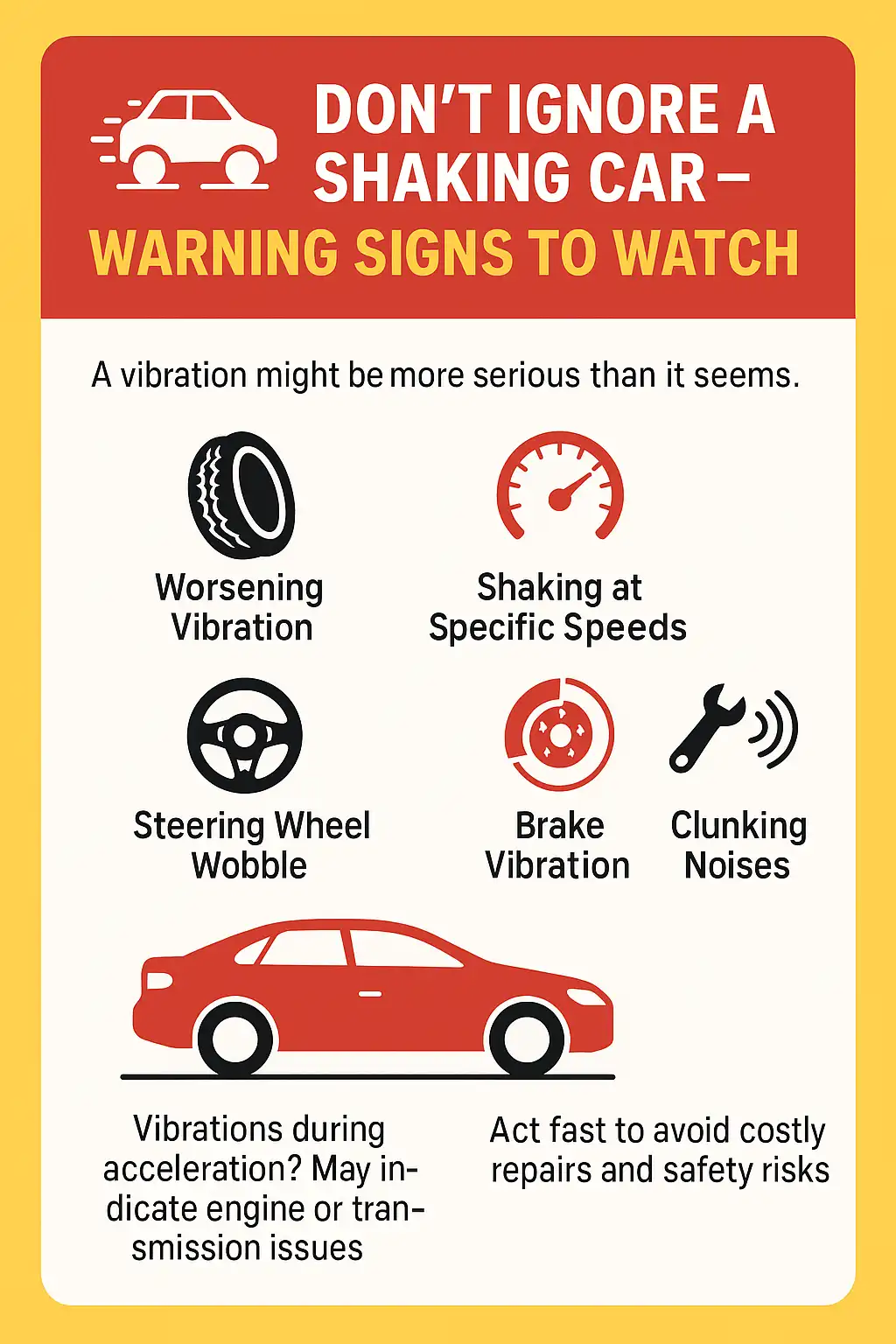
While a slight vibration might seem harmless, it’s often a sign of a deeper problem. Ignoring these symptoms can lead to unsafe driving conditions, higher repair bills, and premature tire or suspension wear.
Watch for these warning signs:
- Vibration that worsens over time – Could indicate progressing tire damage or suspension failure.
- Shaking only at certain speeds – Typically points to tire balance or bent wheel issues.
- Steering wheel wobble – Often tied to alignment problems or worn front-end components.
- The car pulls to one side – Suggests alignment or brake imbalance.
- Brake-related vibration – A sign of warped rotors or uneven brake pad wear.
- Clunking or knocking sounds – May signal suspension or steering component damage.
If your vehicle shows any of these signs, don’t wait. Vibrations are your car’s way of saying something’s not right. Catching it early can prevent a minor issue from becoming a major repair.
While most shaking issues are related to tires, suspension, or brakes, vibrations that happen while idling or accelerating, but not at high speed, may come from engine misfires, worn motor mounts, or transmission issues. These are less common but should be diagnosed promptly, especially if paired with dashboard warnings or poor acceleration.
Book a Vibration Check at Brian’s Tire & Service – Huntsville, AL and Surrounding
Noticing a shake in your steering wheel or seat? Don’t wait for it to get worse. Bring your vehicle to Brian’s Tire & Service in Huntsville, AL, for a professional vibration check. Our experienced technicians will pinpoint the cause, whether it’s related to your tires, brakes, or suspension, and recommend the right solution to keep your ride safe and smooth.
Schedule your appointment today and drive with confidence tomorrow.
Final Thoughts
If your car is shaking, don’t brush it off—it’s your vehicle’s way of telling you something’s wrong. From tire issues and alignment problems to brake wear or suspension damage, the causes are varied but always important. A smooth ride isn’t just about comfort; it’s about safety, performance, and preventing bigger repairs down the road. Whether the fix is simple or complex, catching it early makes all the difference.
FAQs
Q: Why does my car shake only at high speeds?
A: That’s often due to a tire imbalance or a bent wheel. It may also result from worn suspension components that can’t handle higher rotational forces.
Q: Can bad tires cause my steering wheel to shake?
A: Yes. Uneven tread wear, cupping, or flat spots on tires can transfer vibrations directly to the steering column, especially at mid-range speeds.
Q: Is it safe to drive a car that shakes?
A: It depends on the cause, but generally no. Shaking indicates a mechanical problem, if ignored, it can lead to tire blowouts, steering failure, or brake loss.
Q: What’s the difference between balancing and alignment?
A: Balancing corrects uneven weight distribution in the wheel-tire assembly. Alignment adjusts the angles of your wheels to meet manufacturer specifications.
Q: How much does it cost to fix a car that shakes?
A: Simple fixes like tire balancing may cost $40–$80. More complex issues, like suspension repairs or brake replacements, can run $200–$800 or more.