
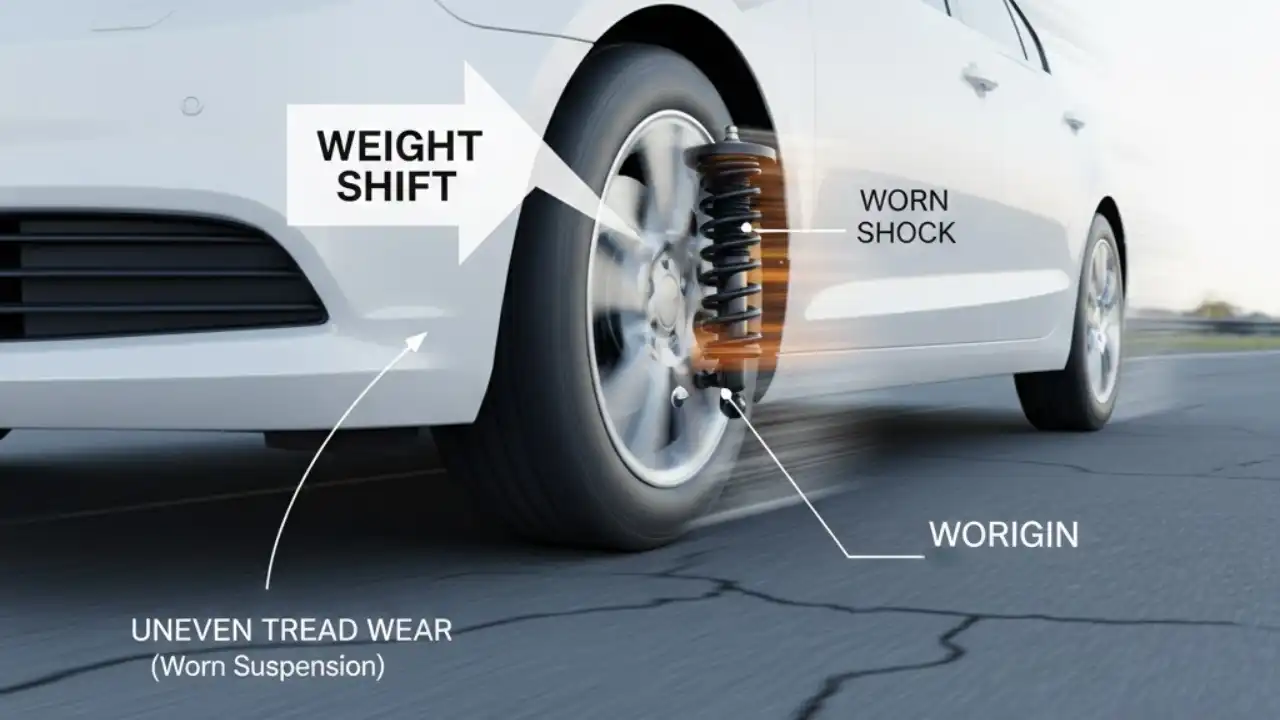
Your suspension is one of those parts you don’t really think about until your ride suddenly feels “off.” Maybe the car bounces more than it should or makes a noise that wasn’t there yesterday. I’ll walk you through the signs in simple, clear words so you know exactly what to look for and what to do next. No fancy terms. No confusing car talk. Just the basics, the way a friend would explain it.
If you’re trying to figure out how to know when your suspension needs repair, the short answer is to watch for changes in the way your car rides, sounds, or handles. When something feels different, the suspension is often the reason.
Warning Signs Your Suspension Needs Repair
- Clunks, knocks, or squeaks over bumps
- Rougher or bouncier ride than usual
- The car bounced more than once over a bump
- Steering feels unsteady, or the car doesn’t stay straight
- Uneven tire wear
- One corner of the car is sitting lower than the others
When your suspension starts wearing out, it usually gives you small clues before the big problems show up. You don’t need to be a mechanic to notice these clues. You just need to pay attention to how your car feels on normal days, because any change in that feeling can mean the suspension system, shocks, struts, or springs are struggling.
I remember one time when my own car began making a soft thump over small bumps. At first, I thought it was just something rolling around in the trunk. A week later the thump turned into a louder knock, and the ride felt rougher, almost like the car was bouncing twice instead of once. That tiny noise ended up being a worn strut, and catching it early saved me from replacing extra parts. Little signs matter more than most people think.
You might notice noises like clunks or squeaks, a ride that feels rougher, or the car bouncing more than usual. Some people feel the steering isn’t as steady or the car doesn’t stay straight without extra effort. Others see their tires wearing out unevenly, which is a big sign the suspension isn’t holding the wheels the way it should. Even something simple like one corner of the car sitting lower can mean a weak spring.
If any of these signs show up, don’t wait. A suspension problem that’s small today can turn into a bigger issue tomorrow, and it affects comfort, safety, and even how long your tires last.
Why Timely Suspension Repair Matters
How Road Conditions Stress Your Suspension
Your suspension system works every time your wheels touch the ground. Even on normal streets, the car hits small cracks, dips, and bumps that you barely notice. Each of these movements pushes against parts like the shocks, struts, springs, and control arms. These parts are built to handle a lot, but they still wear out slowly with every mile you drive. Over time, the metal gets tired, the rubber pieces get weak, and the fluids inside the shocks lose their strength.
I want you to imagine something simple. Think about carrying a backpack every day. At first, it feels light. After a few weeks, you barely feel it. But after months, the straps start loosening, the zipper gets slower, and the bottom begins to sag. Nothing happened in one moment. It wore out through daily use. Your suspension works the same way. It doesn’t fail in one day. It fails slowly, and that slow change is what makes it tricky to notice.
When the suspension begins to weaken, the car stops absorbing bumps the way it should. You may feel a sharper jolt from small cracks. The car might bounce a bit more. Sometimes the steering feels just a little loose, almost like the wheel has extra play. These small hints come from worn bushings, soft springs, or shocks that can’t keep the car level anymore.
The more miles you drive with worn parts, the faster the rest of the system wears out too. It becomes a chain reaction. Weak shocks make the tires slap the ground harder. Weak springs make the ride uneven. Weak bushings make the steering feel shaky. One issue leads to another.
You might not notice the change right away because it happens slowly. But your car notices. And the longer it goes on, the more strain the system carries. That’s why timely repair matters. Fixing one weak part early keeps the others from wearing out before their time.
The Safety, Tire, and Long-Term Costs of Delaying Repair
A healthy suspension does more than make the ride smooth. It helps your tires stay in firm contact with the road. When the suspension is strong, the wheels hold steady and grip well. But when things wear out, the tires can hop or bounce on rough ground, which makes the grip weaker.
This affects braking, cornering, and how quickly the car responds when you turn the wheel. Many people don’t realize that a weak strut or worn shock absorber can increase stopping distance. That small bounce when braking spreads out the car’s weight unevenly, so the tires don’t hold as firmly. According to the GAO report on vehicle safety inspections, component failures, including steering and suspension issues, are cited as a top reason for inspection failures.
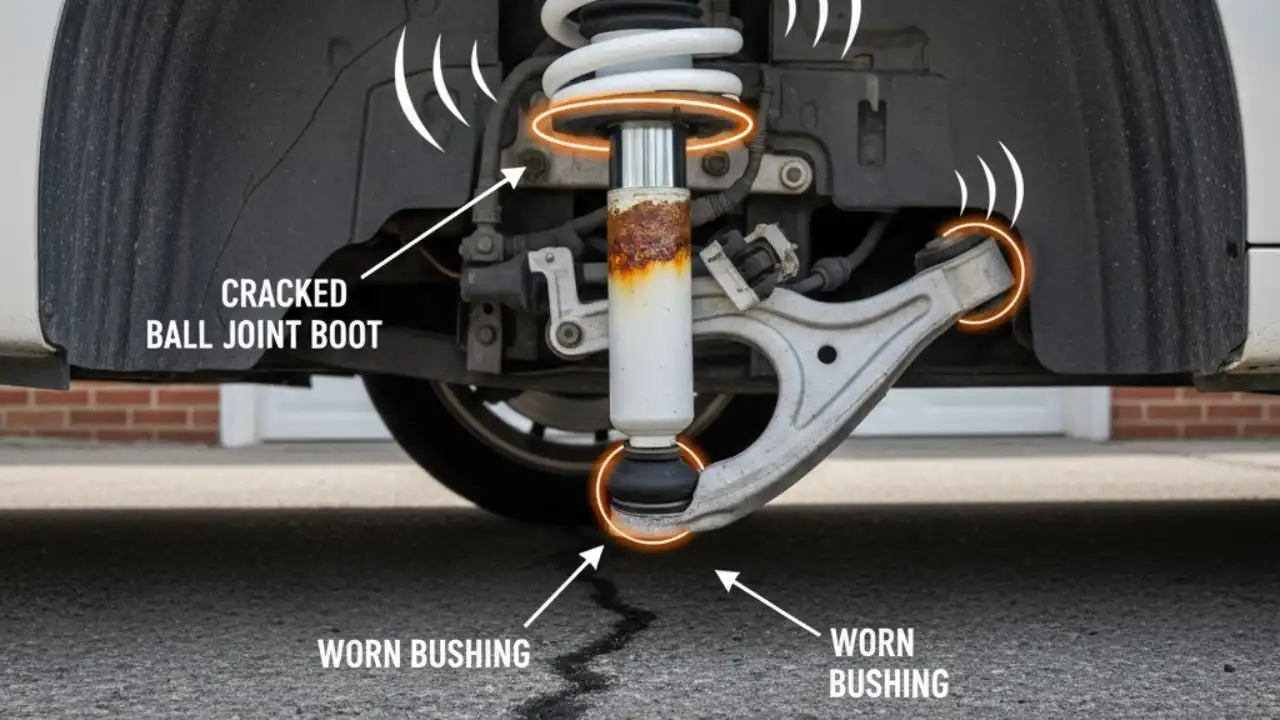
Another problem is uneven tire wear. When the suspension can’t keep the wheels aligned and balanced, one side of the tire may rub harder against the road. Over time, the tread wears off in patches or on one edge. This not only shortens the life of the tire but also makes the car harder to control. You may feel shaking at higher speeds, or the car may drift slightly even when you hold the wheel straight. Replacing a tire early because of uneven wear is a cost that could have been avoided by fixing the suspension.
Long-term damage is another reason not to wait. Weak suspension puts pressure on other parts of the car. The steering system works harder. Joints and bushings wear out faster. Even the frame can feel more stress because it absorbs impacts that the suspension should have handled. What begins as one worn shock can turn into several worn parts across the system if left alone too long.
Timely repair protects the value of your car, too. When a mechanic checks your suspension early, they can spot small issues before they grow. A quick fix today often prevents costly work later. It also keeps the car feeling solid, smooth, and safe, which helps it stay dependable for years.
When you pay attention to changes in ride comfort, noises, or steering feel, you give yourself the chance to act early. Your suspension is not something you see every day, but you can feel it in every drive. And when you take care of it on time, the whole car stays healthier, safer, and more enjoyable to drive.
What to Do Next: Inspection and Repair
How to Choose a Qualified Suspension Repair Shop
When you start noticing changes in how your car rides or handles, the next step is choosing a place that understands the suspension system well. You want a shop that works with shocks, struts, springs, bushings, and control arms every day. A good shop will not rush you, will explain things in simple words, and will check the whole system instead of guessing. Look for clear communication, honest estimates, and technicians who take time to show you what they found. This tells you they truly know what they’re doing and care about getting the job done right.
If you’re in Huntsville, Brian & Tire Service is a shop you can trust. They inspect your car carefully, explain the issues in a way you understand, and provide clear written estimates. They’ll also let you know which repairs are urgent and which can wait, making the process simple and stress-free.
Here are a few signs that a shop is worth trusting:
-
They inspect the car before talking about parts or prices.
-
They explain the problem using examples you can understand.
-
They give written estimates and clear steps for repair.
-
They tell you which parts must be fixed now and which ones can wait.
When a shop is confident and transparent, like Brian & Tire Service in Huntsville, getting your suspension repaired feels easy and worry-free.
What Happens During a Suspension Inspection
A good suspension inspection checks how well each part works and how the whole system feels together. The technician does not just look at the parts; they also drive the car to feel how the shocks, struts, and springs react to bumps and turns. They check for leaks, worn rubber, sagging height, and uneven movement. Most of the time, they push down each corner of the car to see how quickly it settles. If the car bounces more than once or twice, the shocks may be worn.
A basic inspection includes:
- Checking ride height at all four corners
- Looking for leaks on shocks or struts
- Testing rebound and bounce
- Inspecting bushings, joints, and arms
- Checking tire wear patterns
- Testing the steering response
- Reviewing any noises you reported
Preventive Steps to Extend Suspension Life
Keeping the suspension healthy is easier when you follow a few simple habits. Drive at steady speeds over rough areas so the springs and shocks don’t take sudden hits. Keep your tires inflated to the correct pressure because low or high pressure puts extra stress on the suspension. Rotate your tires on schedule, and try not to carry heavy loads all the time. Good driving habits protect the suspension more than most people realize.
Here are simple steps you can follow:
- Slow down when approaching dips or bumps.
- Keep tires at the right pressure at all times.
- Rotate tires to spread wear evenly.
- Avoid sudden hits to curbs or deep potholes.
- Get inspections done when you hear new noises.
Simple Table: Common Parts and What They Affect
| Suspension Part | What It Controls | Sign of Wear |
| Shocks | Smooth ride and bounce control | Extra bouncing, rough ride |
| Struts | Support and alignment stability | Nose-diving, uneven grip |
| Springs | Ride height and weight support | Sagging or sitting low |
| Bushings | Cushioning between metal parts | Creaks or loose steering |
| Control Arms | Wheel and steering movement | Pulling or uneven handling |
Typical Repair Scenarios and When You Should Take Action
Common Parts That Wear Over Time
Your suspension system has many pieces working together, and each one can wear out at a different pace. Some parts show clear signs when they fail, while others break down slowly and quietly. Knowing which parts wear most often helps you understand what your mechanic may recommend and why the repair matters.
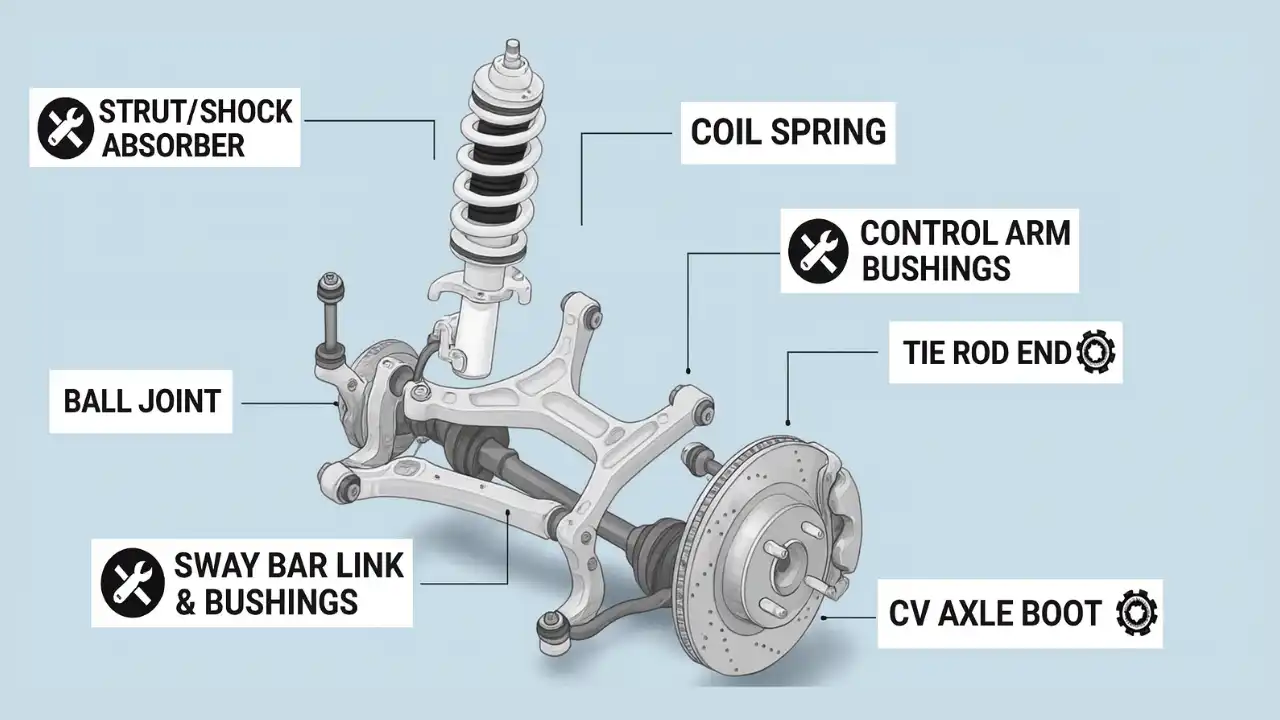
Here are the parts that tend to need attention first:
- Shocks: These control bounce and keep the car stable. When they wear out, the car may bounce more than once after a bump.
- Struts: These support the car and help keep alignment steady. Worn struts often cause nose-diving when braking or a shaky steering feel.
- Springs: These hold the car’s weight. Weak springs make the car sit lower on one side or feel soft over bumps.
- Bushings: These cushioned metal parts. When they crack or dry out, you may hear clunks or feel looseness in the steering wheel.
- Control Arms: These help the wheels move smoothly. Worn control arms can cause drifting, uneven handling, or unusual tire wear.
- Ball Joints and Tie Rods: These are small but important connectors. When they wear out, the car may shake or respond slowly to steering.
All these parts play a role in how the car handles, so when one gets weak, the others work harder to make up for it. That’s why small issues grow into bigger repairs if ignored for too long.
Mileage, Symptoms, and the Right Time to Repair
The best time to take action is when you notice the very first change in how the car rides or responds. Suspensions usually start showing wear between 50,000 and 100,000 miles, but this depends on driving habits and road conditions. If you often drive on rough pavement or carry heavy loads, the parts may wear out sooner. If you drive mostly on smooth roads, they may last longer. In every case, your car will give you clues long before the parts fail completely.
Signs that it’s time to repair include:
- A ride that feels rougher or bouncier than usual
- Steering that feels loose, shaky, or delayed
- Tire wear that shows uneven or patchy areas
- The car is leaning, dipping, or sitting lower on one side
- New noises over bumps, especially clunks or squeaks
- Braking that feels longer or less steady
Some people wait for these signs to get “worse” before going to a shop, but that approach often leads to bigger repair bills. For example, weak shocks can damage tires, and worn bushings can cause metal parts to hit each other. If you fix things early, you usually replace fewer parts and protect the rest of the system.
The ideal moment to act is when the symptoms appear for the first time and become consistent. Your suspension isn’t something that fixes itself. Once a part wears out, the wear continues until it’s replaced. Early action keeps your car smoother, safer, and less expensive to maintain.
Your suspension does the hard work of keeping your car steady, comfortable, and safe, even though it’s hidden under the wheels. Small changes like noises, rough rides, or uneven tire wear are your car’s way of saying it needs attention. Ignoring these signs can lead to bigger repairs, worn tires, and harder steering. Taking care of suspension issues early keeps your drives smooth, your tires lasting longer, and your car safe and responsive on every turn, stop, and bump in the road.
Final Thoughts
Your suspension affects every part of how your car feels on the road. When you pay attention to early signs like noise, bounce, or uneven tire wear, you protect your comfort and safety. Small issues grow fast, but catching them early keeps your car smooth, steady, and easy to control. A simple check today can save you from bigger repairs later and keep every drive feeling right.
Schedule Your Suspension Check Today
If your car has started to feel different, now is the best time to get it looked at. For trusted suspension repair and friendly service, book a visit with Brian’s Tire & Service right here in Huntsville, AL. Their team can inspect your suspension system, explain what they find, and help you get back to a smooth, safe ride.
FAQs
Why does my car feel bouncy even on smooth roads?
A bouncy ride often means the shocks or struts are worn. These parts control how much the car moves after a bump. When they weaken, the car keeps bouncing instead of settling quickly. If the bounce happens more than once or twice, it’s time to get the suspension checked.
What causes uneven tire wear?
Uneven wear usually happens when the suspension system can’t keep the wheels balanced and steady. Weak springs, worn bushings, or bad alignment can make the tire press harder on one side. This shortens the life of the tire and can also affect steering control.
Why does my car pull to one side?
Pulling to one side can be a sign of worn control arms, weak struts, or a simple alignment issue caused by suspension wear. It can also mean a tire is damaged. If your car keeps drifting even when the steering wheel is straight, the suspension may not be holding the wheels in place correctly.
Is it safe to drive with a bad suspension?
It may feel safe at first, but worn suspension parts can make braking less steady and reduce your ability to control the car in sudden moves. The car might shake, bounce, or take longer to stop. Driving for too long with worn parts can also damage other components. Getting it checked early is always safer.
How often should I get my suspension inspected?
A good rule is to check it during regular service visits or any time you notice a change in ride comfort, noises, or handling. Many drivers have it inspected around every 12,000 to 15,000 miles, but listening to how your car feels is the most reliable guide.