
Ever looked at your tire and saw a bunch of letters and numbers? You’re not alone. Most people find tire markings confusing.
But here’s the thing. Those numbers are not random. They tell you everything about your tire. The size, the speed it can handle, when it was made, and much more.
I remember the first time I needed new tires. I walked into the shop feeling lost. The worker asked me what size I needed. I had no idea. I felt silly.
That’s why I wrote this guide. You’ll learn to read your tire sidewall like a pro. No hard words. No confusion. Just simple steps anyone can follow.
Why You Need to Know Your Tire Numbers
Safety Comes First
The wrong tires can be dangerous. Too small or too big, and your car won’t drive right. The steering can feel weird. Your brakes might not work as well. In bad weather, you could lose control. I once saw someone use the wrong tire size. Their car pulled to one side. The speedometer showed the wrong speed. That’s not safe. When you know how to read your sidewall, you pick the right tire every time. Your family stays safe. Your car drives smoothly.
Save Money on the Right Tires
Tire shops want to help you. But sometimes they might sell you more than you need. When you understand tire numbers, you know exactly what to buy. You won’t pay extra for the wrong size. You won’t buy tires that wear out too fast. Plus, you can shop around. Compare prices online. Check different stores. That’s how you save money.
What Do the Numbers on Your Tire Mean?
The First Letter: Tire Type (P, LT, ST)
Look at your tire sidewall. You’ll see letters before the numbers. This tells you what kind of vehicle the tire fits.
- P means passenger tire. Most cars use these. Your sedan, small SUV, or minivan probably needs P tires.
- LT stands for light truck. Big trucks, heavy SUVs, and work vehicles use these. They can carry more weight.
- ST is for special trailer. Boat trailers, camper trailers, and utility trailers need these.
Sometimes you won’t see any letters. That means it’s a metric tire. These come from Europe. They work fine but measure things a bit differently.
According to a study published by the National Highway Traffic Safety Administration (NHTSA), using the correct tire type for your vehicle improves safety and handling (https://www.nhtsa.gov/vehicle-shoppers/tires).
The Three-Digit Number: Tire Width
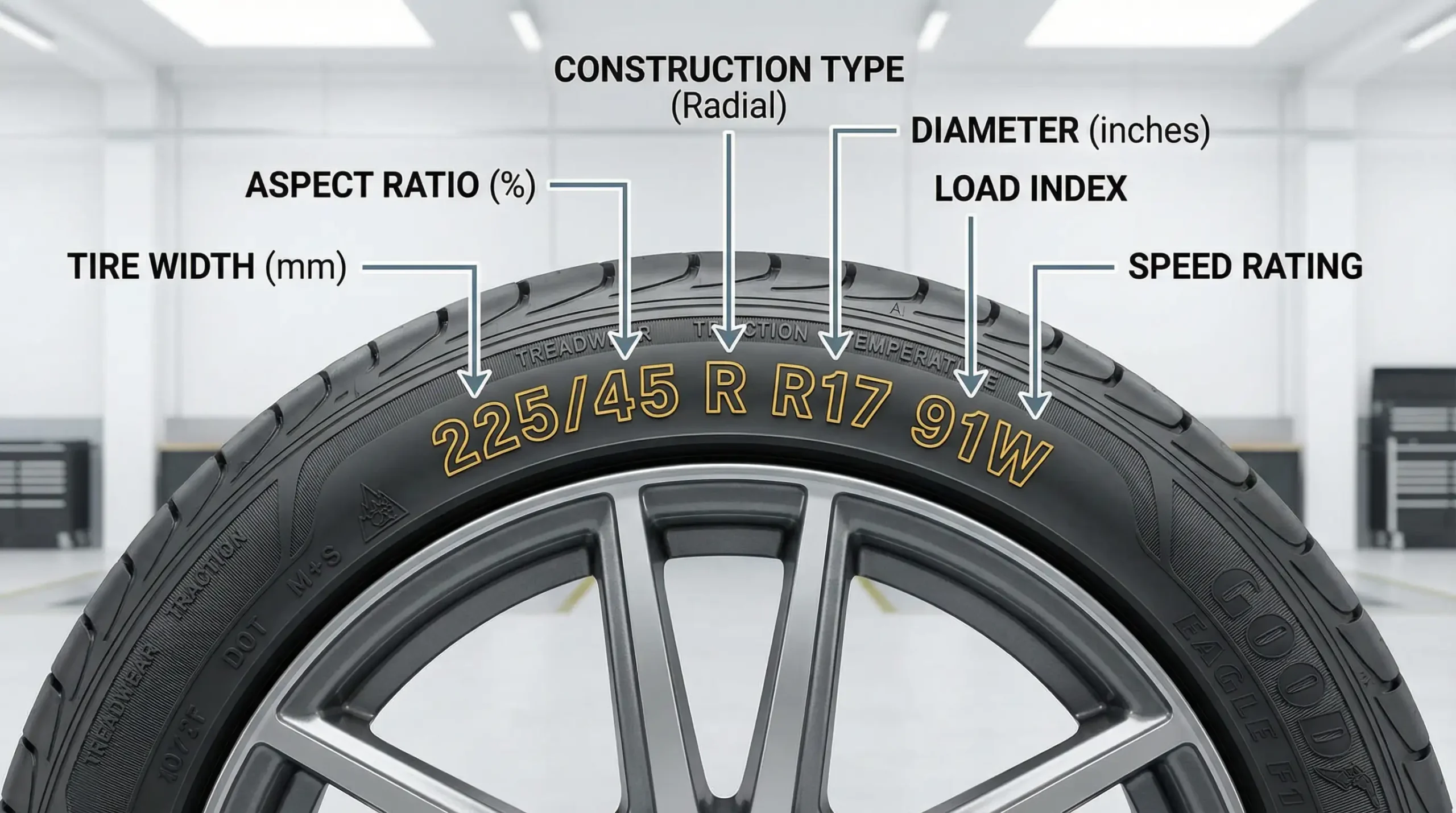
After the letter, you’ll see three numbers. This is your tire width in millimeters. Let’s say you see P215. That means your tire is 215 millimeters wide from side to side. Wider tires give you better grip. But they cost more. They also use more gas. Narrow tires save fuel. They’re cheaper too. But they don’t grip as well in turns. Most regular cars use widths between 185 and 225. Big trucks can go up to 275 or more.
Understanding Aspect Ratio and Construction
What Is Aspect Ratio?
After the slash, you’ll see another number. This is the aspect ratio. It shows how tall your tire’s sidewall is compared to its width. It’s shown as a percentage. For example, P215/65 means the sidewall height is 65% of the tire width. Higher numbers (like 70 or 75) mean taller sidewalls. These give you a softer, more comfortable ride. They’re good for rough roads. Lower numbers (like 45 or 50) mean shorter sidewalls. These help your car turn better. Sports cars use these. But the ride feels bumpy. I drive on city roads with some potholes. I like a 60 or 65 aspect ratio. It’s a nice middle ground.
The Letter “R” and What It Means
You’ll see a letter after the aspect ratio. Almost always, it’s R. R stands for radial. This is how the tire is built inside. Radial tires have cords that run across from side to side. This makes them strong. They last longer. They grip better. They save gas. Almost every car tire today is radial. It’s the best type. Sometimes you might see D (diagonal) or B (belted). These are old styles. Only some trailers and motorcycles still use them.
Wheel Size and Load Index Explained
Finding Your Wheel Diameter
The next number tells you the wheel diameter in inches. For example, P215/65R15 means this tire fits a 15-inch wheel. Common sizes are 15, 16, 17, 18, and 19 inches. Bigger trucks might use 20-inch wheels or larger. This number must match your wheel exactly. You can’t put a 16-inch tire on a 15-inch wheel. It won’t fit. When buying new tires, always check this number first. It’s the easiest way to make sure you’re getting the right fit.
Load Index: How Much Weight Can Your Tire Handle?
After the wheel size, you’ll see a two-digit number. This is the load index. It tells you how much weight each tire can carry when fully inflated. The number doesn’t mean pounds directly. It’s a code. You need to check a load index chart. For example, a load index of 89 means each tire can carry 1,279 pounds. To find your car’s total capacity, multiply by four tires. So 89 x 4 = 5,116 pounds total. Never use tires with a lower load index than your car needs. That’s dangerous. The tire could fail while driving. Most passenger cars use load indexes between 75 and 100. Trucks use higher numbers, like 110 or 120.
Speed Rating: How Fast Can You Go?
What the Letters Mean
Right after the load index, you’ll see a letter. This is your speed rating. It shows the maximum safe speed your tire can handle for a long time. For instance, P215/65R15 89H has a speed rating of H. This doesn’t mean you should drive that fast. It just means the tire can handle it safely if needed. The letter also tells you about the tire’s quality. Higher-rated tires usually grip better and stop faster.
Common Speed Ratings You Should Know
Here are the most common speed ratings:
- S = 112 mph – Good for most regular cars
- T = 118 mph – Very common on family sedans
- H = 130 mph – Popular on newer cars and small SUVs
- V = 149 mph – Used on sporty cars and performance vehicles
- W = 168 mph – High-performance sports cars
- Y = 186 mph – Super sports cars only
Most people need S, T, or H. Unless you drive a sports car, these work great. I have an H-rated tire on my car. It’s perfect for highway driving. The car feels stable even at high speeds (within the legal limit, of course).
The DOT Code: Your Tire’s Birth Certificate
How to Read Manufacturing Dates
Every tire has a DOT code. DOT stands for Department of Transportation. This code shows where and when your tire was made.
Look for the letters DOT on your sidewall. After DOT, you’ll see numbers and letters. The last four numbers are the most important. They show the week and year of manufacture. For example, DOT XXXXXX3323 means the tire was made in the 33rd week of 2023. The 33rd week is around August. So this tire was made in August 2023. Why does this matter? Tires get old. Old tires become weak, even if they look fine.
When Should You Replace Old Tires?
Rubber breaks down over time. Sunlight, heat, and air make it crack.
According to recommendations from Tire Rack, a leading tire testing organization, tires that are six years old or more should be checked by a professional, even if the tread looks good.
Most experts say replace tires after 10 years, no matter what, even if they’re not used much. Even if they look perfect.
I once bought a car with tires that looked brand new. The tread was deep. But when I checked the DOT code, they were nine years old. I replaced them right away. Safety first.
Check your spare tire too. Many people forget about it. But if it’s too old, it won’t help you in an emergency.
Special Symbols and What They Tell You
Winter Tire Symbols (M+S and 3PMSF)
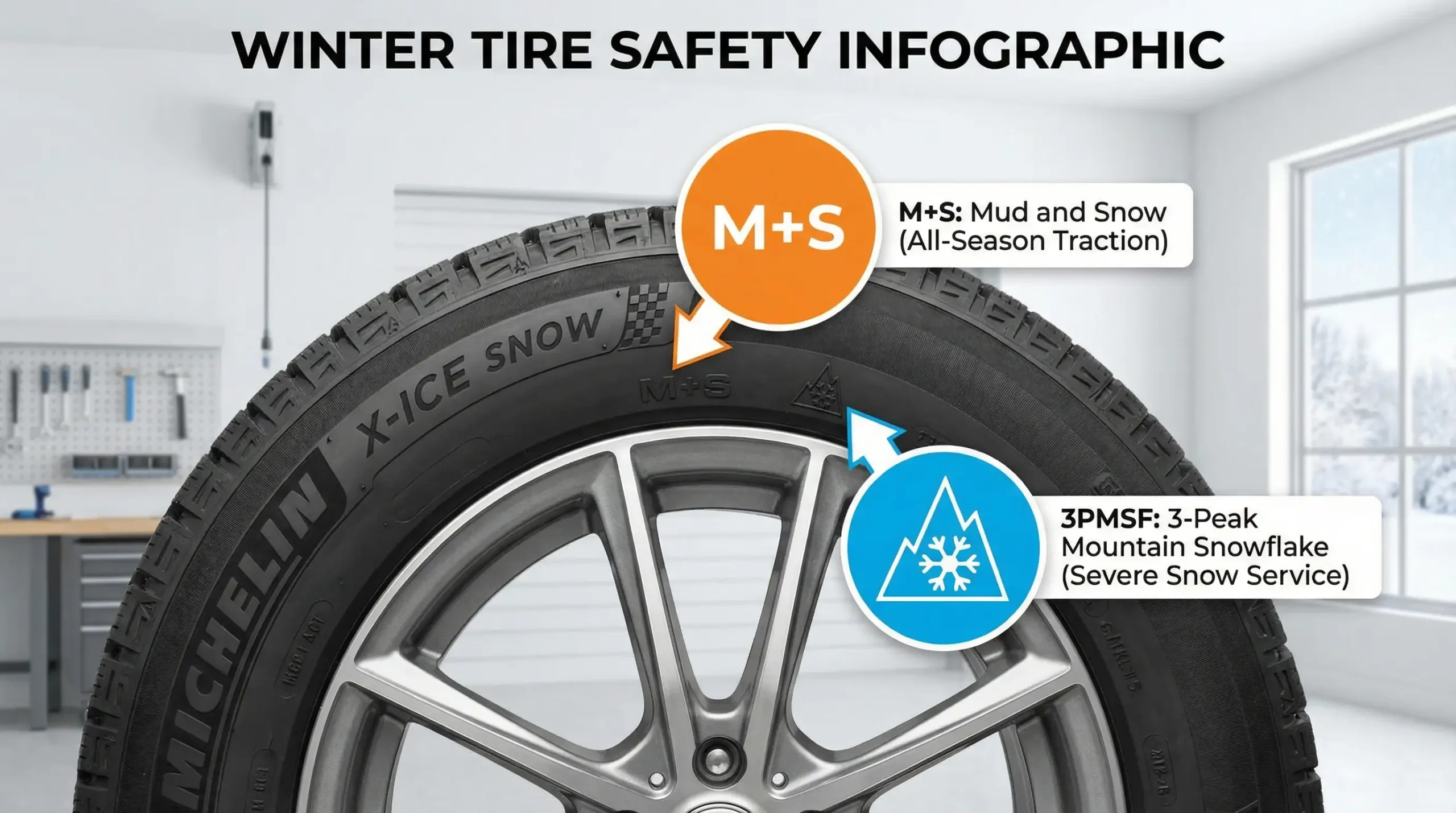
If you live where it snows, look for special winter symbols. M+S means Mud and Snow. These tires work okay in light snow. But they’re not true winter tires. All-season tires often have M+S. They’re fine for most weather. But not for heavy snow or ice. The three-peak mountain snowflake (3PMSF) is better. This symbol shows the tire was tested in real winter conditions.

It looks like a mountain with three peaks and a snowflake inside. If you see this, the tire is a true winter tire. Winter tires with this symbol stop much faster on ice. They grip better in snow. If you drive in harsh winters, look for this symbol.
Other Important Markings
You might see other symbols too:
- Run-flat tires have special markings like RF, RFT, or SSR. These tires can drive for a short distance even after a puncture. You can get to a repair shop without changing the tire on the roadside.
- Tubeless means the tire doesn’t need an inner tube. Almost all modern tires are tubeless. This makes them lighter and safer.
- Max Pressure shows the maximum air pressure the tire can handle. But don’t use this number to fill your tires. Check your car’s door sticker instead. It shows the right pressure for your specific vehicle.
Some tires also show the tread wear rating. A higher number means the tire should last longer. But this is just an estimate. Your driving style and road conditions make a big difference.
Conclusion
Reading tire sidewall numbers isn’t hard once you know what to look for. Start with the tire type (P, LT, or ST). Check the width, aspect ratio, and wheel size. These tell you if the tire fits your car. The load index and speed rating show if the tire can handle your vehicle’s weight and speed safely. Don’t forget the DOT code. It tells you how old your tire is. Replace tires that are too old, even if they look good. And if you live somewhere with winter weather, look for the three-peak mountain snowflake symbol. Now you can walk into any tire shop with confidence. You know what you need. You understand the numbers. And you can make smart choices that keep you safe and save you money. Next time you shop for tires, take this guide with you. Check your current tire sidewall. Write down the numbers. And get exactly what your car needs.
Frequently Asked Questions
Can I use different-sized tires on my car?
No, you should not use different-sized tires on the same car. All four tires should match in size.
Different size tires can mess up your car’s handling. Your steering might feel strange. Your speedometer could show the wrong speed. In some cases, it can even damage your car’s parts.
If you want to change tire sizes, talk to a tire shop first. They can tell you what sizes work safely on your car.
Where can I find my vehicle’s recommended tire size?
Check three places. First, look at the sticker on your driver’s side door. Open the door and look at the door frame. You’ll see a sticker with tire size and pressure info.
Second, check your owner’s manual. It lists all the approved tire sizes for your car.
Third, you can look at your current tires. Just make sure they’re the original size that came with your car.
How often should I check my tire sidewall for damage?
Check your tires at least once a month. Look for cuts, cracks, or bulges on the sidewall.
Also, check them before long trips. And anytime you hit a big pothole or curb.
Sidewall damage is serious. If you see cracks or bulges, replace the tire right away. Don’t wait. A damaged sidewall can blow out while you’re driving.
What does “max pressure” on the sidewall mean?
Max pressure is the highest air pressure the tire can safely hold. It’s usually shown in PSI (pounds per square inch).
But don’t use this number to fill your tires. It’s just the maximum limit, not the recommended pressure.
Instead, use the pressure listed on your car’s door sticker. That number is the right amount for your specific vehicle. It gives you the best ride, handling, and fuel economy.
Are run-flat tires marked differently?
Yes, run-flat tires have special markings. Different brands use different codes.
Look for RF, RFT, SSR, EMT, or DSST on the sidewall. These all mean the tire is a run-flat.
Run-flat tires let you drive for about 50 miles after a puncture. This gives you time to reach a repair shop safely. But they cost more than regular tires and often give a stiffer ride.