
Your car won’t start. You turn the key, and all you hear is a slow, sad click. If this has happened to you, you already know how much stress a dead battery can cause especially when you’re late for work or stuck in a parking lot at night. Here’s the good news: once you know how car batteries work and what wears them down, you can spot trouble early and avoid that whole mess.
How Long Do Car Batteries Last? (The Quick Answer)
Let’s get straight to it, because I know this is what you came here for.
Most car batteries last somewhere between three and five years. That’s the honest, simple answer. But the real number depends a lot on your battery type, your climate, and how you drive.
Average Lifespan by Battery Type
Here’s a simple breakdown:
| Battery Type | Typical Lifespan |
| Standard lead-acid | 3 to 5 years |
| AGM (Absorbent Glass Mat) | 4 to 7 years |
| EFB (Enhanced Flooded) | 4 to 6 years |
| Lithium-ion (EV battery) | 8 to 15 years |
Most gas-powered cars still use a lead-acid battery, so if you drive a normal car or truck, plan around that 3 to 5 year window.
What This Number Really Means for You
A lifespan range is not a guarantee. It’s more like a weather forecast. It tells you what’s likely, not what’s certain.
I’ve seen batteries die at two years. I’ve also seen one last almost seven years in an old truck that barely got driven. The number is a guide, not a rule. Use it to know when to start paying closer attention, not as an exact expiration date.
Think of it this way: your battery has a health bar, even if your car doesn’t show it to you anywhere. Every hot summer, every short trip, every jump start takes a small bite out of that bar. None of those things kill the battery on their own. It’s the pile-up over months and years that finally does it.
That’s why two people with the same car, bought the same year, can end up with two completely different battery stories. Where you live, how you drive, and how closely you watch for small warning signs shape that final number more than the sticker on the battery ever could.
What Are the Different Types of Car Batteries?
Not all batteries are built the same way, and the type in your car changes how long it should last and how you should treat it.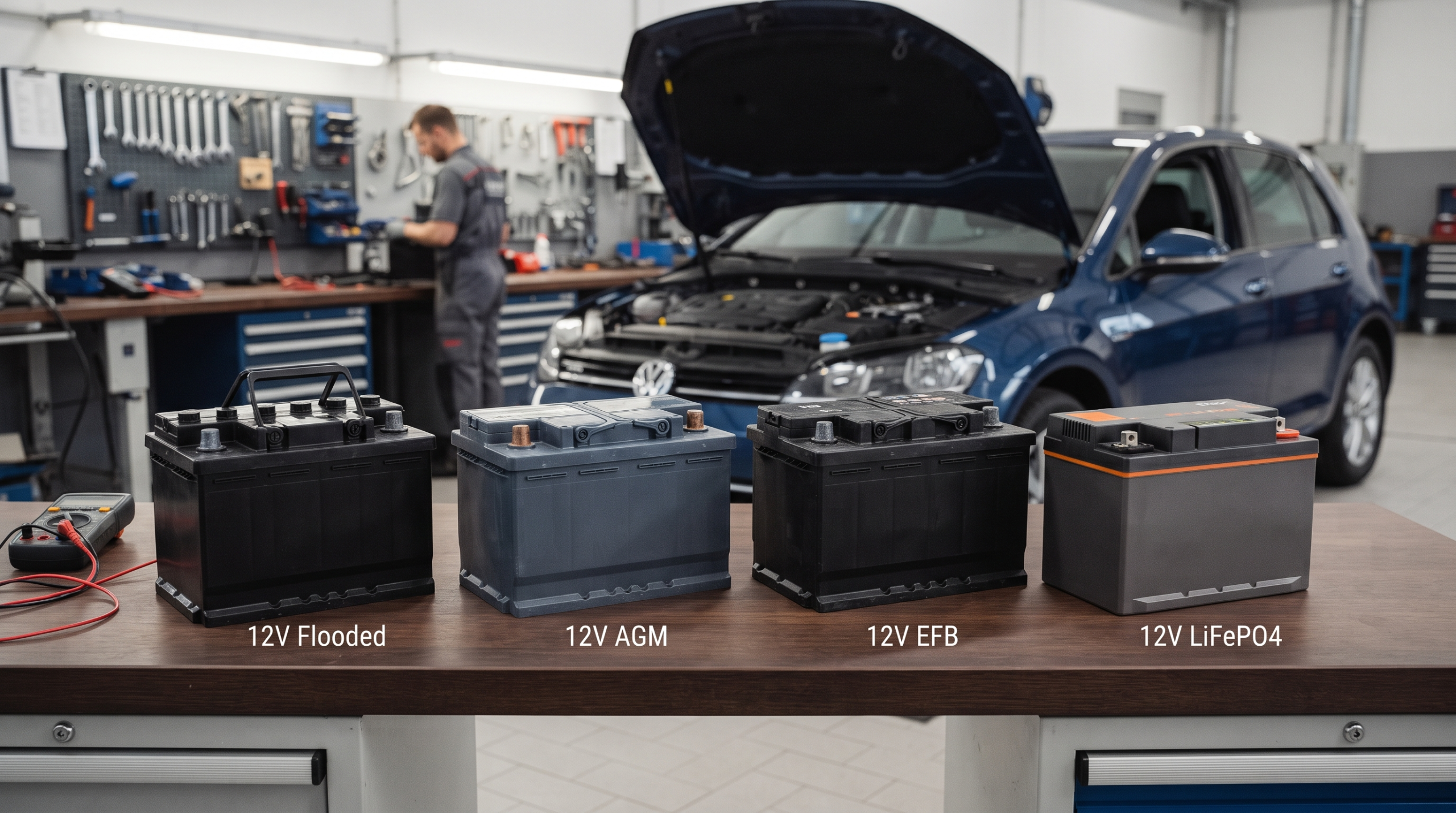
Lead-Acid Batteries
This is the classic car battery. It’s been around for over a hundred years, and it still works the same basic way: lead plates sit in a sulfuric acid solution, and a chemical reaction between them creates the electricity that starts your engine.
Lead-acid batteries are cheap and reliable. That’s why most cars still use them. The downside is they don’t handle deep drains or repeated full discharges very well.
AGM, EFB, and Lithium-Ion Batteries
Newer cars, especially ones with start-stop technology (where the engine shuts off at red lights to save fuel), often need something stronger than a basic lead-acid battery. That’s where AGM batteries come in.
AGM stands for Absorbent Glass Mat. Instead of liquid acid sloshing around, the acid is held in a glass mat, which makes the battery more durable and better at handling frequent charging cycles. EFB batteries sit in the middle better than standard lead-acid, but not quite as tough as AGM.
Then there’s lithium-ion, the type used in electric vehicles. It’s a totally different chemistry, built for a much longer life and a much higher price tag. I’ll get into that more later, because EV batteries deserve their own section.
Here’s a simple way to picture the difference. A lead-acid battery is like an old flip phone battery: cheap, simple, and it does the job but wears down faster if you push it hard. AGM is closer to a mid-range smartphone battery: sturdier, handles more charging cycles, but costs more upfront. EFB sits in between the two, built for cars that need a bit more than basic but don’t quite need full AGM performance.
Honestly, if you’re not sure which one your car has, check your owner’s manual or ask a mechanic before buying a replacement. Using the wrong type can actually shorten your battery’s life, and in some newer cars with start-stop technology, the wrong battery type can even trigger dashboard warning lights or stop the start-stop feature from working at all.
A quick tip: the type is usually printed right on the battery case itself, along with the group size and manufacture date. If you ever swap batteries yourself, always match the same group size and type so it fits the tray and connects the way it should.
What Factors Shorten Your Car Battery’s Life?
This is the part most people skip, and it’s the part that actually matters the most.
Climate and Temperature
Heat is the real enemy here, even though cold weather gets the blame. When it’s hot, the chemical reaction inside your battery speeds up, and the fluid inside can slowly evaporate. Over months and years, that wears the battery down faster.
Cold weather doesn’t kill your battery directly, but it does make an already weak battery struggle. Thick engine oil plus a low battery charge is a rough combination on a freezing morning.
I live somewhere with hot summers, and I learned this the hard way. My old battery lasted only two and a half years, while my cousin’s car in a cooler state got almost six years out of the same battery brand. Same battery, different climate, very different result.
Driving Habits and Short Trips
Short trips are quietly rough on your battery. Starting the engine takes a big burst of power, and if you only drive five or ten minutes before shutting it off again, your alternator never gets enough time to fully recharge the battery.
Do this over and over, and the battery slowly runs at a partial charge for weeks. That leads to something called sulfation, where sulfate crystals build up on the battery plates and reduce how much charge it can hold.
Leaving the key in the ignition, or leaving an interior light on overnight, causes the same kind of slow damage. It’s a small mistake that adds up fast.
There’s also something worth mentioning here: modern cars pull power even while parked. Your alarm system, clock, and onboard computer all sip a small amount of electricity around the clock. This is normal and by itself won’t hurt your battery. But combine that constant small drain with a car that only gets driven once or twice a week, and you’ve got a battery that never really gets a full recharge.
I once had a coworker whose car sat in the office parking lot five days a week while she took the train. Her battery died twice in one year, not because the battery was bad, but because it barely ever got the chance to charge back up. Once she started taking it for a real fifteen-minute drive every weekend, the problem disappeared completely.
Signs Your Car Battery Is Dying
Your battery usually gives you warning signs before it fully gives up. You just have to know what to look for.
Early Warning Signs
Here are the small clues that show up first:
- Slow engine cranking, where the engine takes a beat longer to turn over
- Headlights or dashboard lights that look dimmer than usual, especially while idling
- A clicking or grinding sound when you turn the key
- Corrosion or a white, chalky buildup around the battery terminals
I once ignored a slow crank for almost two weeks because I told myself it was “probably fine.” It wasn’t fine. It died on me in a grocery store parking lot on a Saturday morning, which is not the time you want to learn this lesson.
Looking back, the signs were all there. The radio clock had reset itself twice that week, which I brushed off as a glitch. The dome light seemed a little dimmer at night. Small stuff, easy to ignore, but it was the battery quietly waving a flag the whole time.
If you notice your car’s electronics acting a little off, like power windows moving slower than usual or the dashboard flickering for a split second on startup, that’s often the battery struggling to keep up with everything your car asks of it.
Signs You Need a Replacement Right Now
Some signs mean you shouldn’t wait at all:
- The car won’t start, even after a jump
- A swollen or cracked battery case
- A strong, rotten-egg smell near the engine, which can mean a sulfuric acid leak
- The battery is already three or more years old and struggling in any of the ways above
If you notice any of these, don’t put it off. A battery that’s already showing serious signs can fail completely with no warning at all, and that’s a much worse day than a quick replacement.
To be fair, not every no-start means a dead battery. Sometimes it’s a bad alternator, a loose cable, or a faulty starter. But if the battery is already a few years old and showing any of the signs above, it’s the first and easiest thing to rule out, and most shops can test it in a few minutes without charging you a dime.
How to Make Your Car Battery Last Longer
The good news is you have more control over this than you think. A few simple habits can add real months, sometimes years, to your battery’s life.
Simple Daily Habits
Try to drive your car for at least fifteen to twenty minutes at a time, especially if most of your trips are short. This gives the alternator enough time to fully recharge the battery instead of leaving it topped off halfway.
Turn off lights, chargers, and anything plugged into a power outlet before you shut off the engine. And if your car is going to sit unused for a few weeks, a small trickle charger (sometimes called a battery maintainer) keeps the charge steady without overcharging it.
Park in shade or in a garage when you can. This one small habit protects the battery from the kind of heat damage that quietly builds up over a hot summer.
According to Consumer Reports, a nonprofit organization that independently tests car batteries in its lab each year, heat is actually the bigger threat to battery life, not cold. Their testing simulates the high temperatures a battery faces under the hood, since that’s where most of the long-term damage happens over time. Their data also shows a clear regional pattern: batteries in the coldest northern parts of the U.S. can last close to five years on average, while batteries in the hottest southern regions often need replacing well before the four-year mark.
Maintenance Checks Worth Doing
A few minutes of maintenance goes a long way:
- Clean the battery terminals with a mix of baking soda and water if you see any corrosion
- Make sure the battery is fastened tightly, since vibration can loosen internal connections over time
- Get the battery load-tested once it’s two years old if you’re in a hot climate, or four years old in a cooler one
- Check the battery date sticker so you actually know its age
If you ever notice a swollen case, a leak, or a battery that just won’t hold a charge no matter what you try, that’s your sign to visit a shop rather than keep testing your luck. If you need help figuring out where your battery stands, a local mechanic or service center can run a proper load test in a few minutes and tell you exactly where things stand.
None of these habits take much time, and honestly, most of them become second nature after a while. I check my terminals about twice a year, usually when I’m already popping the hood for something else, like checking oil or washer fluid. It’s a small habit, but it’s saved me from at least one slow-building corrosion problem before it turned into a real issue.
How Long Do Electric Car Batteries Last?
Electric vehicles work on a completely different kind of battery, and honestly, the numbers are pretty impressive.
EV Battery Lifespan and Warranty
According to the U.S. Department of Energy’s Alternative Fuels Data Center, EV batteries are generally designed to last far longer than a traditional car battery. Department of Energy modeling suggests these lithium-ion battery packs can last around 12 to 15 years in moderate climates, and about 8 to 12 years in more extreme climates.
Most manufacturers also back their EV batteries with an 8-year or 100,000-mile warranty, whichever comes first. That’s a big deal, because it means if the battery fails early or degrades too much within that window, you’re usually covered.
EV vs. Traditional Car Batteries
A traditional 12-volt lead-acid battery starts your engine in a quick burst. An EV battery does something completely different it powers the entire drivetrain, mile after mile, which is a much bigger and more constant job.
That’s part of why EV batteries use a different chemistry (lithium-ion instead of lead-acid) and why they last so much longer. It’s honestly a fair trade-off for the cost, especially with the long warranty backing it up.
Interestingly, EVs still have a small 12-volt lead-acid battery too, tucked away to run things like the radio, lights, and onboard computer when the car is off. So even EV owners aren’t totally free from the classic car battery story.
I find that part kind of funny, honestly. You can own the most advanced electric car on the market, and it can still leave you stuck with a dead 12-volt battery on a cold morning, the exact same way a twenty-year-old sedan would. The big lithium-ion pack gets all the attention, but that small backup battery still needs the same basic care: keep it charged, keep the terminals clean, and don’t ignore the warning signs.
When Should You Test or Replace Your Battery?
You don’t need to guess. There’s a simple rhythm to follow here.
How Often to Test Your Battery
Once your battery hits the two-year mark in a hot climate, or the three to four-year mark almost anywhere else, it’s smart to get it tested. Most auto parts stores and repair shops offer this for free, and it only takes a few minutes.
I try to get mine checked whenever I go in for an oil change, since it’s easy to forget otherwise and the timing lines up nicely with routine maintenance.
It also helps to check right before any season change. Battery weaknesses that were hiding fine in mild spring weather often show up the second summer heat or winter cold puts extra stress on the battery. A five-minute test before the first heat wave or the first cold snap can save you a very inconvenient morning later.
What Happens During a Battery Test
A load test checks how well your battery holds voltage while it’s actually being used, not just when it’s sitting still. The technician connects a tester, applies a load similar to starting the engine, and watches how the voltage holds up.
If the battery passes, you’re good for a while longer. If it’s borderline or fails, that’s your cue to replace it before it strands you somewhere inconvenient.
Most testers also check something called reserve capacity, which is basically how long the battery can keep running your car’s electrics if the alternator suddenly stops working. It sounds like an unlikely situation, but alternators do fail sometimes, and a healthy battery can buy you enough time to pull over safely instead of losing power in traffic. A good test result on both fronts, voltage and reserve capacity, is a strong sign your battery still has life left in it.
Conclusion
So, how long do car batteries last? For most drivers, the honest answer is three to five years, with heat, short trips, and driving habits shifting that number up or down. Pay attention to the early warning signs, get your battery tested once it hits that two-to-four-year window, and take care of the small habits that protect it, like avoiding short trips and keeping it out of extreme heat when you can.
A little attention now saves you from a dead battery moment later, usually at the worst possible time. If you ever want a second opinion on your battery’s health, a quick visit to a trusted local shop can settle it in minutes.
If you drive an EV, the story is a bit different but the lesson is the same: know your battery, know its warranty, and don’t ignore small changes in how your car behaves. Whether it’s a lead-acid battery under the hood or a lithium-ion pack under the floor, a little bit of attention goes a long way toward avoiding an expensive surprise.
I’d love to hear about your own battery story. Has yours died way earlier than expected, or outlasted every guess you made about it?
FAQs
How do I know my car battery is dying?
Watch for slow engine cranking, dim headlights, clicking sounds when starting, and corrosion on the terminals. These usually show up weeks before a full failure.
Can a car battery last 10 years?
It’s rare for a standard lead-acid battery, but not impossible with light use and a mild climate. Lithium-ion EV batteries, on the other hand, commonly reach 10 years or more.
Does cold weather really kill car batteries faster?
Cold weather doesn’t cause as much long-term damage as heat does, but it does expose a battery that’s already weak, since starting an engine takes more power in the cold.
How much does a new car battery cost?
Prices vary by battery type and vehicle, generally ranging from around $100 for a basic lead-acid battery to $250 or more for an AGM battery. Your local auto parts store or mechanic can give you an exact price for your specific vehicle.
Can I jump-start my car myself, or should I call for help?
Jump-starting is usually safe to do yourself with jumper cables and another vehicle, as long as you follow the correct cable order and connect the negative cable to unpainted metal rather than the battery itself. If you’re not comfortable with it, or if the battery looks swollen, cracked, or leaking, it’s safer to call for roadside help instead of risking a spark near damaged battery casing.