
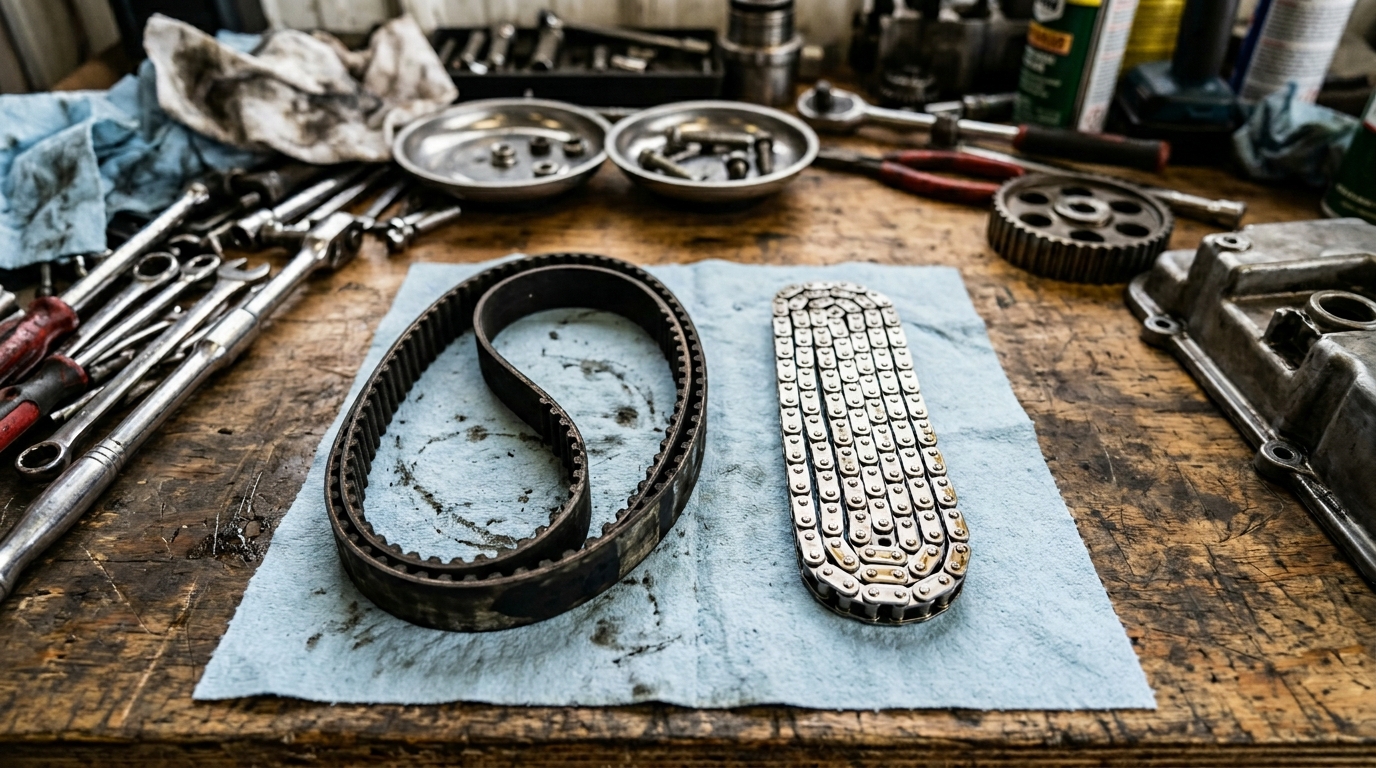
Your car’s engine has hundreds of parts. But if one small part fails, the whole thing stops. That one part? It’s either a timing belt or a timing chain.
Most people have no idea which one their car has. And honestly, I didn’t know either until I ignored a small rattling sound and ended up with a $1,400 repair bill. Not fun. So let’s break this down in a simple way, so you don’t make the same mistake I did.
What Are These Parts and Why Do They Matter?
What Is a Timing Belt?
A timing belt is a flat, ribbed belt made of reinforced rubber. It connects your car’s crankshaft to the camshaft. Together, these two parts control when your engine’s valves and pistons move.
Think of it like a dance. The crankshaft moves the pistons up and down. The camshaft opens and closes the valves to let air and fuel in. If they don’t move at exactly the right time, the whole engine can break. The timing belt keeps them in perfect sync, like a conductor keeping musicians on beat.
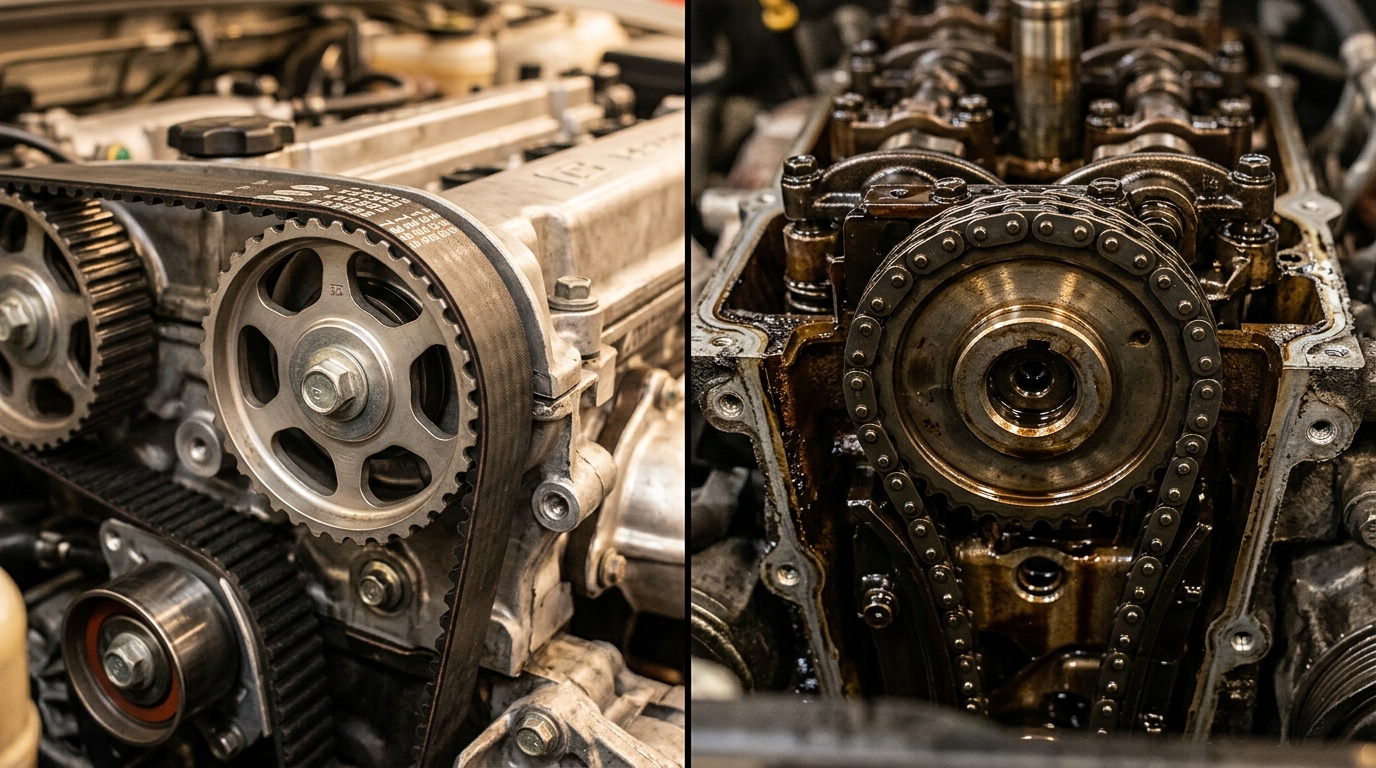
Because it’s made of rubber, it sits in a dry area away from engine oil. Oil can actually damage rubber and make the belt wear out faster.
What Is a Timing Chain?
A timing chain looks just like a bicycle chain, but it lives inside your engine. It does the same job as a belt, connecting the crankshaft and camshaft so the engine runs smoothly.
Because it’s made of metal, it runs in a wet environment. It gets lubricated by engine oil with every cycle. This is actually one reason timing chains last longer. They’re constantly being kept clean and smooth by the oil running through the engine.
Timing chains also use tensioners and guides to stay tight and on track. If those wear out, the chain can get loose and cause trouble.
Timing Belt vs Timing Chain: The Key Differences
Material, Location, and Noise
Here’s the simplest way to understand the difference. A timing belt is made of rubber. A timing chain is made of metal. That one difference changes almost everything about how they work and how long they last.
| Feature | Timing Belt | Timing Chain |
| Material | Reinforced rubber | Metal links |
| Location | Outside the engine (dry area) | Inside the engine (lubricated) |
| Noise level | Very quiet | Slightly louder |
| Needs oil? | No — oil damages it | Yes — oil keeps it alive |
| Replacement needed? | Yes, every 60,000–100,000 miles | Often lasts the life of the engine |
The timing belt is quieter because rubber absorbs vibration. This is actually why many car makers started using belts in the 1960s. People wanted quieter, smoother rides. But quiet comes with a cost: rubber wears out much faster than metal.
How They Affect Your Engine’s Feel and Sound
If you have a car with a timing belt, you probably don’t notice it at all. That’s the point. Belts are designed to run silently. But once they start to crack or wear, you might notice a small engine misfire or a slight drop in power. The scary part is there’s often no big warning before a belt breaks.
A timing chain that’s getting old will usually tell you. A rattling or ticking sound when you first start the car is a common sign. This happens because the chain has stretched and is loose. It’s annoying but also helpful, because it gives you time to fix it before it gets worse.
Lifespan and Durability: Which One Lasts Longer?
How Long Does Each One Last?
Most car makers recommend replacing a timing belt every 60,000 to 120,000 miles. Some cars have a time limit too, like every 5 to 7 years, even if you haven’t driven that far. That’s because rubber dries out and cracks over time, especially in hot climates.
A timing chain, on the other hand, can last the full life of the engine in many cars. There’s often no fixed replacement interval at all. The catch? You have to keep up with regular oil changes. Without clean oil flowing through the engine, the chain and its tensioners wear out much faster.
According to AutoZone’s engine guide, timing belts typically need replacement every 60,000 to 100,000 miles, while timing chains can last significantly longer with regular oil changes.
What Causes Them to Fail?
A timing belt fails when the rubber gets old, dry, or cracked. Oil contamination or coolant leaks near the belt can also destroy it quickly. And when it breaks, it often happens without warning. If your car has an interference engine<span style=”font-weight: 400;”>, a broken belt can cause the pistons to hit the valves and do serious damage. Repairs in that case can cost thousands of dollars.
A timing chain usually fails because of poor maintenance. Skipping oil changes lets dirty oil circulate, which wears down the chain and its guides. Over time, the chain stretches. A stretched chain can jump teeth on the sprockets and throw off your engine’s timing. This can cause rough running, a dashboard warning light, or even engine failure.
I once heard a story from a mechanic friend who said a customer came in with a timing chain that had stretched so badly it sounded like a handful of coins rattling in a tin can. All of it came down to never changing the oil. That’s a $1,200 repair that a $50 oil change would have prevented.
Cost to Replace: Which One Costs More?
Timing Belt Replacement Cost
Replacing a timing belt is not cheap, but it’s predictable. You’ll usually pay between $400 and $1,000 at a shop. The parts themselves cost $75 to $400. The rest is labor, and it takes most mechanics 2 to 5 hours to do the job properly.
Here’s a tip: if your car’s water pump runs off the timing belt, replace both at the same time. You’re already paying for the labor to take the front of the engine apart. It usually only adds $50 to $150 more for the water pump part, and it saves you from having to tear everything apart again in a year or two.
According to Mechanic Base’s repair cost breakdown: timing belt replacement typically runs $400–$1,000 total, while a timing chain replacement can range from $750 to $1,700.
Timing Chain Replacement Cost
Replacing a timing chain costs more. Expect to pay between $750 and $1,700, sometimes higher for complex engines. The chain itself might cost around $180 to $250, but the real cost is labor. The chain is hidden deep inside the engine, behind a cover. It takes much longer to access and replace.
The good news? Most timing chains never need replacing at all. If you keep up with oil changes, yours might last the full life of your car. The higher replacement cost is almost offset by the fact that you probably won’t ever need to pay it.
Which Is Better: Timing Belt or Timing Chain?
Honestly, most mechanics will tell you that a timing chain is the better long-term choice. It lasts longer, requires less scheduled replacement, and alerts you before it fails. But that doesn’t mean a timing belt is bad. It means they’re built for different things.
If you like a quieter car, plan to follow your maintenance schedule closely, and don’t keep your car for more than 80,000 miles, a belt works perfectly fine. If you want peace of mind and plan to drive your car for 150,000+ miles, a chain is the smarter choice.
The most important thing either way? Follow your car’s service interval. A belt that gets replaced on time will never let you down. A chain that gets clean oil on schedule will last for years without complaint.
Conclusion
The timing belt vs timing chain debate comes down to one thing: what kind of driver are you? Both parts do the same job. They keep your crankshaft and camshaft in perfect sync so your engine runs the way it should.
A timing belt is cheaper to make, runs quieter, but needs regular replacement. A timing chain is stronger, lasts longer, but costs more to fix when something does go wrong.
Neither is perfect. Both need attention. The worst thing you can do is ignore your maintenance schedule, whether that means replacing your belt on time or keeping up with your oil changes for a chain. Your engine will thank you, and your wallet will too.
Have you ever had a timing belt or chain problem? I’d love to hear what happened in the comments below!
Frequently Asked Questions (FAQs)
How do I know if my car has a timing belt or a timing chain?
The easiest way is to check your owner’s manual. It will say whether your car uses a timing belt or a timing chain. You can also search your car’s make, model, and year online. If your car has a scheduled replacement interval listed in the maintenance schedule, it almost certainly has a belt. Chains usually don’t have a set replacement mileage.
What happens if I don’t replace my timing belt on time?
If you skip the replacement and the belt breaks, your engine stops immediately. In an interference engine, the pistons can hit the open valves and bend them. This causes very expensive damage, sometimes totaling the car. It’s always cheaper to replace the belt on schedule than to deal with the aftermath of a break.
Does a timing chain really last the life of the car?
In many cases, yes. If you keep up with regular oil changes using clean, high-quality oil, a timing chain can last 200,000 miles or more. But if you skip oil changes, the chain and its tensioners wear out much faster. Dirty oil is the number one enemy of a timing chain.
Can I replace a timing belt myself to save money?
Technically yes, but it’s not recommended unless you are an experienced mechanic. Installing a timing belt incorrectly can seriously damage your engine. The job requires precise alignment of the crankshaft and camshaft, and even a small mistake can cause big problems. For most people, paying a professional is the safer and smarter choice.
Is a timing chain quieter than a timing belt?
No. A timing belt is actually quieter because rubber naturally absorbs sound and vibration. That’s one of the reasons car makers started using belts in the first place. A timing chain is metal and produces a little more noise. If your chain is making a loud rattling sound, that’s a warning sign and you should get it checked right away.