
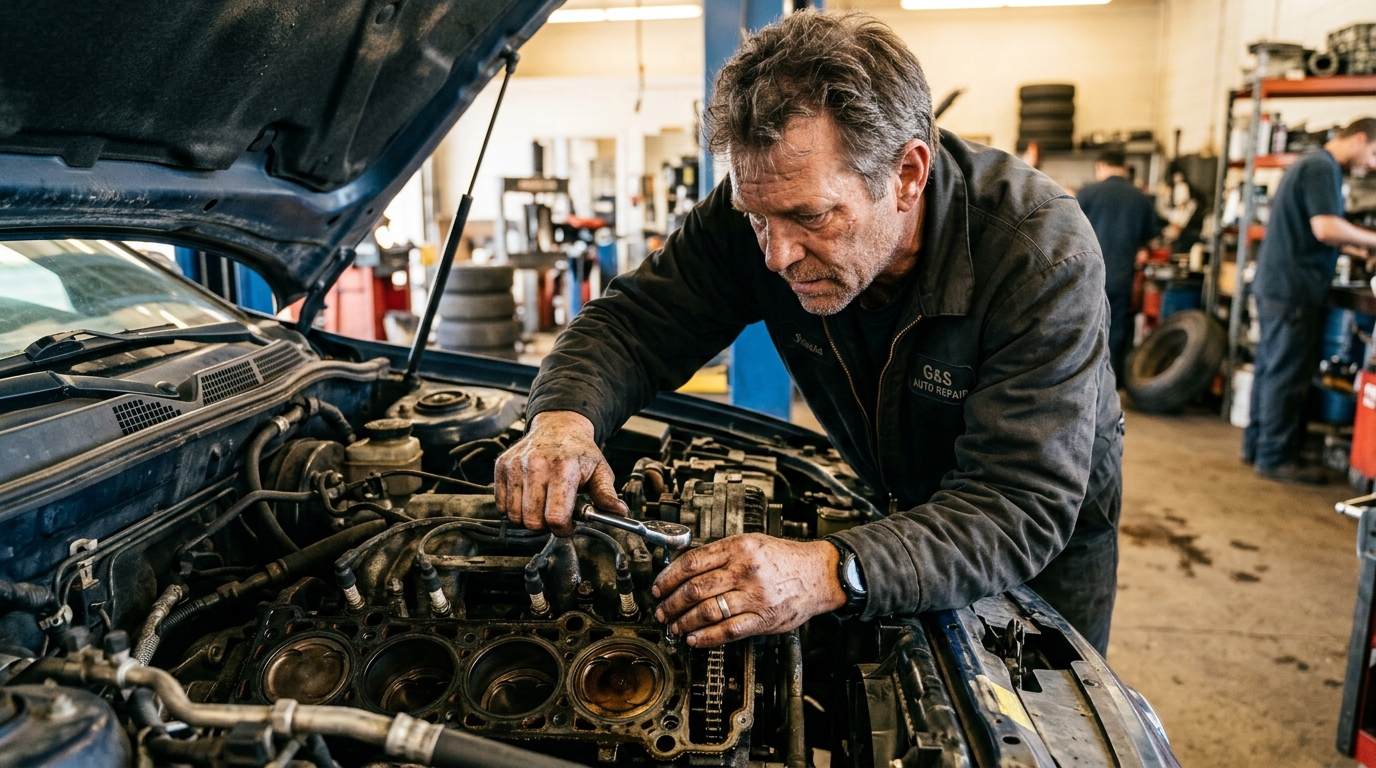
That knocking sound coming from your engine is not something you should ignore. Trust me, I learned this the hard way. The first time I heard my car knocking on a highway, I turned the music up and hoped it would go away. It did not. Two weeks later, I was looking at a repair bill that could have been much smaller if I had acted fast. Engine knocking causes and fixes are something every driver should know, not just mechanics.
What Is Engine Knocking?
Engine knocking, also called pinging or detonation, is a sound your engine makes when something goes wrong inside the combustion chamber. Normally, your engine burns fuel in a smooth and controlled way. When it does not, you hear that tapping or knocking noise.
Think of it like this. You are clapping your hands in a steady rhythm. Now imagine two people clapping at different times, crashing into each other. That clash is what happens inside your engine cylinders when the air-fuel mixture burns unevenly or at the wrong time.
It can sound like marbles rolling around in a tin can. Some people describe it as a metallic tapping or repetitive pinging. It often gets louder when you speed up or go uphill.
Why You Should Never Ignore Engine Knock
I know it is easy to think “it is just a small noise.” But engine knock creates real pressure spikes inside your engine that can damage your pistons, connecting rods, and even your cylinder walls. Left untreated, it can lead to complete engine failure.
The good news? Most causes of knocking are fixable. Some fixes cost almost nothing. Others need a mechanic. But catching it early always saves you money.
Top Causes of Engine Knocking
There is no single cause of engine knocking. It can come from several places. Here are the most common ones I have seen and read about.
| Cause | Quick Sign | Typical Fix |
| Wrong fuel (low octane) | Knock on acceleration | Use the correct fuel grade |
| Worn spark plugs | Misfires and rough idle | Replace spark plugs |
| Carbon buildup | Worse over time | Fuel system cleaning |
| Wrong ignition timing | Knock at startup | Timing adjustment or sensor fix |
| Low engine oil | Ticking from the top of the engine | Check and refill oil |
| Lean air-fuel mixture | Higher engine temps | Check fuel injectors or MAF sensor |
Low-Octane Fuel: The Most Common Culprit
The number one cause of engine knock in everyday cars is using the wrong fuel. If your car needs premium fuel and you fill it with regular fuel, the lower octane rating makes the fuel ignite too early under pressure. This is called pre-ignition.
The fix is simple. Check your owner’s manual. It tells you exactly what octane level your engine needs. If your car calls for 91 or 93 octane, do not try to save a few dollars with 87. That small saving can lead to big repair costs.
Honestly, if you have already put in the wrong fuel by mistake, the best thing you can do is top it off with the correct grade as soon as you can. Diluting it helps reduce the effect fast.
Spark Plugs and Ignition Timing Issues
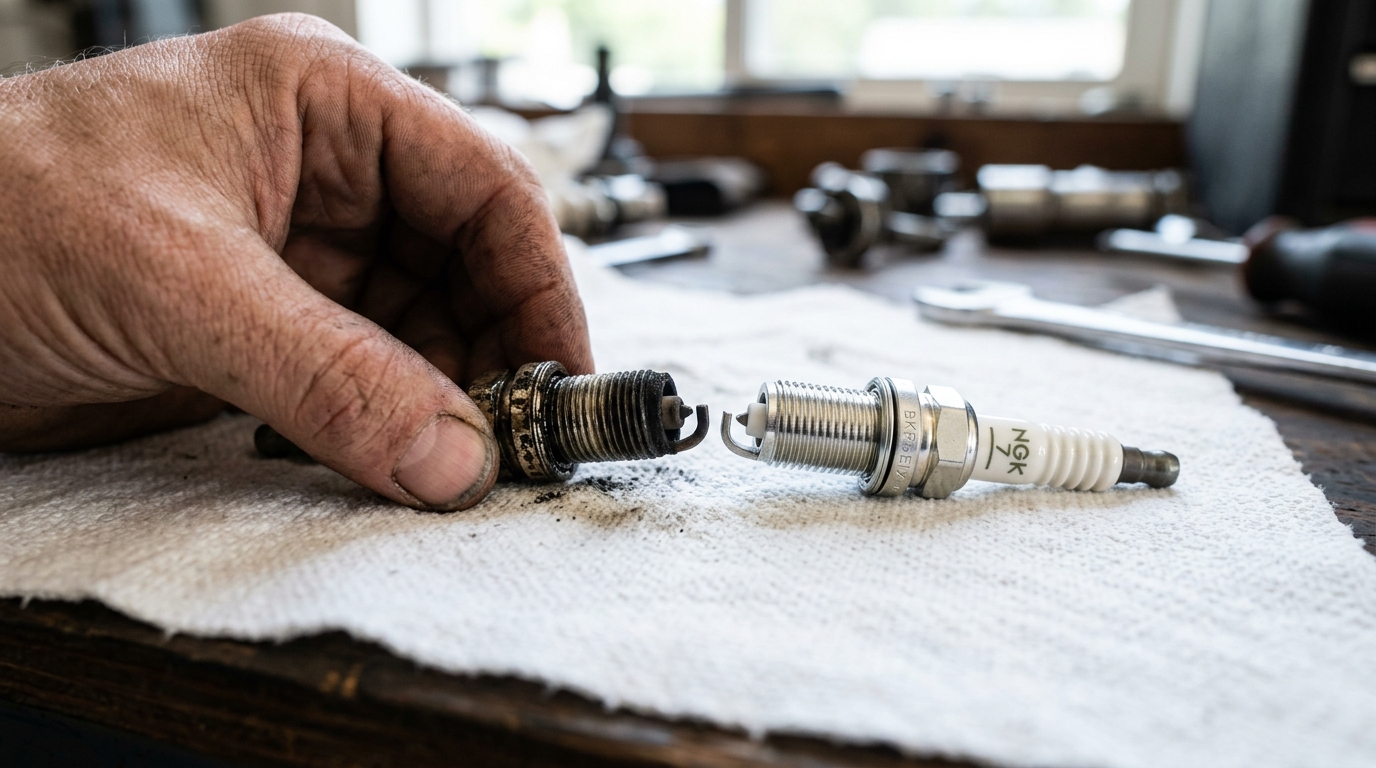
Old or damaged spark plugs are another very common reason for engine knocking. A spark plug’s job is to fire at the exact right moment to ignite the fuel. When a spark plug wears out or gets dirty, it fires at the wrong time. This throws the whole combustion cycle off and causes knocking, especially when you press on the gas.
Most cars need new spark plugs every 30,000 to 100,000 miles, depending on the type. Check your manual. Replacing them is usually not expensive, and it can make a huge difference.
Ignition timing is closely connected. If the spark fires too early or too late, it leads to abnormal combustion. Modern cars have a computer that controls timing, but a bad sensor or faulty ignition module can throw it off. A mechanic can run a diagnostic check to find out fast.
Carbon Deposits and Oil Problems
Over time, carbon deposits build up inside your engine on the pistons, valves, and combustion chamber walls. This buildup raises the pressure inside the chamber and creates hot spots. These hot spots can ignite the fuel before the spark plug even fires, causing pre-detonation and knocking.
A good fuel system cleaning service can remove a lot of this buildup. Some drivers also use a fuel injector cleaner additive poured into the gas tank as a first step.
Low engine oil is a different but equally serious problem. Oil keeps metal parts from rubbing against each other. When oil is low or old, parts like the rod bearings and camshaft do not get proper lubrication. This causes a knocking sound that comes from the top or bottom of the engine. Always check your oil level if you hear a ticking or knocking sound.
According to the U.S. National Highway Traffic Safety Administration (NHTSA), regular vehicle maintenance including oil checks is one of the most effective ways to prevent engine damage and costly repairs.
How to Fix Engine Knocking: Step by Step
Fixing engine knocking depends on finding the root cause first. Here is a simple process you can follow.
Start by checking the easy things. Look at your oil level. Make sure you have been using the right fuel. Think about when you last replaced your spark plugs. These three checks alone solve the knocking problem for a lot of drivers.
If those are all fine, you likely need a professional diagnostic check. A mechanic will use a code reader to scan your car’s computer. This helps find if the knock sensor, timing system, or fuel injectors are causing the problem. Modern cars actually have a built-in knock sensor that detects abnormal combustion and tells the engine computer to adjust timing. But if that sensor is broken, it cannot do its job.
I have personally found that when I take the time to describe the knock carefully to my mechanic, like whether it happens at startup, under heavy load, or all the time, the diagnosis goes much faster. Details matter.
A study referenced by the U.S. Department of Energy shows that using the right oil viscosity and grade can improve engine efficiency by 1 to 2 percent and reduce the risk of engine wear that leads to knocking sounds.
Can You Drive with Engine Knocking?
The short answer is: not for long. Mild knocking caused by using the wrong fuel for a short time may not cause immediate damage. But if you keep driving with a knocking engine, you risk damaging your pistons, cracking cylinder walls, or destroying rod bearings. Any of these repairs costs thousands of dollars.
The safe move is to stop driving, get it checked, and fix it as soon as possible. Your engine is the heart of your car. You would not ignore chest pain, right?
Conclusion
Engine knocking causes and fixes are not as scary as they sound once you know what to look for. Most of the time, it starts with something simple: wrong fuel, worn spark plugs, or low oil. Catching it early is the key to avoiding a huge repair bill.
If you hear that knock, start with the basics. Check your oil, check your fuel, and check when you last serviced your spark plugs. If the knock continues, see a mechanic and get a proper diagnosis. Do not wait and hope it goes away on its own. It seldom does.
Have you dealt with engine knocking before? I would love to hear what fixed it for you. Drop your experience in the comments below!
Frequently Asked Questions (FAQs)
What does engine knocking sound like?
Engine knocking sounds like a repetitive metallic tapping, pinging, or rattling coming from inside your engine. Some people say it sounds like marbles shaking in a can. It often gets louder when you accelerate or drive uphill. It is different from a normal engine hum and usually shows up suddenly or gets worse over time.
Can low oil cause engine knocking?
Yes, low or dirty engine oil is a common cause of knocking. Oil keeps metal parts lubricated. Without enough oil, parts rub together and make a knocking or ticking sound. Always check your oil level first when you hear a new noise from your engine. Top it up with the correct grade if it is low.
Is engine knocking expensive to fix?
It depends on the cause. Some fixes are very cheap, like switching to the correct fuel grade or replacing spark plugs. Others can be costly, like fixing rod bearings or a damaged piston. The earlier you catch the problem, the cheaper the fix. Ignoring it always makes it worse and more expensive.
Can I fix the engine knocking myself?
You can fix some causes yourself. Switching to higher-octane fuel, topping up oil, adding a fuel system cleaner, or replacing spark plugs are all things many people do at home. But if the knocking is caused by a timing issue, a bad knock sensor, or internal engine damage, you need a qualified mechanic to handle it safely.
How do I prevent engine knocking from happening?
Prevention is easier than repair. Always use the fuel grade your car’s manual recommends. Change your engine oil on time. Replace spark plugs at the recommended intervals. Get a fuel system cleaning service every year or two. And listen to your engine. If something sounds different, check it early before it becomes a big problem.