
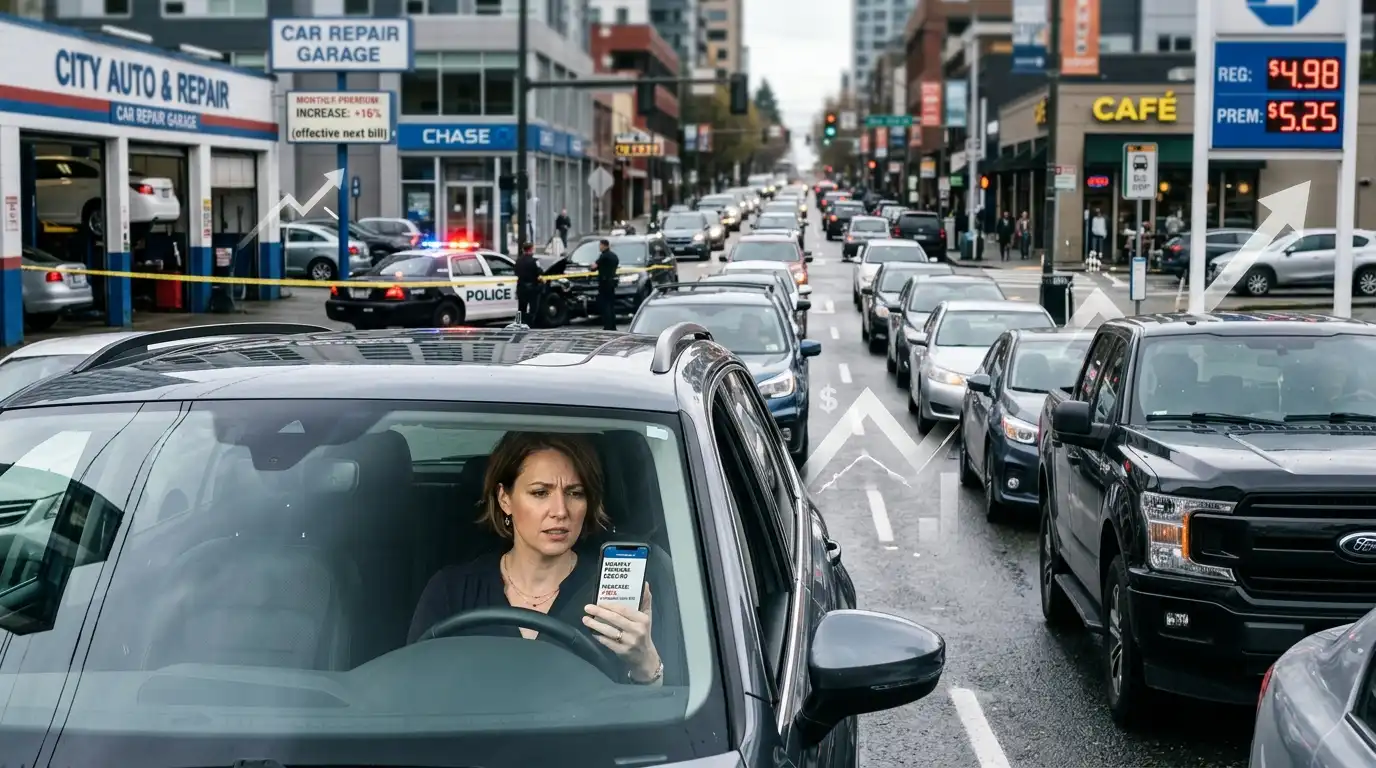
You open your renewal letter, and your stomach drops. Your car insurance just went up again. You haven’t had a single accident. No new tickets. Nothing changed on your end. So why on earth is your auto insurance premium climbing higher every single year? You’re not alone, and you’re not imagining it. This is happening to millions of drivers all across the USA, and there are real, clear reasons behind it.
How Much Have Car Insurance Rates Gone Up?
Let’s start with the numbers, because they tell the real story. According to the U.S. Bureau of Labor Statistics, motor vehicle insurance prices rose 11.3% from December 2023 to December 2024. That came right after an even bigger jump of 20.3% the year before. Put that together, and you’re looking at car insurance costing nearly one-third more than it did just a few years ago.
According to a report by Bankrate, the national average annual cost for full coverage car insurance in 2025 is $2,678, up from $2,543 in 2024. For someone earning the median household income of around $74,580, that’s about 3.6% of their entire yearly income just going to insure their car. That’s a lot. And for families with young drivers or people living in high-risk states, it’s even worse.
Why Are Insurance Companies Charging More?
Here’s something most people don’t know: insurance companies actually lost money for several years in a row. According to the Insurance Information Institute (Triple-I), in 2022, insurers paid out $1.12 in claims and expenses for every single $1 they collected in premiums. That means they were running at a loss. When any business loses money, it raises its prices. That’s exactly what happened here.
Think of it this way. Imagine you sell lemonade for $1 a cup, but each cup now costs you $1.12 to make. You can’t keep selling at a loss forever. You raise your price. That’s what auto insurers did, and we, the drivers, are the ones paying more now.
10 Main Reasons Why Car Insurance Is Going Up
1. Inflation Made Everything More Expensive to Repair
When inflation hit hard between 2020 and 2024, the price of almost everything went up, including the parts used to fix your car. Auto repair costs, labor rates, and the price of replacement parts all went through the roof. According to the U.S. Bureau of Labor Statistics, the cost of car maintenance and repair has seen significant double-digit increases since 2022.
I remember getting a minor fender bender fixed a few years back. What used to cost maybe $400 at a body shop now easily runs $700 or $800 for the same job. The parts cost more, the labor costs more, and the whole repair bill is much bigger. When your insurer has to pay bigger repair bills every time someone files a claim, they pass that cost on to you through higher insurance rates.
2. Supply Chain Problems Drove Up Vehicle Costs
During the pandemic, car factories slowed down or stopped completely. That caused a huge shortage of new vehicles. When new cars became hard to get, the prices for used cars shot up fast. The used car market exploded, which pushed up the value of vehicles and also pushed up the cost to replace them when they got totaled in an accident.
When a car is worth more, it costs the insurer more to pay out a total loss claim. And guess who pays for that? You do, through your rising car insurance premiums. Even now that new car production has mostly returned to normal, the effects of those price spikes are still being felt across the whole system.
3. Modern Cars Have Expensive Technology
Today’s cars are packed with technology. Things like advanced driver assistance systems (ADAS), cameras, radar sensors, automatic braking, lane-keeping systems, and backup cameras are now standard on most new vehicles. These features are great for safety, but they make repairs extremely expensive.
A rear bumper that used to cost a few hundred dollars to fix now has a camera and sensors embedded in it. Replacing it can cost thousands. A cracked windshield used to be a $200 job. Now that it has sensors for automatic emergency braking built into it, replacing and recalibrating it can cost $1,000 or more. All of that extra repair cost flows straight into higher insurance costs.
4. More Accidents and Riskier Driving
Here’s something surprising. Even during the early days of COVID-19, when many people stayed home and the roads were much emptier, traffic fatalities went up. People were driving faster because the roads were clear. According to the National Highway Traffic Safety Administration (NHTSA), traffic deaths rose by 10.5% in 2021, the biggest single-year jump NHTSA had ever recorded at that time.
Even after the pandemic, risky driving behavior stayed high. More distracted driving, more speeding, more DUI violations, all of this means more accidents and more claims. When there are more claims, insurers have to raise rates across the board to cover those costs.
5. Severe Weather and Natural Disasters
Climate change has led to more frequent and more powerful storms, floods, wildfires, and hail events. According to data from the National Centers for Environmental Information, both 2023 and 2024 ranked among the worst years on record for billion-dollar weather disasters. In 2023 alone, there were 28 separate weather events that each caused over $1 billion in damage, the most ever recorded.
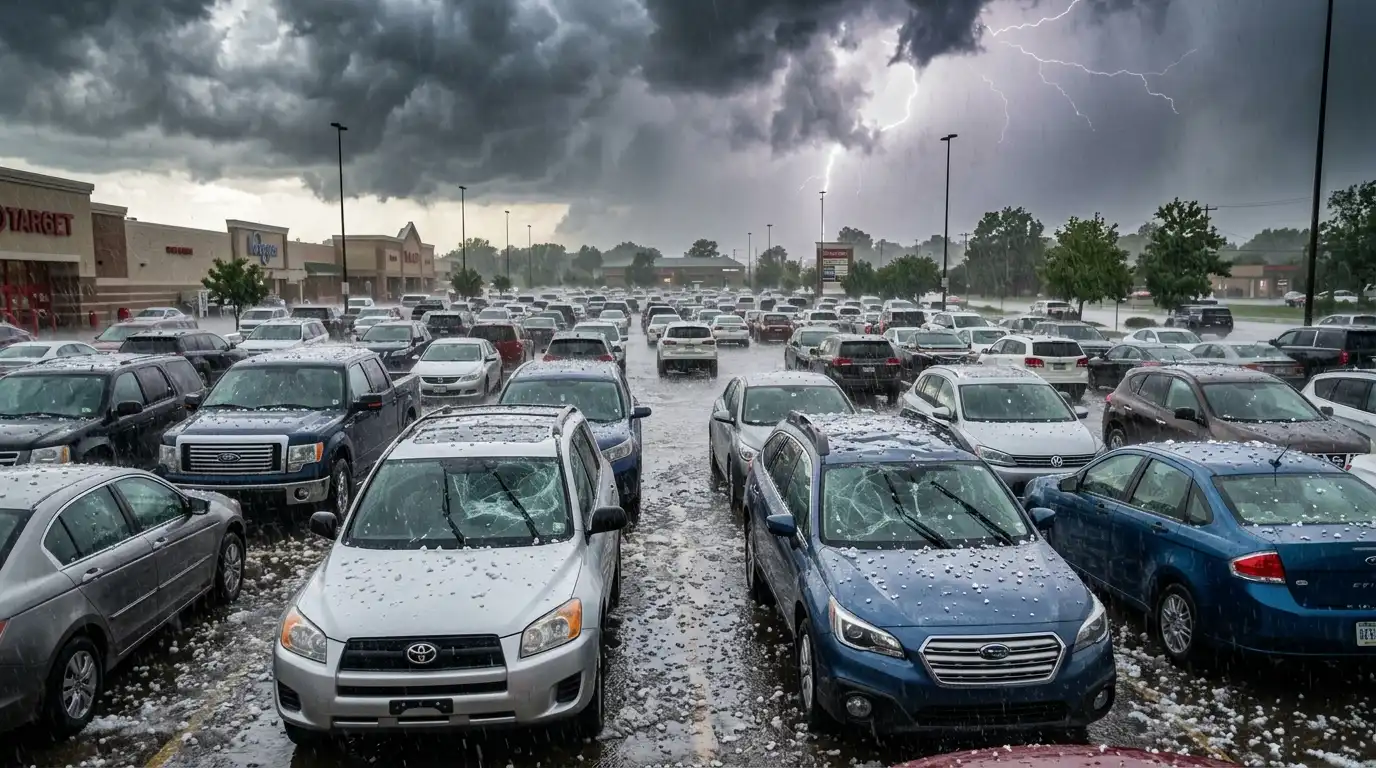
Hail is a particularly nasty one. It hits suddenly, and when a big hail storm rolls through a city, it can damage thousands of cars all at once. Comprehensive car insurance coverage pays for storm and hail damage, so when these events become more common and more severe, the cost to insurers goes way up. That cost gets spread out to all drivers through higher premiums.
6. Car Theft Is on the Rise
Vehicle theft rates have climbed significantly since 2022. Certain car models, especially Kia and Hyundai, were targeted heavily due to a well-known security vulnerability that made them easy to steal. In some cities, thefts of those models alone made up more than half of all car thefts in 2023. This led to a massive spike in comprehensive coverage claims.
If you live in a neighborhood or city with a higher rate of theft, your insurance rate reflects that added risk. It’s not a punishment, it’s just math. More theft in your area means more claims in your area, which means higher premiums for everyone nearby.
7. Where You Live Affects Your Rate
Your ZIP code plays a huge role in how much you pay. If you live in a densely packed city, your chances of being in an accident are higher simply because there are more cars around you. States like Michigan, Florida, Nevada, and Louisiana consistently have the highest average car insurance costs in the country. Michigan, for example, averages a staggering $386 per month, partly due to its high Personal Injury Protection (PIP) coverage requirements.
States prone to hurricanes, flooding, or high theft rates will almost always have higher auto insurance rates. Florida’s market, for instance, is driven by frequent severe claims, a large and growing population, and the constant threat of hurricanes. Moving to a new address, even just a different ZIP code in the same city can change your rate significantly.
8. Your Personal Driving Record and Life Events
Even if the world around you drives rates up, your own record still matters a lot. At-fault accidents, speeding tickets, and DUI violations can all cause your individual premium to jump. According to industry data, a DUI can raise your average rate by 84% nationwide. A single ticket can increase your cost noticeably, depending on the state.
Life changes matter too. Adding a teen driver to your policy is one of the biggest rate increases most families ever experience. Young drivers are statistically at much higher risk. Buying a new car, moving to a new area, or even getting older (past your mid-70s) can all change what you pay. None of this is personal, it’s all based on risk assessment and data about claim patterns.
9. Insurance Companies Are Still Catching Up on Past Losses
Here’s something most people don’t realize: rate increases don’t happen instantly. Insurers have to file requests with state regulators and wait for approval before they can raise prices. That process can take months or even years. This means that many of the rate hikes you’re seeing now in 2024 and 2025 are actually the industry catching up to the losses it experienced back in 2021 and 2022.
As Bankrate analyst Shannon Martin explained, car insurance is “reactionary.” The premium increases you see today are a result of insurers trying to recover losses from the past few years and better account for future risks. The good news is that as the industry stabilizes, the pace of increases should slow down and there are signs that’s already starting to happen in 2025.
10. More Uninsured Drivers on the Road
This one surprises a lot of people. As car insurance costs have gone up, more drivers have dropped their coverage entirely or let their policies lapse. According to the Insurance Research Council, about 1 in 7 drivers, roughly 14% of motorists, are driving without liability insurance. In places like Washington, D.C., that number jumps to over 25%.
When an uninsured driver causes an accident, they often can’t pay for the damage they cause. That burden falls on the insured drivers through uninsured motorist coverage claims. More uninsured drivers means more of those claims, which, yes, pushes rates up for everyone who does have insurance. It’s a frustrating cycle, but it’s real.
What Can You Actually Do to Lower Your Car Insurance?
Smart Ways to Cut Your Premium Without Losing Coverage
Even with all these forces pushing car insurance rates higher, you’re not totally helpless. There are real, practical steps you can take to lower what you pay without leaving yourself without protection. The biggest one is simple: shop around. Most experts suggest getting new insurance quotes every six months. Rates vary widely between companies for the exact same driver, so a little comparison shopping can save you hundreds.
Raising your deductible is another solid move. If you go from a $500 deductible to a $1,000 deductible, your monthly premium usually drops noticeably. You’re just agreeing to cover a bit more out of pocket if something does happen. If you’re a safe driver and haven’t filed a claim in years, this trade-off often makes good sense.
Discounts and Programs Worth Asking About
Many insurance companies offer discounts that most people never ask about. Taking a defensive driving course can save you up to 10% on applicable coverages with companies like State Farm. Bundling your home and auto insurance with the same company usually gets you a multi-policy discount. Setting up automatic payments sometimes triggers a small discount, too.
Usage-based insurance programs, where an app on your phone tracks how you drive, are another option. If you drive carefully and don’t rack up a lot of miles, these programs can reward you with lower rates. You give up a little privacy, but the savings can be real. Some programs let you participate for just six months and then lock in a discount for a year or more afterward. It’s worth checking what your insurer offers.
Also, pay attention to your credit score. Many states allow insurers to use your credit history when setting your rate. A better credit score can lead to a meaningfully lower premium. Checking your credit report regularly for errors and working to improve it over time can pay off in more ways than one.
Conclusion
Car insurance is going up because of a combination of things that all hit at the same time: inflation, expensive repairs, more severe weather, riskier driving, rising vehicle theft, and a wave of losses that insurers are still trying to recover from. None of it is random, and none of it is aimed at you personally. It’s the whole system adjusting to a new and more expensive reality.
The best thing you can do is stay informed, review your policy regularly, shop around for better rates, and ask about every discount available to you. You may not be able to stop rates from rising completely, but you can absolutely make sure you’re not overpaying for the coverage you have. I’d love to hear your thoughts. Have you found a tip that helped you lower your premium? Share it in the comments below.
Frequently Asked Questions (FAQs)
Why did my car insurance go up even though I didn’t have any accidents?
Your car insurance rate can go up even if you personally did nothing wrong. Insurers set rates based on broad risk factors like the cost of repairs in your area, weather events, and the overall number of claims being filed. If any of those things went up in your state or ZIP code, your rate can increase even if you have a perfect driving record. It feels unfair, but it’s how the system works.
How much has car insurance gone up in the last few years?
According to the U.S. Bureau of Labor Statistics, motor vehicle insurance prices rose 20.3% in 2023 and 11.3% in 2024. Since January 2022, the cost of car insurance has risen by roughly 55%. The national average for full coverage in 2025 is about $2,678 per year, up sharply from around $1,194 in 2019.
Which states have the highest car insurance rates?
States with the highest average car insurance costs include Michigan, Florida, Nevada, Louisiana, and Arizona. Michigan tops the list, with average rates around $386 per month, more than double the national average. States with expensive natural disaster risks, high population density, or strict coverage requirements tend to have the priciest auto insurance rates.
Will car insurance rates come down in 2025 or 2026?
There are early signs that the rate of increase is slowing. The 11.3% rise in 2024 was smaller than the 20.3% increase in 2023, suggesting the worst of the premium spikes may be behind us. Most experts believe rates will stabilize as the insurance industry catches up to its past losses. However, a dramatic drop in prices is unlikely in the near term, given that repair costs and weather risks remain elevated.
What is the fastest way to lower my car insurance premium?
The fastest way to lower your car insurance premium is to shop around and get quotes from multiple insurers. Doing this every six months is smart. Ask about every discount available, including for defensive driving courses, bundling policies, safe driver programs, and usage-based insurance. Raising your deductible and improving your credit score over time are also very effective long-term strategies.