
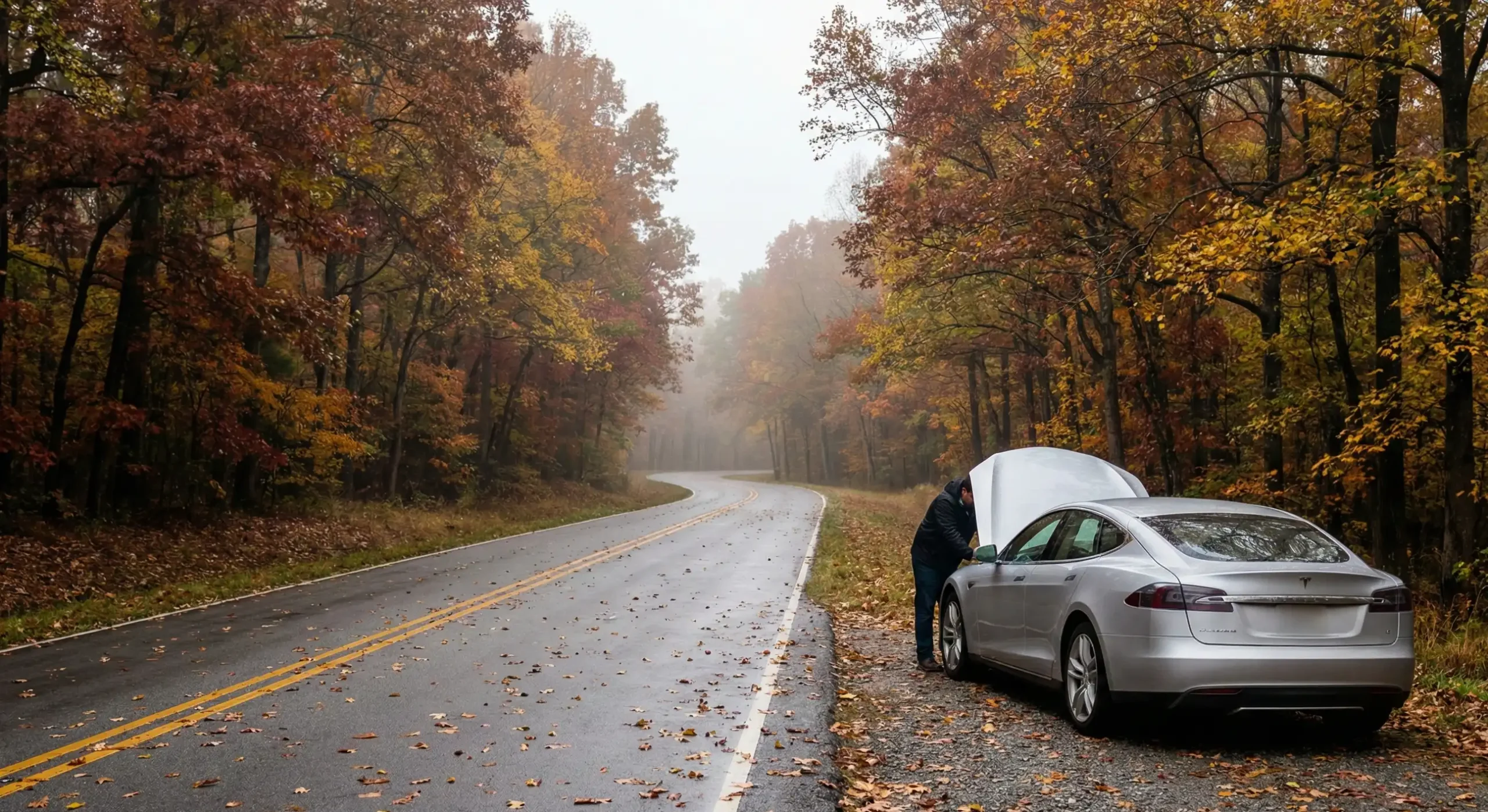
Fall is here, and your car needs help. I remember last November when my neighbor’s car died on University Drive during a cold rain. She had skipped her fall check, and it cost her big time.
Why Fall Car Maintenance Matters in Huntsville
How Alabama Weather Affects Your Vehicle
Huntsville sits in North Alabama, where the weather can change fast. One day, you’re driving in 75-degree sunshine. The next morning, it’s 40 degrees with heavy rain.
This back-and-forth puts real stress on your car. Summer heat bakes your battery and makes your engine oil work harder. Then fall brings cooler air that drops your tire pressure and tests parts that got worn out overthe summer.
I’ve lived here for years, and I’ve seen too many cars break down on Interstate 565 or Madison Boulevard when the first cold snap hits. Most of those problems could have been stopped with simple checks.
The Connection Between Road Conditions and Car Care
Bad road conditions and poor car care work together to make driving dangerous. When roads get wet from fall rain, your tires need good tread to grip. Your windshield wipers must clear water so you can see.
According to a study, wet roads cause about 70% of weather-related crashes. That number goes up when cars aren’t maintained right.
The truth is, you can’t control Huntsville’s weather, but you can control how ready your car is to handle it.
Understanding Huntsville’s Fall Road Conditions
Common Weather Challenges in North Alabama
From September through November, Huntsville drivers face rain, fog, and sudden temperature drops. Some mornings you’ll see frost on your windshield. Other days bring storms that flood low spots on roads.
The Alabama Department of Transportation reports that fall brings more road closures and construction delays as crews rush to finish projects before winter. You’ll find roadwork on major routes like Research Boulevard and around town.
I always check road updates before I drive anywhere new in fall. One wrong turn into a closed road can add 20 minutes to your trip.
How Temperature Changes Impact Driving Safety
Here’s something most people don’t think about: when the temperature drops 10 degrees, your tires lose about 1 PSI of air pressure. That might not sound like much, but it adds up.
Lower tire pressure means less grip on wet pavement. It also makes your car use more gas and causes uneven tire wear. I check my pressure every two weeks in the fall, and I’m always adding a few pounds of air.
Cold air also makes your battery work harder to start the engine. A battery that seemed fine in August might suddenly die on a chilly October morning.
Essential Fall Car Maintenance Checklist
Check Your Engine Oil and Filter
Your engine oil keeps metal parts from grinding together inside your motor. Over the summer, heat breaks down oil faster. By fall, it might be dirty or low.
Pop your hood when the engine is cold. Pull out the dipstick, wipe it clean, put it back in, then pull it out again. The oil should be between the two marks and look amber, not black.
If you’re close to needing an oil change, do it now. Fresh oil helps your engine run smoothly when cold weather arrives. Most cars need oil changed every 5,000 miles, but check your owner’s manual to be sure.
I once pushed my oil change too long, and my engine started making weird noises. The mechanic said I was lucky I didn’t cause real damage. Now I keep track on my phone.
Inspect and Replace Windshield Wipers
Your windshield wipers are cheap to replace but super important for safety. Old wiper blades leave streaks or miss spots, making it hard to see in the rain.
Walk to your car and look at the rubber edge of each blade. If you see cracks, tears, or stiff spots, it’s time for new ones. Turn on your wipers while spraying wiper fluid. If they skip or squeak, replace them.
Most wiper blades last about a year. I change mine every fall, right before rain season starts. It takes five minutes and costs less than dinner.
Also, fill up your washer fluid tank. Get the kind that won’t freeze if temperatures drop below 32 degrees.
Tire Care for Fall Road Conditions
Check Tire Pressure and Tread Depth
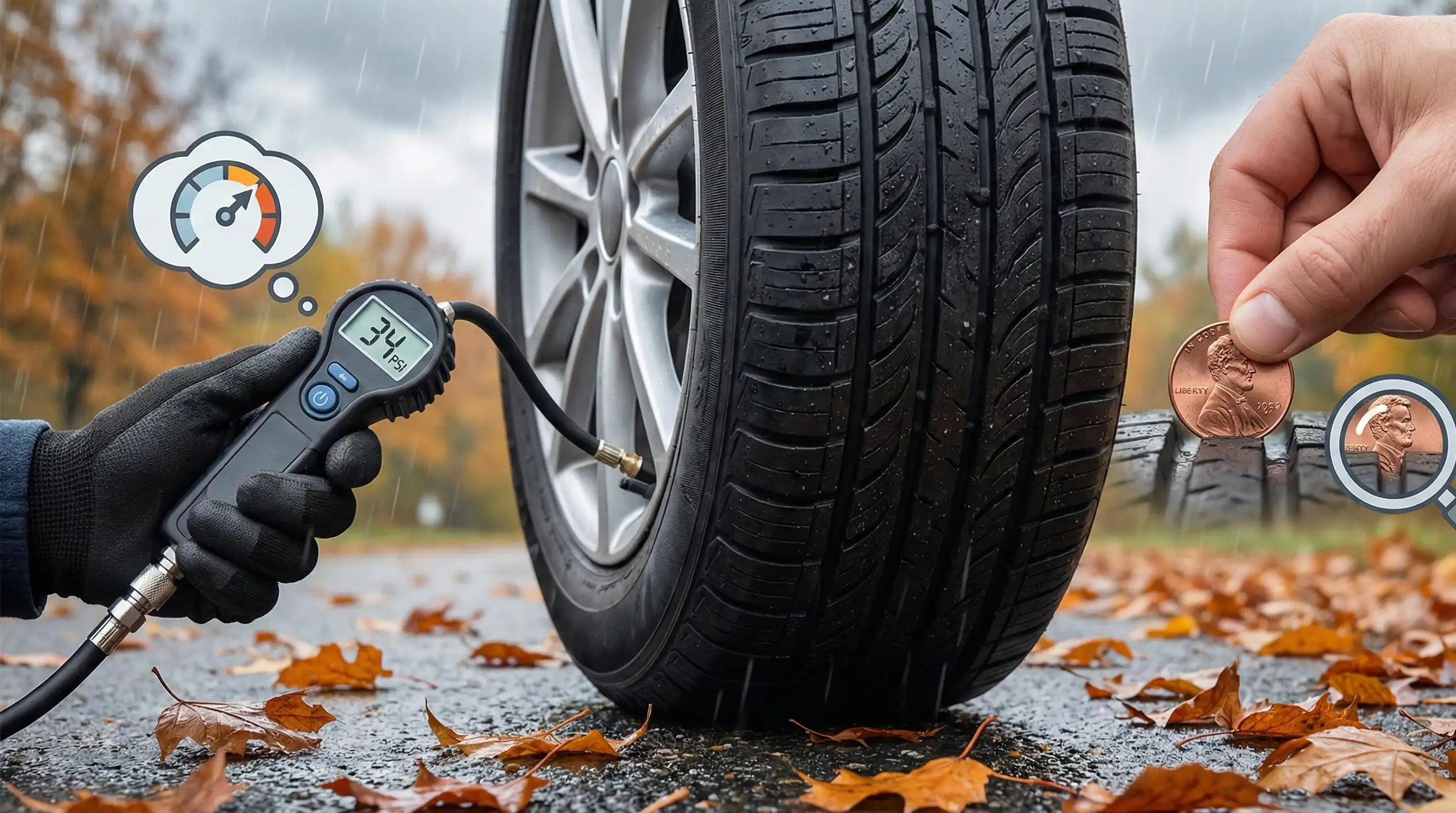
Tires are the only part of your car touching the road, so they better be in good shape. Grab a tire gauge from any auto store. They cost a few dollars.
Check each tire when it’s cold, before you’ve driven anywhere. The right pressure is written on a sticker inside your driver’s door jamb. Most cars need between 30 and 35 PSI.
For tread depth, use the penny test. Stick a penny into the tread with Lincoln’s head upside down. If you can see all of Lincoln’s head, your tread is too worn, and you need new tires.
I check my tires every month. It’s become a habit, like checking my phone. Last fall, I found a nail in one tire before it went flat. That check saved me from getting stuck on the side of the road.
Why Proper Tires Matter on Wet Roads
When rain hits the road, your tire tread pushes water out of the way so the rubber can grip. Worn tires can’t do this, and you end up hydroplaning.
Most people in Huntsville use all-season tires, which work fine here. We don’t usually need winter tires because we don’t get much snow or ice. But your all-season tires still need good tread.
Keep them filled to the right pressure, and they’ll last longer and keep you safer on wet fall roads.
Brake System Inspection
Testing Your Brakes Before Winter
Your brake system is what stops you when roads are slippery. Before winter comes, make sure your brakes work right.
Find an empty parking lot. Speed up to about 30 miles per hour, then press the brake pedal firmly. Your car should stop smooth and straight, with no pulling to one side.
Listen for any grinding, squeaking, or scraping sounds. Those noises mean your brake pads are worn and need replacing. If your brake pedal feels soft or sinks to the floor, get to a shop right away.
I learned this lesson the hard way a few years back. My brakes were making a light squeak, and I ignored it. By the time I got them checked, the pads were metal-on-metal and I had to replace the rotors too. What could have cost $150 turned into $600.
Brake Fluid Levels and Quality
Brake fluid transfers the force from your pedal to your brakes. Over time, it absorbs water and gets dirty.
Check the brake fluid reservoir under your hood. The fluid should be clear or light yellow, not dark brown. It should be between the minimum and maximum lines.
If it’s low or dirty, have it changed. This is something I let my mechanic do because brake fluid is tricky to handle and you have to bleed the system right.
Battery and Electrical System Check
Test Your Car Battery
Summer heat kills more car batteries than winter cold, but you don’t find out until fall arrives and the temperature drops.
Most auto parts stores will test your battery for free. They put a little tool on it and tell you how much charge it can hold. If your battery is more than three years old, definitely get it tested.
Look at the battery terminals where the cables connect. You might see white or blue crusty stuff, which is corrosion. Clean it off with a wire brush or take it to a shop.
I keep jumper cables in my trunk just in case. They’ve saved me twice, and I’ve helped out other people too.
Inspect All Exterior Lights
Fall means shorter days and more driving in the dark. Your headlights, taillights, and turn signals need to work so other drivers can see you.
Walk around your car while it’s running. Check your low beams, high beams, brake lights, and blinkers. If a bulb is out or dim, replace it.
Clean your headlight covers if they look foggy. Dirty or yellowed covers cut your light by half, making it hard to see at night or in fog.
I once drove for weeks with one headlight out and didn’t realize it until a cop pulled me over. He just gave me a warning, but I felt silly for not noticing.
Fluids That Keep Your Car Running
Coolant and Antifreeze Levels
Your coolant system keeps your engine from overheating in summer and freezing in winter. It’s basically water mixed with antifreeze.
Find the coolant reservoir under your hood. It’s usually a clear plastic tank. The liquid inside should be bright green, orange, or pink, depending on your car.
Check the level when the engine is cold. Never open the cap when the engine is hot, because hot coolant can spray out and burn you. The Occupational Safety and Health Administration warns that coolant burns are serious injuries.
If your coolant is low, top it off with the right type for your car. If it’s dirty or rusty looking, it’s time for a flush. I get mine flushed every 30,000 miles, which my mechanic recommends.
Other Important Fluids to Check
Your car runs on more than just gas and oil. Check your power steering fluid and transmission fluid too.
Power steering fluid helps you turn the wheel easy. Transmission fluid keeps your gears shifting smooth. Both have little dipsticks or reservoirs you can check.
If any fluid is way below the line, something might be leaking. Get that looked at before small problems turn into big repair bills.
Honestly, I’m not great at remembering all these checks, so I just ask my mechanic to look at everything during my oil change. They check it all and tell me what needs attention.
Preparing for Huntsville’s Unpredictable Fall Weather
Test Your Heating System
You probably haven’t used your heater since last winter. Now’s the time to make sure it works.
Start your car and turn the heat all the way up. Wait a few minutes for the engine to warm up. Hot air should blow out of the vents. If it’s blowing cold air, you might have a problem with your heater core or coolant system.
I test mine on the first cool morning in October. It’s better to find out early if something’s wrong, rather than waiting until it’s 30 degrees outside.
Build an Emergency Kit for Your Car
Even with perfect car maintenance, stuff happens. Keep an emergency kit in your trunk.
Here’s what I keep in mine: jumper cables, flashlight, blanket, bottled water, snacks, ice scraper, flares, and a basic tool kit. I also have a phone charger that plugs into my car.
One time I helped a lady whose car died in a parking lot. She didn’t have cables, and her phone was dead. She was stuck until I came along. Now she keeps a kit too.
You don’t need fancy stuff. Just things that would help if you got stuck waiting for a tow truck on a cold night.
Conclusion
Taking care of your car before fall weather hits is smart and simple. You don’t need to be a mechanic or spend a lot of money. Most of these checks take a few minutes and cost nothing.
Check your tires, oil, battery, wipers, and fluids. Test your lights and brakes. Make sure your heater works. Keep an emergency kit ready.
Huntsville’s road conditions can change fast in the fall. Rain, fog, and temperature swings test your car. But if you stay on top of maintenance, you’ll drive safer and avoid breakdowns.
If you need help with any of these maintenance tasks or want a professional to check your car before winter arrives, Contact Brian’s Tire and Service for expert car care. Our team can handle everything from tire checks to full inspections, keeping you safe on Huntsville roads all season long.
I’d love to hear your thoughts on car care. What tricks do you use to keep your car running through fall and winter?
Frequently Asked Questions
How often should I check my tire pressure in the fall?
Check your tire pressure at least once a month during the fall. Temperature changes make air pressure go up and down. Cold mornings can drop your PSI by several pounds. I check mine every two weeks when the weather is changing a lot. It only takes five minutes, and you can do it at most gas stations for free.
When should I replace my windshield wipers?
Replace your windshield wipers once a year or when they start leaving streaks. Fall is the perfect time since you’ll need them for rain and maybe even snow. If your wipers skip, squeak, or leave wet spots, get new ones right away. They cost $15 to $30 for a pair and take minutes to put on.
Do I need winter tires in Huntsville, Alabama?
No, you don’t need winter tires in Huntsville. We don’t get enough snow or ice to make them worth it. Good all-season tires with plenty of tread work fine here. Just make sure your tread is deep enough, and your pressure is right for wet roads.
What should I keep in my car emergency kit?
Keep jumper cables, a flashlight, a blanket, water, snacks, an ice scraper, a phone charger, and basic tools. Add flares or reflective triangles if you have them. This stuff helps if you break down or get stuck waiting for help. I’ve used my kit more than once, and it’s saved me every time.
How can I tell if my battery needs replacing?
If your car is slow to start, your lights are dim, or your battery is more than three years old, get it tested. Most auto parts stores test batteries for free. Look for corrosion on the terminals too. White or blue crusty stuff means your battery is struggling. Replace it before it dies on a cold morning and leaves you stranded.