
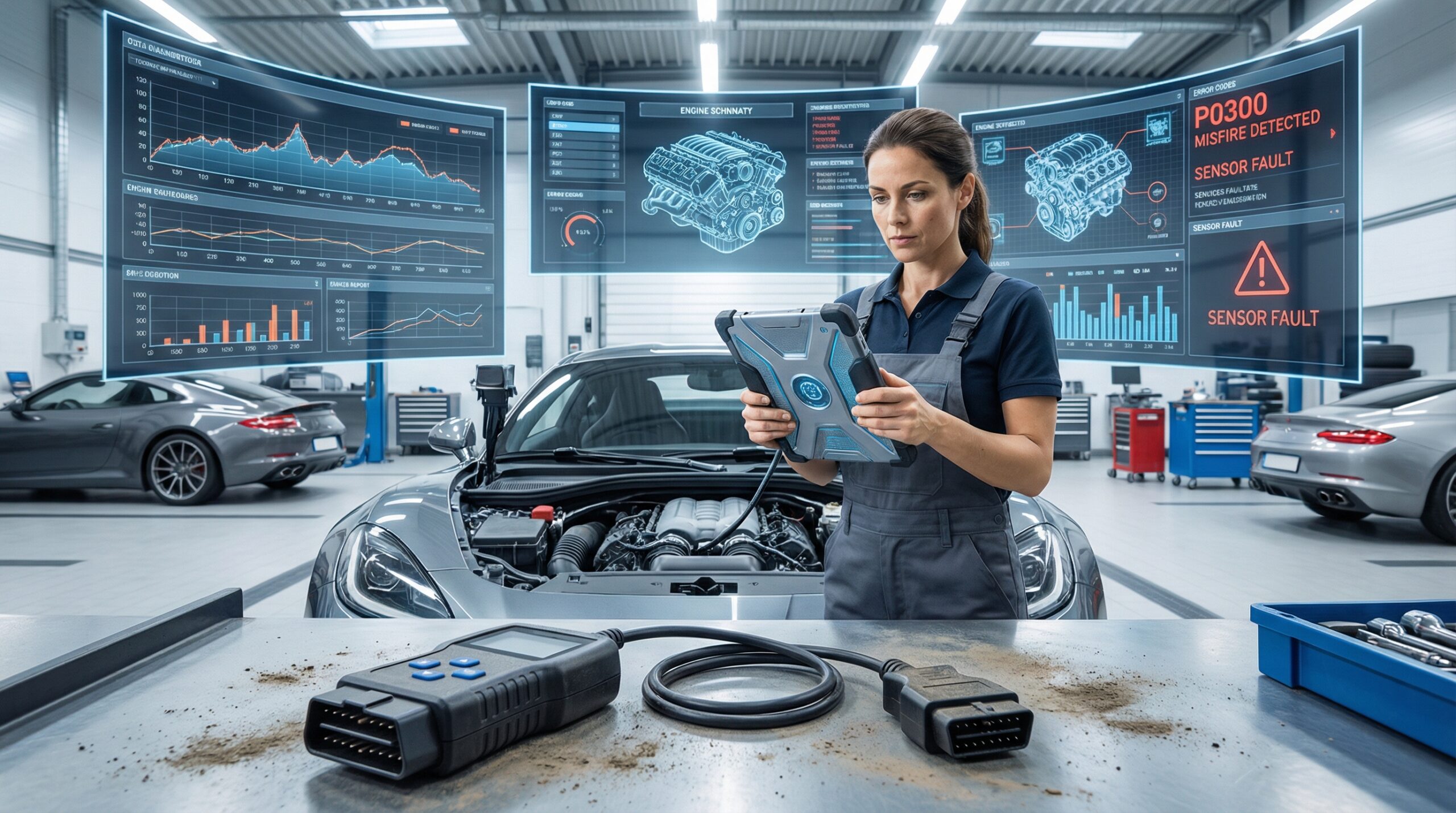
You plug in your basic code reader. It shows “P0420.” You look it up. It says something about the oxygen sensor or catalytic converter. But what now?
This happens to thousands of car owners every day. They buy a cheap code reader, thinking it will solve their car problems. Then they get stuck. The tool tells them WHAT is wrong, but not WHY or HOW to fix it.
I learned this the hard way. My check engine light came on. I used my basic reader. It showed a code. I replaced the part. Two weeks later, the same light came back. I wasted money on the wrong repair.
This blog shows you why a simple code reader is not enough for real car work. You will learn what these tools can and cannot do. More importantly, you will see when you need something better. By the end, you will know exactly which tool fits your needs.
What is a Code Reader and What Can It Actually Do?
Basic Functions of OBD2 Code Readers
A code reader is a simple tool. It connects to your car’s OBD2 port. This port is usually under your dashboard on the driver’s side.
The reader talks to your car’s computer. It pulls out error codes called DTCs (diagnostic trouble codes). These codes tell you something is wrong with your engine or emissions system.
Here is what a basic code reader can do:
- Read engine codes
- Clear the codes after you fix the problem
- Turn off the check engine light
- Show freeze frame data (what was happening when the code appeared)
- Check if your car is ready for emissions testing
That sounds helpful, right? For quick checks, it is. But there is a big problem.
The Serious Limits You Need to Know
Code readers only see part of your car. They focus on the engine and sometimes the transmission. That’s it.
Your car has many other systems. Think about your ABS (anti-lock brakes), airbags, transmission, and body control modules. A basic reader cannot see these systems at all.
Here is what a code reader CANNOT do:
- Access ABS or airbag systems
- Show live data from sensors while the car is running
- Test individual parts like injectors or window motors
- Reset service lights for oil changes or brake jobs
- Talk back to your car to run tests (bi-directional control)
- Read manufacturer-specific codes (only generic codes)
Let me give you an example. Your airbag light is on. You connect your code reader. It says “No Codes Found.” Why? Basic readers cannot talk to the airbag system. You just wasted your time.
This is where people get frustrated. They think the tool is broken. But the tool is just too basic for the job.
Why Basic Code Readers Fall Short for Real Diagnostics
No Access to ABS, Airbag, or Transmission Systems
Modern cars are complex. They have computers controlling almost everything. Your engine, brakes, airbags, transmission, and even your windows all have electronic controls.
A code reader only speaks to one computer: the ECU (engine control unit). It ignores all the others.
This creates real problems. Let’s say your ABS light comes on. This light tells you something is wrong with your anti-lock braking system. You need to know what. But your code reader will show nothing. It cannot see ABS codes.
Same thing with airbags. If your SRS light (airbag warning light) is on, a basic reader is useless. You need a scanner that can talk to the airbag module.
Even transmission problems are missed. Some readers claim they check transmissions, but they only see basic generic codes. They miss the detailed manufacturer codes that tell you exactly what is broken.
According to a study published by the Automotive Maintenance and Repair Association (AMRA), nearly 40% of DIY repairs using only basic code readers result in incorrect part replacements. This wastes money and time.
Missing Live Data Means Guessing Games
Here is another big problem: code readers show you a code, but not what is happening RIGHT NOW in your car.
Let’s say you have a code for a bad oxygen sensor. But what if the sensor is fine and the problem is a vacuum leak? Or a faulty fuel injector? Without live data, you are just guessing.
Live data shows you what your car is doing in real time. It displays:
- Sensor readings
- Engine RPM
- Coolant temperature
- Fuel trim values
- Throttle position
This information helps you see if a sensor is working correctly or if something else is causing the code.
I once had a car that kept throwing a misfire code. My code reader said cylinder 3 was misfiring. I changed the spark plug. The code came back. Then I changed the ignition coil. Still came back.
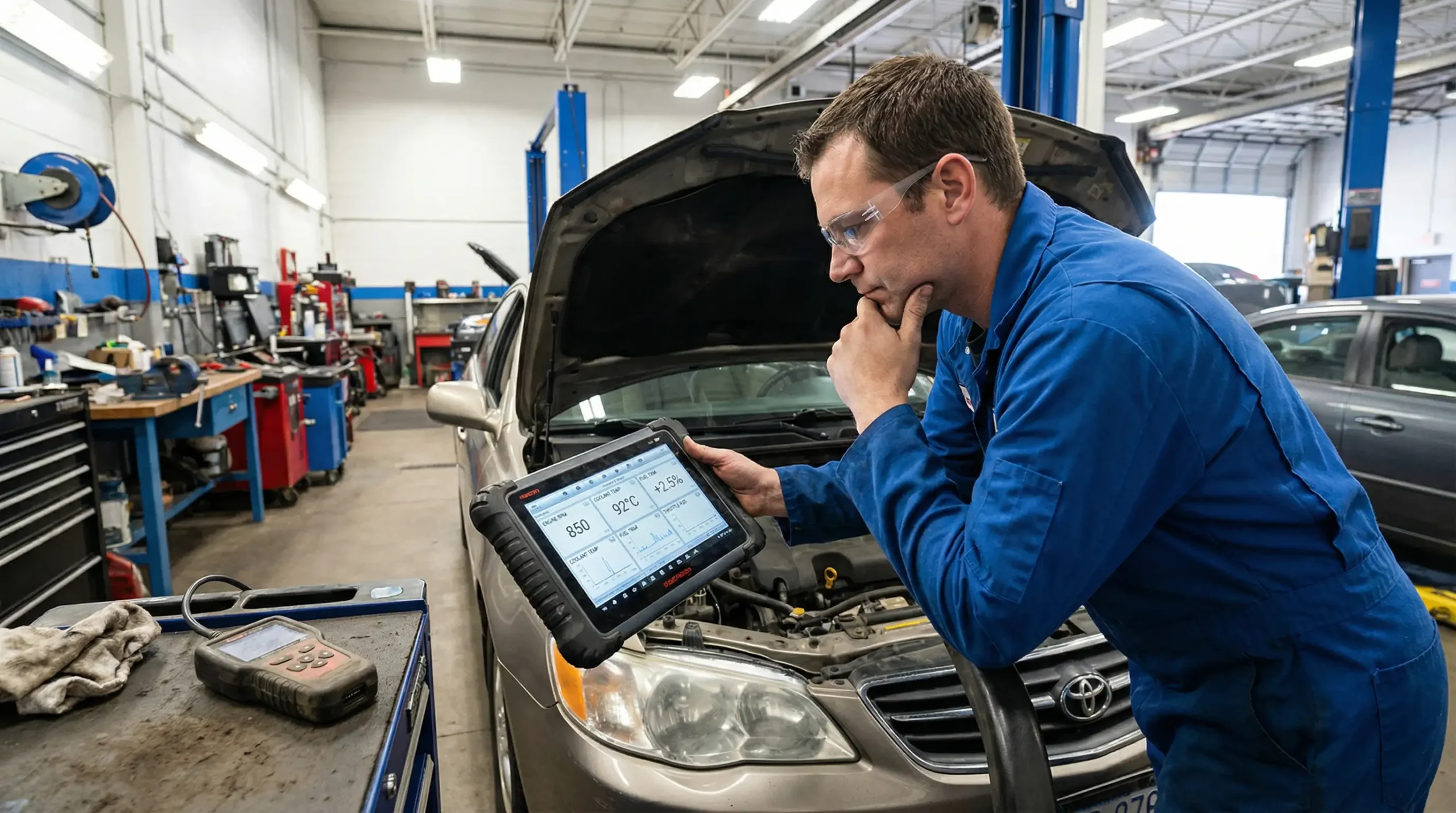
Finally, I borrowed a real scanner with live data. It showed me the fuel injector for cylinder 3 was not firing. That was the real problem. A $15 part fixed it, but I had already wasted $80 on plugs and coils.
Without live data, you are driving blind.
What Makes Advanced Diagnostic Scanners Different
Bi-Directional Control: The Game Changer
Here is the biggest difference between a code reader and a professional scanner: bi-directional control.
- A code reader is passive. It only listens to your car. It cannot send commands back.
- A professional scanner is active. It can send commands TO your car and test things.
- Think of it like this. A code reader is like a thermometer. It tells you if you have a fever. But it cannot tell you why or help you fix it.
- A professional scanner is like a doctor. It can ask your body to do things, test responses, and help you find the real cause.
- Here is a real-world example. Let’s say your power window is stuck. You press the button, but nothing happens.
- You connect a code reader. It shows nothing. No codes. Why? Because the motor might be fine, but the switch is broken.
Now you connect a professional scanner with bi-directional control. You press a button on the screen that tells the window motor to move. If the motor moves, you know the motor is fine. The problem is the switch or wiring.
This saves you hours of work and hundreds of dollars.
Bi-directional control also helps with:
- Testing fuel injectors
- Cycling ABS pumps
- Opening and closing valves
- Turning on cooling fans
- Retracting electronic parking brake calipers
According to Automotive Service Excellence (ASE), over 60% of professional technicians rely on bi-directional testing for accurate diagnostics. Is it that important?
Full System Access Beyond the Engine
Advanced scanners do not just talk to your engine computer. They talk to ALL the computers in your car.
Modern vehicles have 30 to 100 different control modules. Each one manages a different system:
- ECU: Engine control
- TCM: Transmission control
- ABS Module: Anti-lock brakes
- SRS Module: Airbags
- BCM: Body control (lights, locks, windows)
- HVAC: Heating and air conditioning
- TPMS: Tire pressure monitoring
A professional scanner can read and clear codes from all these systems. It can also run system tests and perform service resets.
For example, modern cars with electronic parking brakes (EPB) require a scanner to change brake pads. You cannot just push the caliper back like old cars. You need to send a command to retract the pads electronically.
Same thing with oil changes. Many newer cars require a scanner to reset the oil life monitor. Without it, your maintenance reminder light stays on forever.
Advanced scanners also offer special functions like:
- Throttle body relearns after cleaning
- Battery registration after replacement
- Steering angle sensor (SAS) calibration after alignment
- DPF regeneration for diesel engines
These are not fancy extras. These are essential tasks for modern car maintenance. A code reader cannot do any of this.
Real-World Scenarios Where Code Readers Fail
When Your Brake Light Stays On
Your brake warning light comes on. You check your brake fluid. It is full. What now?
You grab your code reader and plug it in. Nothing. No codes. The light is still on.
Why? Because the problem is in the ABS system, and basic code readers cannot see it. The issue could be a faulty wheel speed sensor, a bad ABS pump, or a wiring problem.
Without access to the ABS module, you are stuck. You either guess (and waste money) or pay a shop to scan it for you.
A professional scanner would show you the ABS code immediately. It might say something like “C0035 – Left Front Wheel Speed Sensor Circuit Malfunction.” Now you know exactly which sensor to check.
This is not rare. ABS and brake system problems are common. And code readers are completely blind to them.
Diagnosing Intermittent Engine Problems
Here is another tough situation. Your car runs fine most of the time. But sometimes it hesitates, stutters, or loses power. The check engine light flashes for a second, then goes off.
You connect your code reader. It might show a “pending code,” but that tells you almost nothing. What is causing it? When does it happen? You have no idea.
This is where live data becomes critical. A professional scanner can record what happens in real time. You can drive the car while it monitors:
- Fuel pressure
- Air-fuel ratio
- Sensor voltages
- Timing advance
When the problem happens again, the scanner captures everything. You can see exactly what changed at that moment.
For example, if fuel pressure drops suddenly, you know the fuel pump is failing. If the oxygen sensor voltage goes crazy, you have a vacuum leak. Without this data, you are just guessing.
Who Actually Needs an Advanced Scanner
DIY Mechanics and Car Enthusiasts
If you work on your own car regularly, a basic code reader is not enough.
Here is why. Modern cars are complicated. Even simple jobs like changing brake pads can require scanner access. If your car has electronic parking brakes, you MUST have a scanner to retract the caliper. There is no other way.
Same thing if you do your own oil changes. Many cars built after 2015 require a scanner to reset the service light. Without it, your dashboard keeps nagging you.
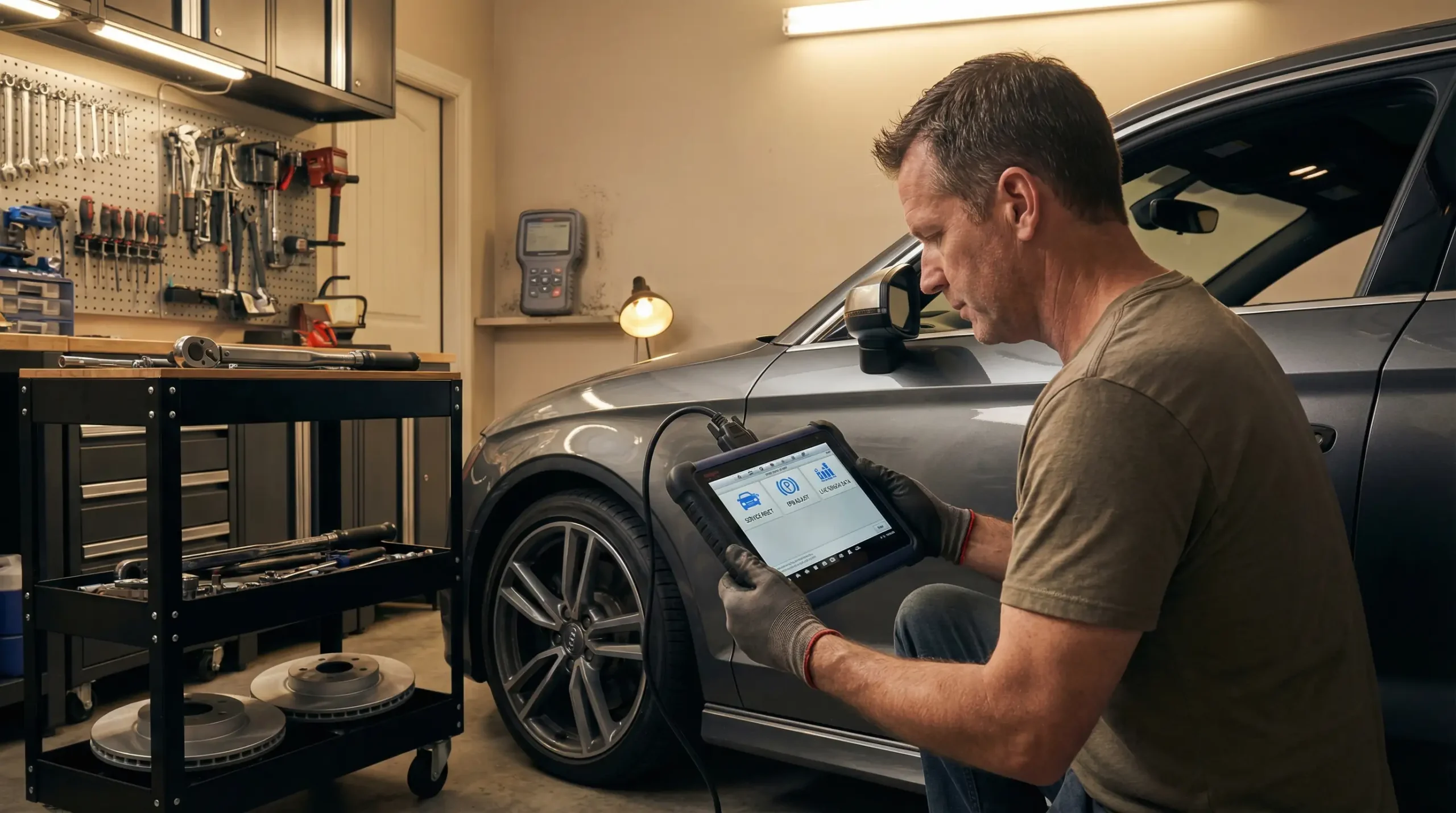
You also save money long-term. A good professional scanner costs $200 to $600. That sounds like a lot. But one trip to a shop for a diagnostic scan costs $100 to $150. After a few uses, the scanner pays for itself.
More importantly, it helps you avoid bad repairs. How many times have you replaced a part, only to find out that was not the problem? With a scanner, you can test parts before replacing them. You stop wasting money on guesses.
Professional Shops and Mobile Mechanics
For professional mechanics, there is no debate. A code reader is a toy. You need a real scanner.
Why? Because customers come to you with all kinds of problems. ABS lights. Airbag lights. Transmission issues. HVAC problems. You need access to every system.
You also need to perform service functions. Oil resets. Brake bleeds. Throttle relearns. Key programming. These are daily tasks in a shop. A code reader cannot do any of them.
Professional scanners also offer better support. They usually include:
- Regular software updates
- Technical support
- Wiring diagrams
- Repair guides
This makes your job faster and easier. You spend less time researching and more time fixing cars.
Mobile mechanics especially benefit from advanced scanners. You show up at a customer’s house. They have an airbag light on. If all you have is a basic code reader, you look unprofessional. You cannot even see the problem.
With a professional scanner, you diagnose it on the spot, explain the issue, and give them a quote. That builds trust and gets you more work.
Conclusion
A basic code reader is a starting point. It is cheap and easy to use. For simple engine checks, it works fine.
But it is NOT enough for real diagnostics.
Modern cars are too complex. They have dozens of computer systems. Basic readers only see one. They miss ABS problems, airbag issues, transmission faults, and body control errors. They also lack live data and bi-directional control, which are essential for accurate repairs.
If you work on cars regularly, you need a professional scanner. It saves you time, money, and frustration. It helps you fix problems correctly the first time instead of guessing.
The choice is clear. You can keep using a code reader and hope for the best. Or you can upgrade to a real diagnostic tool and take control of your repairs.
FAQs
Can a code reader diagnose airbag problems?
No. Basic code readers cannot access the airbag system. You need a professional scanner to read SRS (airbag) codes.
What is bi-directional control, and why is it important?
Bi-directional control lets a scanner send commands to your car to test parts. For example, it can activate a window motor or retract brake calipers. This helps you find problems faster and avoid replacing good parts.
Do I need a scanner to reset my oil change light?
On many newer cars, yes. Some vehicles require a scanner to reset the oil life monitor. Check your owner’s manual to be sure.
Can I use a code reader for ABS or transmission problems?
Not usually. Basic code readers focus on engine and emissions codes. They miss ABS, airbag, and many transmission issues. You need a full-system scanner for those.
How much does a professional diagnostic scanner cost?
Professional scanners range from $200 to $1,000 depending on features. Entry-level models with full system access start around $200. High-end scanners with advanced functions can cost $600 or more. They pay for themselves after a few uses compared to shop diagnostic fees.