
I want to start this by asking you something simple. Have you ever looked at your tires and felt unsure if they just need a quick rotation or if it’s finally time to buy new ones? I’ve been in that spot too, staring at the thread and hoping for a clear answer. The truth is, choosing between rotation and replacement can feel confusing, but it doesn’t have to be. Let’s make it easy.
Tire Rotation vs. Buying New Tires
You should rotate your tires when they still have good tread but are wearing unevenly. You need new tires when the tread is too low, the rubber is damaged, or the tire no longer feels safe on the road. Rotation helps your tires last longer, but it can’t fix worn-out or unsafe tires.
What Tire Rotation Really Means (Simple Explanation)
Tire rotation means moving your tires from one spot on your car to another so they wear more evenly. Most cars wear the front tires faster because they handle more weight and steering. Rotating them helps all four tires wear at a similar speed, so they last longer and stay safer.
I still remember the first time a mechanic told me my front tires were wearing out way faster than the back ones. I thought something was wrong with my car. He explained that it was normal and that a simple rotation would keep all my tires in better shape. After that day, I never skipped rotations, and my tires started lasting much longer. It was such a small thing, but it made a big difference.
During a rotation, the shop usually follows a set pattern. For example, front tires may move to the back, and back tires may switch sides when they move forward. This pattern helps balance out the natural wear your car creates. When your tires wear evenly, the car handles better, feels smoother, and stays safer on the road.
Think of rotation as helping your tires “share the work.” Instead of two tires doing most of the job, all four tires take turns. It’s simple maintenance, but it protects your car and your wallet at the same time.
Why Regular Tire Rotations Matter
Better Wear on All Tires
When you rotate your tires on time, they wear in a more even way. Your front tires usually take on more weight and turning, so they wear faster than the back ones. By moving the tires around, you spread out this stress. This helps each tire stay stronger for a longer time. It also keeps the tread pattern healthy, which means your car has better control when you turn or stop. I like to think of it like sharing chores. When only one person does all the work, they get tired fast. But when everyone helps, no one gets worn out too soon. Your tires work the same way.
Longer Tire Life and Fewer Surprises
Regular rotations are one of the best ways to make your tires last longer. When the wear spreads out evenly, the rubber breaks down slowly instead of all at once. That means you won’t wake up one day and suddenly find a tire that looks unsafe. Many people skip rotations because they think it’s not urgent, but the slow damage adds up. If the wear becomes uneven, the tire may become noisy, start to shake, or lose grip. All of this can happen long before the tread actually runs out. Rotation keeps these problems from building up and gives you more time before you need to buy new tires.
Better Handling and a Smoother Ride
You might not notice it day by day, but your car handles differently when the tires wear unevenly. One tire may grip more, another may grip less, and this creates a small imbalance. Over time, the steering can feel slightly off, or the car may pull a little to one side.

Rotating your tires keeps the grip levels balanced, so your car responds the way it should. A smooth ride is not just about comfort. It also helps you stay safe, because your tires react better when all four have similar tread depth. A well-balanced set of tires gives you steady control on dry roads, wet roads, and even bumpy roads.
Better Fuel Use
When your tires wear evenly, your car does not have to work as hard to move forward. Uneven tires create more drag, meaning the engine must push harder to keep the car rolling. This burns more fuel. With regular rotations, you keep the rolling resistance low, and that can save you money over time. Even a small improvement adds up, because tires work every time your car moves.
Saving Money in the Long Run
Tire rotation is one of the cheapest car services you can get, but it prevents some of the most expensive problems. Uneven wear can shorten tire life by thousands of miles. That means you may end up replacing tires much sooner than you should. When the wear becomes too uneven, you can’t fix it just by rotating. By the time it gets that bad, the tire grip is already damaged. Regular rotations stop this from happening and help you avoid early replacement. Think of it as light, simple care that protects a much bigger investment.
Helping Your Car Stay Safe
Your tires are the only parts of the car that touch the road, so their condition matters more than most people think. When they wear evenly, the tread can grip the road the right way during turns, stops, and sudden moves. Even a small loss of traction can make a difference in an emergency. Regular rotations help your tires keep their shape and strength, which means your car stays stable and predictable. This gives you more peace of mind every time you drive.
Easy to Add to Your Routine
Tire rotation fits easily into a simple maintenance schedule. Most people pair it with an oil change because the time between both services is usually close. This makes it easy to stay consistent without having to remember too many dates. When you rotate your tires on time, everything else about tire care becomes easier, too. Your checks become predictable, and your tires behave the way you expect.
How Often Should You Rotate Your Tires?
The Usual Rotation Timing
Most cars need a tire rotation every 5,000 to 8,000 miles. This range works for everyday driving and helps keep the tread wear at the same speed on all four tires. Many people match their rotation with an oil change because the timing is almost the same. This makes it easier to stay on schedule without keeping track of too many dates.
Here are simple points to remember:
- Rotate your tires if you have passed 5,000 miles since the last service.
- Rotate sooner if your front tires look more worn than the back ones.
- Rotate right away if you hear noise or feel shaking at normal speeds.
When You Should Rotate Sooner
Some driving habits or car types make tires wear faster. In these cases, rotating sooner helps stop uneven patterns before they become a problem.
You may need quicker rotations if you:
- Drive with heavy loads many times a week
- Accelerate or brake hard often
- Drive mostly on rough or damaged roads
- Use a front-wheel or all-wheel drive car
These conditions put more pressure on certain tires, so rotating them early keeps everything balanced.
A Quick Look at Common Rotation Intervals
Here is a simple table showing the average rotation timing for different driving styles:
| Driving Style / Condition | Suggested Rotation Interval |
| Normal daily driving | Every 5,000–8,000 miles |
| Rough roads/potholes | Every 4,000–5,000 miles |
| Heavy loads often | Every 4,000–6,000 miles |
| Sporty driving | Every 4,000–5,000 miles |
| New tires (first rotation) | At 5,000 miles |
Why Timing Matters
Rotating your tires on time keeps the tread wearing in a smooth and even way. This helps your car stay steady, reduces noise, and keeps the tires gripping the road the way they should. If you wait too long, the wear can become uneven, and rotation may not fix it anymore. Once uneven wear sets in deeply, the tire can lose grip, make your ride rough, or force early replacement.
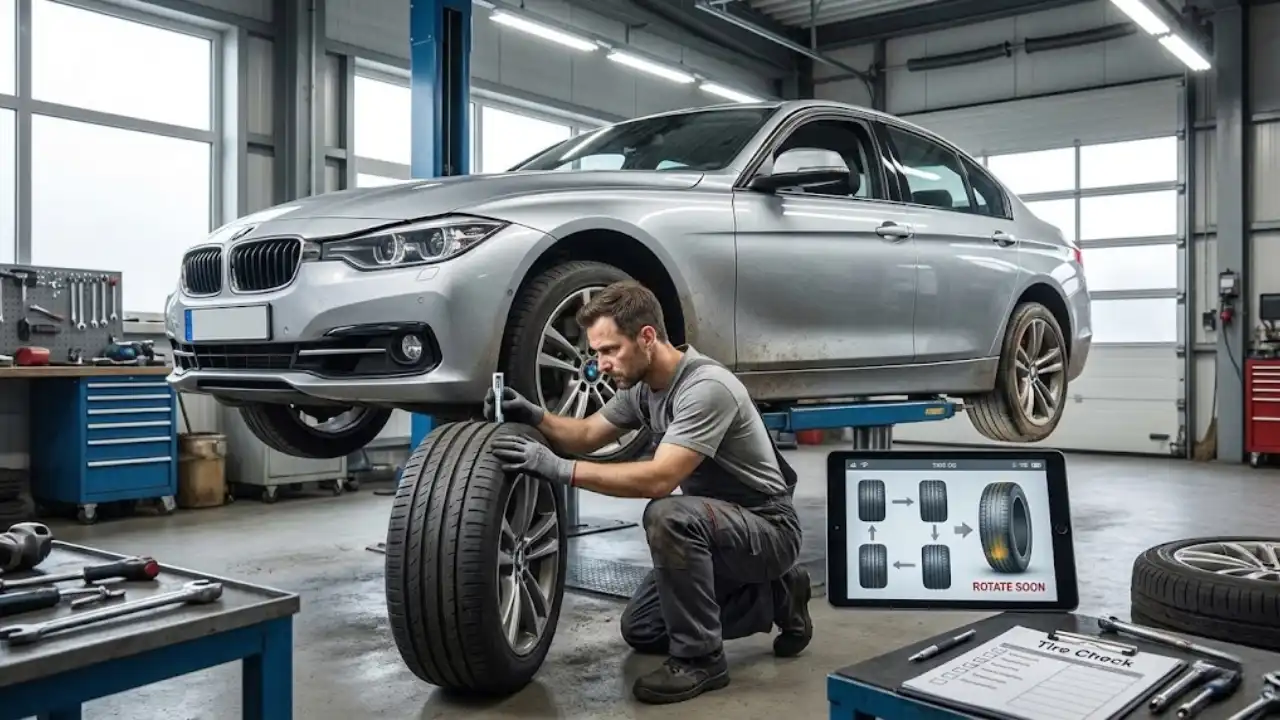
Keeping up with regular rotations keeps your tires healthy for many more miles and gives you a safer, smoother, and more predictable drive.
When Rotation Isn’t Enough, Clear Signs You Need New Tires
When the Tread Is Too Low
Your tire tread is what helps the rubber grip the road. Once it gets too low, no rotation can fix the problem. The simple test many people use is the penny test. If you place a penny in the tread and you can see the top of the head, the tread is too low. That means the tire can’t push away water, can’t stop well, and can’t stay stable at higher speeds. According to the National Highway Traffic Safety Administration, tires are considered unsafe when the tread reaches 2/32 of an inch, which is the legal minimum in many places.
Key signs of low tread:
- You see the top of the head in the penny test
- The tread looks flat or smooth in some spots
- Water splashes feel stronger when driving in the rain
When the tread reaches this point, rotation will not help at all. The tire is already past the safe limit.
When the Tire Has Visible Damage
A tire with cracks, cuts, or bulges is no longer safe. These signs show that the rubber or the inside layers have weakened. Even if the tread still looks fine, damage can cause sudden air loss or even a blowout.
Look for simple warning signs like:
- A bubble or bump on the side of the tire
- Deep cracks in the rubber
- Cuts or slices from road debris
- Nails or screws stuck in the tread
Once you see these issues, replacing the tire is the only safe choice.
When Wear Becomes Uneven
Uneven wear often starts small. A little extra wear on one side may not seem important, but it grows over time. If you wait too long to rotate, one tire can become badly worn while the others stay strong. At that point, rotation won’t balance the problem anymore.
You may notice:
- One tire looks bald while the others look fine
- A loud humming sound as you drive
- The steering wheel shakes at steady speeds
- The car pulls in one direction
Uneven wear means the tire has already lost its shape and grip. Replacement is the only real fix.
When the Tire Is Too Old
Even if the tread looks good, old tires become unsafe. Heat, air pressure changes, and sunlight slowly weaken the rubber. Most tires should be replaced when they reach around six years old.
You can check the age by looking at the code on the tire side. The last four numbers show the week and year it was made.
Replacing old tires keeps your car safe because the rubber stays flexible and strong.
Cost Comparison: Rotation vs. Buying New Tires
The Cost of a Tire Rotation
A tire rotation is one of the least expensive services you can get for your car. Most places charge a small fee, and some shops even include it with other services. Because the cost is low, rotating your tires on time is an easy way to protect them from early wear. When you rotate them often, you help the tread stay even, which means each tire can last its full lifespan instead of wearing out too soon. Even though the service takes only a short time, the savings you get over the life of your tires can be surprisingly big.
The Cost of Getting New Tires
Buying new tires is a bigger investment. The price depends on the size, brand, and type, but no matter what you choose, replacing tires is always more costly than rotating them. This is why many people prefer to stretch the life of their tires as long as they can. New tires also come with extra costs such as mounting, balancing, and proper disposal of the old ones. These steps are important because they help the new tires work the right way and keep your car driving smoothly. While the cost may feel high at the moment, new tires bring you more safety and better performance, so the investment pays off in the long run.
How the Costs Add Up Over Time
When you look at the bigger picture, rotation helps slow down the wear that leads to early replacement. If you skip rotations, one or two tires may wear out much earlier than the others. That means you could end up buying new tires long before you expected to.
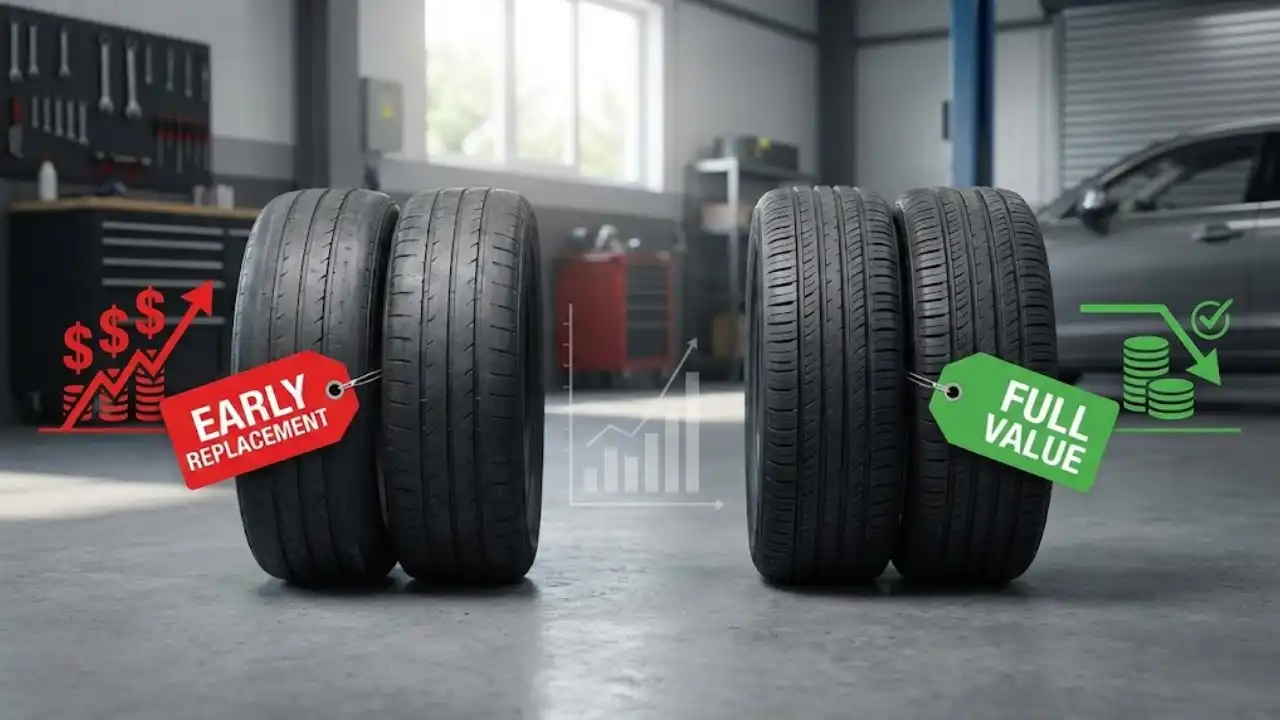
On the other hand, when you rotate them often, the tread wears evenly, so all four tires reach the end of their life at almost the same time. This gives you more value for every mile you drive. Instead of replacing a single worn-out tire ahead of schedule, you get the most use from the full set.
Choosing What Makes Sense for You
If your tires still have good tread and no damage, rotation is the smarter and cheaper choice. It helps them last longer and keeps your ride smooth. But if your tires are worn out, cracked, or losing grip, buying new ones is the right call. New tires cost more, but they also give you better control, shorter stopping distance, and more peace of mind. In the end, the choice depends on the condition of your tires and how safe they feel on the road. When safety comes first, the money is always well spent.
Final Thoughts
Choosing between a tire rotation and buying new tires doesn’t have to feel confusing. If your tires still have good tread and no damage, rotation is the simple way to keep them healthy for more miles. But when the tread is too low, or the tire no longer feels safe, replacing it is the right move. Taking a few minutes to check your tires now can save you money later and help your car stay steady and safe every time you drive.
Ready to Take Care of Your Tires?
If your tires need a rotation or you think it might be time for a new set, you can get fast, friendly, and trusted help right here in Huntsville. Contact us to book a quick check or service. We’ll look at your tires, explain what’s best, and help you drive away with confidence.
FAQs
How do I know if I need a tire rotation or new tires?
If your tires still have good tread and no damage, a rotation is usually enough. But if the tread is very low, the tire is cracked, or the car feels unsafe, then you need new tires. Rotation can help slow down wear, but it cannot fix a tire that is already worn out.
How often should I rotate my tires?
Most cars need a rotation every 5,000 to 8,000 miles. If you drive on rough roads or your tires wear fast, you may need to rotate them sooner. Keeping a steady schedule helps your tires last longer.
Can I rotate my own tires at home?
You can rotate your own tires if you have the right tools and feel safe doing the work. But many people prefer going to a shop because they can lift the car safely and check other parts at the same time, like the brakes and alignment.
Will rotating my tires make them last longer?
Yes, regular rotation helps all four tires wear at the same rate. When the wear is even, the tires stay strong for more miles and give you better control when driving.
Is it dangerous to drive on old or worn-out tires?
Yes, it can be unsafe. Old or worn-out tires lose their grip, especially on wet roads. They also have a higher chance of failing. If your tires look damaged or the tread is too low, it’s better to replace them right away