
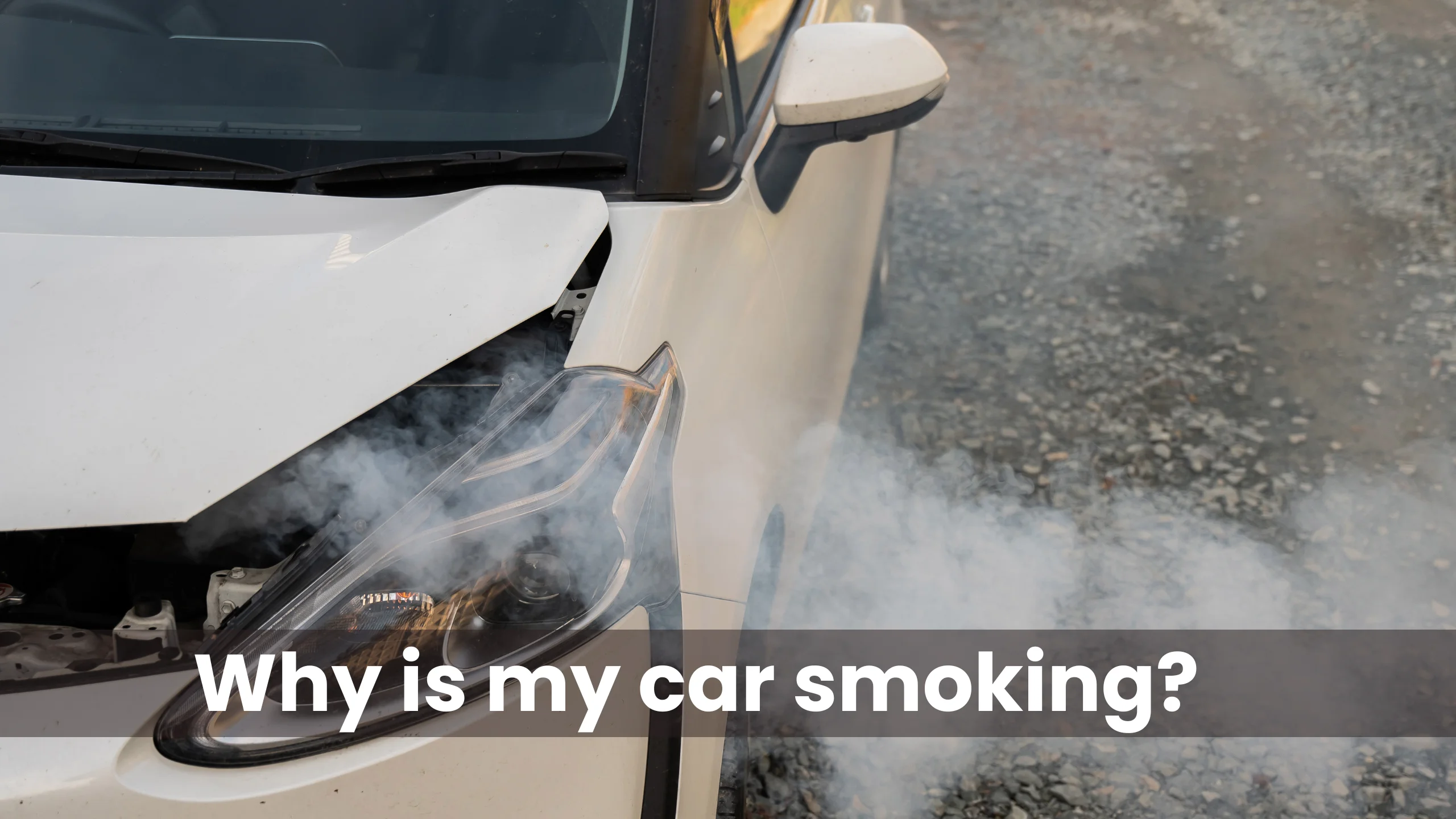
It’s a scary sight. You’re driving along, everything feels fine, then suddenly smoke starts billowing from under the hood or trailing behind your car. Your stomach drops. Is it dangerous? Expensive? Can you keep driving?
I’ve helped a lot of friends and customers figure this out, and I’ll walk you through the same steps I use in the shop. Most of the time, smoke has a clear cause once you know what signs to look for. Whether it’s harmless steam or something more serious, you’ll know what to do by the end of this guide.
Why Is My Car Smoking?
What Color Is the Smoke? Here’s What It Means
One of the first things I always tell customers is this: pay attention to the color of the smoke. It tells a story about what’s happening inside your car. Here’s how to decode it:
White Smoke
If the smoke is thin and white, almost like steam, and it disappears quickly after starting the engine, it’s usually nothing serious. Just condensation burning off in the exhaust system, especially on cold mornings.
But if it’s thick, persistent white smoke, especially when the engine is warm, that’s a red flag. It often means coolant is leaking into the engine. This can be caused by a blown head gasket, a cracked engine block, or a warped cylinder head, all serious repairs.
What to look for:
- Sweet smell
- Coolant level dropping
- Engine overheating
- Milky or frothy oil on the dipstick
Blue or Gray Smoke
This type of smoke means your engine is burning oil. It’s usually caused by worn piston rings, valve seals, or a clogged PCV (positive crankcase ventilation) valve. If left untreated, it can lead to serious engine wear.
What to check:
- Is your oil level dropping quickly?
- Do you notice blue smoke, especially on startup or during acceleration?
A quick story:
A buddy of mine had an old Civic that started puffing blue smoke every time he floored it. He ignored it, thinking it was just age catching up with the car. Turns out, the PCV valve was clogged, a $20 part. We replaced it in under 30 minutes, and the smoke vanished. Sometimes it’s that simple, but if you let it go, it can lead to thousands in engine work.
Black Smoke
Black smoke usually means too much fuel is being burned, and not enough air is getting in. This could be due to a dirty air filter, faulty fuel injectors, or a bad oxygen sensor. It’s more common in older vehicles or ones with poorly maintained fuel systems.
What to check:
- Fuel economy suddenly worse?
- Does your car smell rich or like raw fuel?
- Is the air filter looking dirty or clogged?
The smoke color is your best early warning system. And catching the issue early can save you from much bigger problems later on. Let’s move on to the next sign: where the smoke is actually coming from.
Where Is the Smoke Coming From?
Understanding where the smoke is coming from is just as important as the color. It helps narrow down what’s going wrong, whether it’s an engine problem, a coolant leak, or just harmless steam. The location can point you toward the right solution, or at least help you explain the issue better when you take your car to a mechanic.
Smoke from the Exhaust Pipe
If you’re seeing smoke coming from your tailpipe, you’re likely dealing with an internal engine issue. This could mean oil is burning inside the combustion chamber, coolant is leaking in, or your fuel system is off balance. Tailpipe smoke tends to be steadier and comes out in a visible stream, especially when accelerating or idling. If the smoke comes and goes with engine speed, that’s a sign the issue is happening inside the engine itself. This type of smoke should never be ignored, especially if it’s thick or discolored. Even something like a failing turbocharger can cause smoke at the exhaust, and that’s not something you want to let slide.
Smoke from Under the Hood
Smoke from the front of the car, under the hood, is usually caused by fluid leaks onto hot engine components. The most common ones are oil or coolant leaks. When these fluids hit hot metal like the exhaust manifold, they vaporize quickly and create a cloud of smoke. It might smell like burning oil or have a sweet, syrupy smell if it’s coolant. This type of smoke might not show up constantly; you might only notice it after driving for a bit or sitting at a stoplight with the engine hot.
If the smoke is only coming from one side of the engine bay or you notice drips on your driveway, it’s worth popping the hood and looking around (carefully, and only when the engine is off and cool). Many times, the problem is a leaking valve cover gasket or a cracked coolant hose. These can often be repaired before they cause bigger issues, like engine overheating or oil starvation.
Smoke While Starting the Engine
Sometimes you’ll see smoke right when you start your car, especially after it’s been sitting overnight. If it’s thin white smoke that goes away quickly, it’s usually just condensation burning off, nothing to worry about. But if the smoke lingers or has a blue tint, it could mean oil is seeping into the combustion chamber while the car is parked. This can happen when valve seals are worn out, and it’s more common in older engines. It’s not always an emergency, but it does mean you should get it checked before it leads to bigger oil consumption issues.
Smoke While Driving or Accelerating
Smoke that appears only when you’re accelerating or climbing hills could be related to how the engine is handling load and fuel. Black smoke in this case often means a rich fuel mixture, your car is burning more fuel than it needs. It might also feel sluggish or have poor fuel economy. Blue smoke during acceleration might suggest oil control problems, where the engine is allowing oil to get past the piston rings or valve guides under high pressure.
Smoke at Idle
If your car is producing visible smoke even while sitting still at a stoplight or parked, that’s typically a sign of a more advanced problem. Engines in good shape shouldn’t emit visible smoke at idle, regardless of temperature or humidity. Constant smoke at idle, especially blue or white, can mean internal wear or leaks that have progressed too far to ignore.
The more details you notice about when and where the smoke appears, the easier it will be to fix. Up next, I’ll break down the most common reasons behind these issues, the parts and systems that usually fail first when you’re seeing smoke from your car.
Most Common Reasons Your Car Is Smoking
Once you’ve seen the color and figured out where the smoke is coming from, the next step is understanding what’s causing it. These are the issues I see most often in the shop when someone pulls in with smoke pouring from their engine or exhaust.
Coolant Leaks Into the Engine
- Often caused by a blown head gasket, cracked cylinder head, or warped engine block
- Coolant gets into the combustion chamber and burns, causing thick white smoke
- Usually comes with signs like engine overheating, low coolant, or bubbling in the reservoir
Burning Oil
- Caused by worn piston rings, bad valve seals, or a clogged PCV valve
- Produces blue or gray smoke from the exhaust
- It may be worse when accelerating or starting the car
- You’ll often notice your oil level dropping faster than normal
Overheating Engine
- Often due to low coolant, a broken thermostat, or a failed radiator fan
- Can produce steam or smoke from under the hood
- Overheating may lead to severe engine damage if ignored
Fuel System Problems
- Issues like bad injectors, faulty sensors, or clogged air filters
- Result in black smoke from the exhaust
- Usually, a sign of a rich fuel mixture, the engine is burning more fuel than it should
Table: Smoke Causes & Clues
| Smoke Color | Likely Cause | Check For |
| White (thick) | Coolant leak | Overheating, low coolant, sweet smell |
| Blue/Gray | Burning oil | Low oil level, oily smell, blue exhaust |
| Black | Fuel system issue | Poor mileage, rich fuel smell, dirty filter |
| White (thin) | Condensation (normal) | Disappears quickly on a cold start |
These are just the most common issues; your car may have a combination of small problems leading to smoke. In the next section, I’ll show you what you should do immediately, depending on the symptoms you’re seeing. Don’t worry, you don’t need to be a mechanic to take smart next steps.
What You Should Do Right Now
According to the U.S. EPA, emissions from transportation contribute significantly to smog, soot, and air pollution in cities. If your car starts smoking, don’t panic, but don’t ignore it either. Smoke is your car’s way of saying something’s wrong. Whether it’s a minor issue or something more serious, here’s what you should do right away to protect your vehicle (and your wallet).
Pull Over If You See Heavy Smoke
- If the smoke is thick, smells strong, or you see your temperature gauge rising, pull over and shut off the engine.
- Continuing to drive could turn a small repair into a major engine rebuild.
- Open the hood carefully after the engine cools down; never open it immediately if it’s overheating or steaming.
Check Your Coolant and Oil Levels
- After the car has cooled down (usually 15–30 minutes), check your coolant reservoir. If it’s low or empty, that could be why the engine is smoking.
- Also, check your engine oil; if it’s very low or looks milky, that’s a sign of internal leaks, like a head gasket failure.
- Topping off fluids can help you get to a shop safely, but it’s not a permanent fix.
Pay Attention to the Smell and Smoke Color
- A sweet smell usually means coolant is burning.
- A burnt oil smell is often from oil leaks or engine wear.
- A fuel-like smell could mean you’re burning too much gas, possibly a sensor issue.
- This helps you or your mechanic quickly identify what system to check first.
Use a Code Scanner If You Have One
- If your check engine light is on, use a simple OBD-II scanner to read the code. Many auto parts stores will do this for free.
- Common codes can point to oxygen sensors, misfires, or even overheating warnings.
Call for a Tow If You’re Unsure
- If the smoke is constant, you see fluid dripping, or the car is overheating, it’s safest to get it towed.
- Driving a smoking vehicle can cause internal damage that multiplies the repair bill quickly.
Taking these steps gives you a good idea of what’s wrong and helps your mechanic fix the issue faster. In the next part, I’ll explain when it’s time to bring your car in, and when you might be okay to keep driving.
When to Call a Mechanic (or Stop By Your Local Shop)
There’s a difference between a small puff of harmless steam and serious smoke that signals engine trouble. Knowing when to bring your car to a mechanic can save you from bigger headaches down the road. If the smoke is more than a quick burst or if it’s happening regularly, it’s time to get it looked at.
Persistent Smoke That Doesn’t Go Away
If your car keeps producing smoke, whether from the exhaust or under the hood, that’s not something to brush off. Even if the car feels like it’s running fine, that smoke usually means a deeper problem is developing. Over time, what starts as a minor oil leak or coolant drip can turn into a major engine issue. Don’t wait for warning lights to come on if you already see signs like this.
Sudden Power Loss or Overheating
Smoke paired with loss of power or a rising temperature gauge is a serious warning sign. This combination often points to head gasket failure, restricted cooling flow, or fuel-related issues that affect how the engine runs. If you notice your engine getting weaker, louder, or slower to respond, and it’s also smoking, you shouldn’t keep driving it. You risk breaking something critical, like the pistons or cylinder head.
Warning Lights on the Dashboard
Many modern cars are smart enough to tell you when something’s off. If your check engine light comes on along with smoke, that’s a strong signal to stop and investigate. The issue could be as simple as a faulty sensor or something more serious, like a misfire or low oil pressure. Either way, it’s not worth guessing. Mechanics can read these codes quickly and pinpoint the cause before it escalates.
Diagnostic Tools and Trained Eyes Help
A mechanic can do more than just look under the hood. Shops have tools to test for coolant leaks, check oil pressure, and scan every sensor in your engine. These checks take minutes but give a complete picture of what’s going on. In many cases, we can spot problems that aren’t visible yet, like early head gasket wear or small leaks inside the engine.
Getting ahead of the problem is always better than waiting for it to get worse. If you’re seeing consistent smoke, especially with any of these symptoms, it’s time to have it checked by a pro.
Can I Keep Driving My Smoking Car?
This is one of the most common questions drivers ask, and honestly, it depends on what kind of smoke you’re dealing with. Some situations are safe enough for short-term driving, while others can seriously damage your engine if you don’t stop right away.
If the smoke is light white and only appears for a minute or two after you start the car, especially on cold mornings, that’s usually just condensation burning off. It’s harmless and goes away as the engine warms up. Many cars do this; it’s just part of the warm-up process.
But if you’re seeing thick white, blue, or black smoke that keeps coming, it’s not safe to keep driving. These colors usually mean your engine is burning coolant, oil, or excess fuel. Each of those issues can lead to more expensive damage, from overheating to complete engine failure. Even if the car feels fine at first, the damage adds up quickly the longer you keep driving.
A good rule I give my friends is this: if the smoke keeps coming after the engine has warmed up, it’s time to stop and check it out. Driving a smoking car “just a little more” can end up costing you way more than a quick visit to a shop.
Quick Fixes vs. Real Repairs
Not all smoking problems need a full engine teardown. In fact, some are caused by simple parts that are easy and affordable to fix. A clogged PCV valve, for example, can cause oil to back up and burn, and replacing it is usually quick and cheap. The same goes for a dirty air filter that’s messing with your fuel mixture.
Sometimes, a small oil leak dripping onto hot engine parts creates smoke, but the repair might just be resealing a valve cover or tightening a loose oil cap. Even a cracked coolant hose, which can look dramatic when steam is shooting out, is often an easy fix at the shop.
That said, more serious issues like a blown head gasket or worn piston rings require deeper repairs. These aren’t quick fixes, but catching them early still saves time and cost. That’s why getting a clear diagnosis early on matters so much; it helps you figure out whether you’re dealing with something minor or something that needs immediate attention.
Final Thoughts
Smoke coming from your car is never something to ignore, but it’s also not always the end of the world. By watching the color, location, and timing of the smoke, you can get a clear idea of what might be wrong. And in many cases, it’s a small fix if caught early.
Whether it’s just steam or a more serious engine issue, the key is to act quickly and not guess. The sooner you figure it out, the easier and cheaper it usually is to fix. A little attention now can save you from a big repair bill later.
Need Help Fast? Stop By Brian’s Tire and Service
If your car is smoking and you’re not sure what’s wrong, don’t wait; let our trusted team take a look. At Brian’s Tire and Service, we’ve helped drivers stay safe on the road with honest, expert diagnostics and repairs for over 25 years.
We’re right here in Huntsville, AL, and we handle everything from oil leaks and cooling system issues to full engine diagnostics. Whether it’s just a quick fix or something more involved, we’ll walk you through it step by step, no pressure, no guesswork.
Call us or visit brianstireandservice.com/services to book your inspection today. We’re here to help you get back on the road safely.
FAQ
1. Is it safe to drive if my car is smoking?
It depends on the type of smoke. Thin white vapor on a cold morning is usually just condensation and harmless. But thick white, blue, or black smoke means your car is burning coolant, oil, or excess fuel, all signs of a real problem. If the smoke doesn’t go away after the engine warms up, it’s safest to pull over and call a mechanic before driving further.
2. What does the color of car smoke mean?
Smoke color gives important clues:
-
White (thick): Coolant leak, often a bad head gasket.
-
Blue or gray: Burning oil from worn engine parts or a clogged PCV valve.
-
Black: Too much fuel, possibly a dirty air filter or bad sensor.
The color helps you figure out what system is failing before serious damage occurs.
3. Why is there smoke coming from under my hood?
Smoke from under the hood usually means oil or coolant is dripping onto hot metal parts like the exhaust manifold. You might smell burning oil or a sweet coolant odor. It’s often caused by small leaks, valve cover gaskets, cracked hoses, or loose caps, which can turn into bigger issues if ignored.
4. My car only smokes when I start it. Should I worry?
A quick puff of light white smoke when starting the car is often harmless condensation. But if it’s persistent or tinted blue, oil may be seeping into the cylinders overnight through worn valve seals. It’s not an emergency, but you should have it checked soon to avoid engine wear and increased oil consumption.
5. How can I stop my car from smoking?
Regular maintenance goes a long way. Keep up with oil changes, replace air filters, and fix small leaks early. If you see smoke, check fluid levels first, note the color and smell, and bring your car to a trusted shop like Brian’s Tire & Service in Huntsville, AL. Our team can quickly find the source and fix it before it becomes a costly repair.